Bangladesh dengue deaths rise to 9 in 2026 as cases cross 4,900
Synopsis
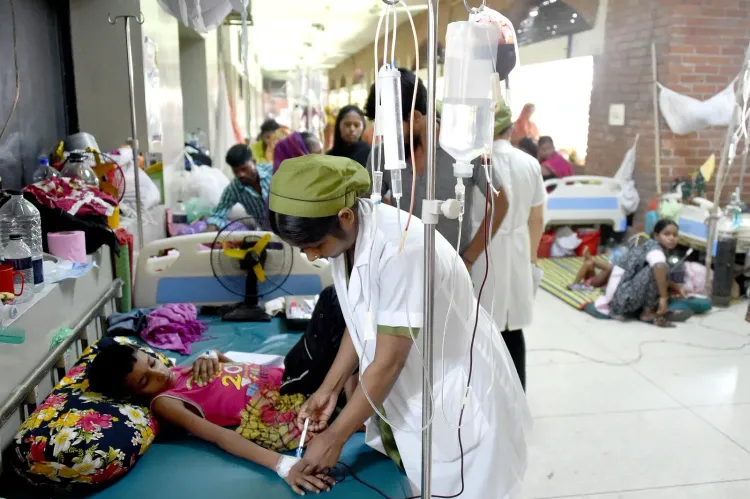
Bangladesh's 2026 dengue death toll has climbed to nine with 4,900 cumulative cases — and the government has ruled out a vaccination drive, citing the absence of universal global acceptance. With the 2025 season having claimed 413 lives, the pressure on Dhaka's public health infrastructure is mounting fast as monsoon conditions worsen.
Key Takeaways
Bangladesh recorded two more dengue deaths in the 24 hours ending 21 June 2026 , in Barishal division and the DSCC area.
The 2026 dengue death toll now stands at nine , with cumulative infections reaching 4,900 .
220 new patients were hospitalised during the same period; 60% of 2026 cases are men.
Bangladesh reported 1,02,861 cases and 413 deaths from dengue in 2025 .
Health Minister Sardar Sakhawat Husain ruled out a dengue vaccination programme, citing the vaccine's lack of universal global acceptance.
The government will consult WHO and UNICEF before revisiting the vaccination decision.
Bangladesh recorded two more dengue fatalities in the 24 hours ending Sunday morning, 21 June 2026, pushing the country's total dengue death toll for the year to nine. The new deaths were reported in Barishal division and the Dhaka South City Corporation (DSCC) area, according to the Directorate General of Health Services (DGHS).
Rising Case Count
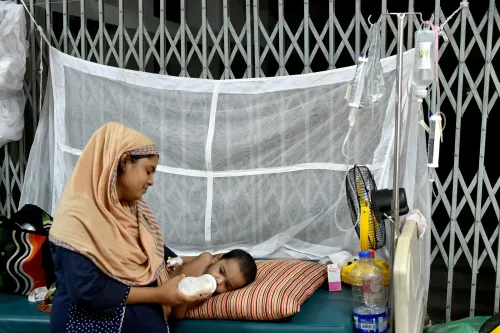
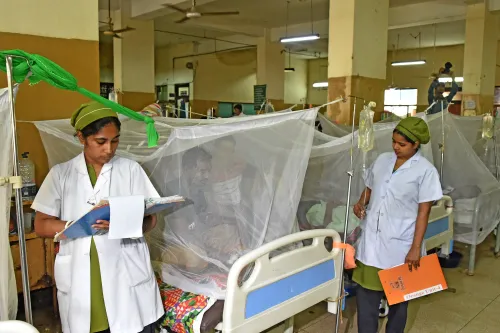
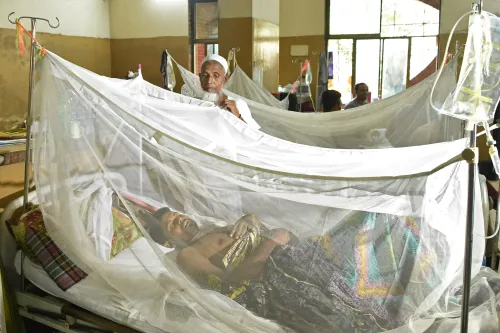
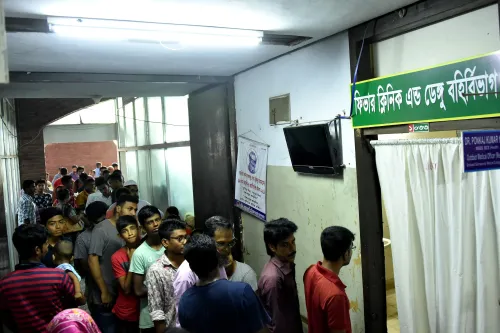
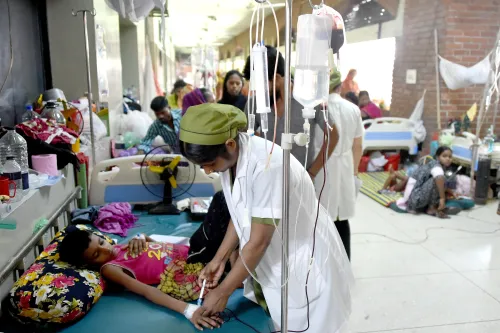
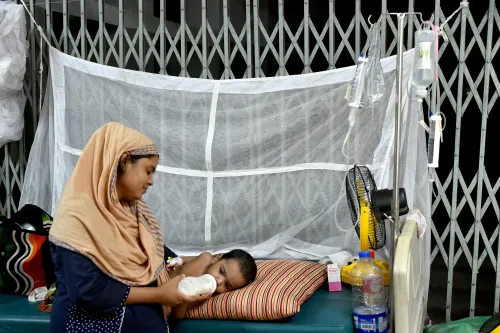
During the same period, 220 additional patients were hospitalised with dengue-related viral fever, bringing cumulative infections in 2026 to 4,900, the DGHS said. Gender data reveals that 60 per cent of this year's dengue patients are men, while 40 per cent are women.
This comes amid a broader pattern of escalating dengue burden in Bangladesh. The country reported 1,02,861 dengue cases and 413 dengue-related deaths in 2025, according to DGHS figures — one of the worst outbreaks in recent years.
Government Rules Out Dengue Vaccination for Now
Bangladesh Health Minister Sardar Sakhawat Husain stated on 2 June that the government would not launch a dengue vaccination programme at this stage. Addressing journalists after a discussion on dengue prevention and treatment guidelines at the Secretariat, Husain said: 'This vaccine is being used in only a limited number of countries around the world, including Brazil, Malaysia, Australia, and Thailand. However, it has not yet become a universally accepted vaccine globally. As an LDC (Least Developed Country), we cannot suddenly begin administering the vaccine.'
He added: 'God forbid, if even a single adverse incident occurs, the entire blame will fall on us. People will say that we proceeded without proper examination and evaluation.'
Husain confirmed that the matter had been discussed with the Prime Minister, and that the government would consult the World Health Organisation (WHO) and UNICEF before reconsidering. 'However, at this moment, we are not going to conduct a vaccination programme. Since it is not a universally accepted vaccine, we want to make our position clear to the public,' he said.
What Is Dengue and Why It Is Dangerous
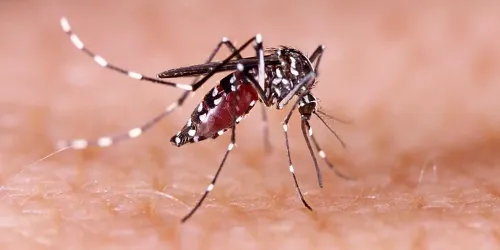
Dengue is a viral infection caused by the dengue virus (DENV), transmitted to humans through the bite of infected Aedes mosquitoes. According to the WHO, most people with dengue experience no symptoms, while those who do typically develop high fever, headache, body aches, nausea, and rash. Most patients recover within one to two weeks. However, a subset develops severe dengue requiring hospitalisation, and the disease can be fatal in serious cases.
What Comes Next
With the monsoon season intensifying across Bangladesh, health authorities face heightened risk of further spread. The government's decision to defer vaccination pending WHO and UNICEF consultation means vector control — including mosquito breeding-site elimination — remains the primary public health tool. Experts and health advocates are likely to watch whether the 2026 trajectory approaches the scale of the 2025 outbreak as the season progresses.
Point of View
The absence of a vaccination pathway leaves vector control as the sole line of defence — a tool that has repeatedly proved insufficient during peak monsoon months. The Health Minister's caution on the vaccine is understandable for an LDC, but the framing of 'universal acceptance' as a prerequisite risks conflating regulatory caution with inaction. WHO and UNICEF consultation is the right call, but the timeline matters enormously. If the 2026 monsoon follows 2025 patterns, Dhaka may not have the luxury of a prolonged deliberation window.
NationPress
21 Jun 2026
Frequently Asked Questions
How many dengue deaths has Bangladesh recorded in 2026?
Bangladesh has recorded nine dengue deaths in 2026 as of 21 June, after two new fatalities were reported in Barishal division and the Dhaka South City Corporation area. Cumulative infections for the year have reached 4,900.
Why is Bangladesh not administering the dengue vaccine?
Health Minister Sardar Sakhawat Husain said the dengue vaccine has not achieved universal global acceptance and is currently used in only a limited number of countries, including Brazil, Malaysia, Australia, and Thailand. As a Least Developed Country, Bangladesh has decided to first consult WHO and UNICEF before proceeding.
How does the 2026 dengue situation compare to 2025?
Bangladesh reported 1,02,861 dengue cases and 413 deaths in 2025 — one of the worst outbreaks on record. The 2026 season, with 4,900 cases and nine deaths by late June, is still in its early stages but is being closely monitored as monsoon conditions intensify.
Who is most affected by dengue in Bangladesh in 2026?
According to the DGHS, 60 per cent of dengue patients in 2026 are men and 40 per cent are women. Cases have been reported across multiple divisions, with deaths recorded in Barishal and the Dhaka South City Corporation area.
What is dengue and how is it transmitted?
Dengue is a viral infection caused by the dengue virus (DENV), spread through the bite of infected Aedes mosquitoes. Symptoms include high fever, headache, body aches, nausea, and rash; most patients recover in one to two weeks, but severe cases can be fatal, according to the WHO.