BJP's core agenda for Punjab: end crisis, build secure and prosperous state, says Nitin Nabin
Synopsis
BJP President Nitin Nabin used a gathering of saints and spiritual leaders in Jalandhar to frame Punjab's drug crisis as a moral emergency — and to position the BJP as its solution. By invoking Sikh Gurus, Guru Ravidas, and Maharishi Valmiki in a single speech, Nabin's outreach signals a deliberate attempt to consolidate Punjab's diverse religious communities around the BJP ahead of the next state election.
Key Takeaways
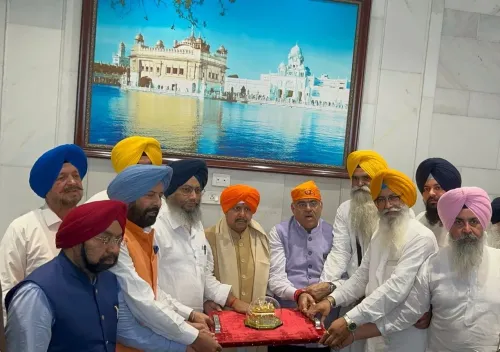
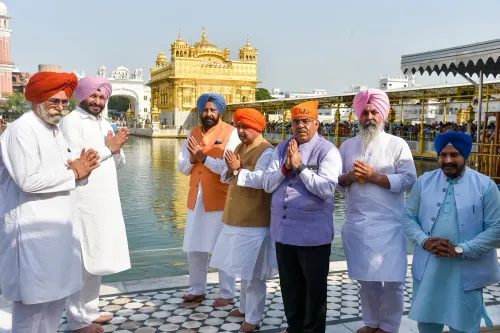
BJP President Nitin Nabin addressed the Sant Sammelan in Jalandhar on 21 June , meeting saints and spiritual leaders from across Punjab.
Nabin declared making Punjab secure, prosperous, and strong the BJP's core agenda for the state.
He appealed to gurdwara committees, ashrams, deras, and temple committees to pledge support in combating drug addiction.
The BJP chief invoked the principles of Sarbat da Bhala and Sabka Saath, Sabka Vikas as the foundation for the party's Punjab governance vision.
Nabin is on a three-day visit to Punjab as the BJP intensifies its ground-level outreach in the state.
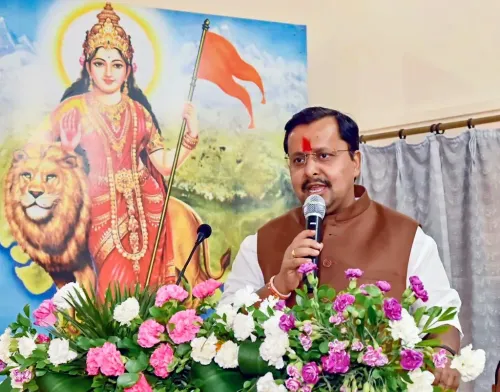
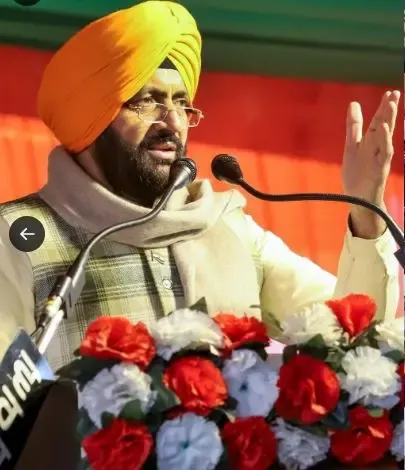
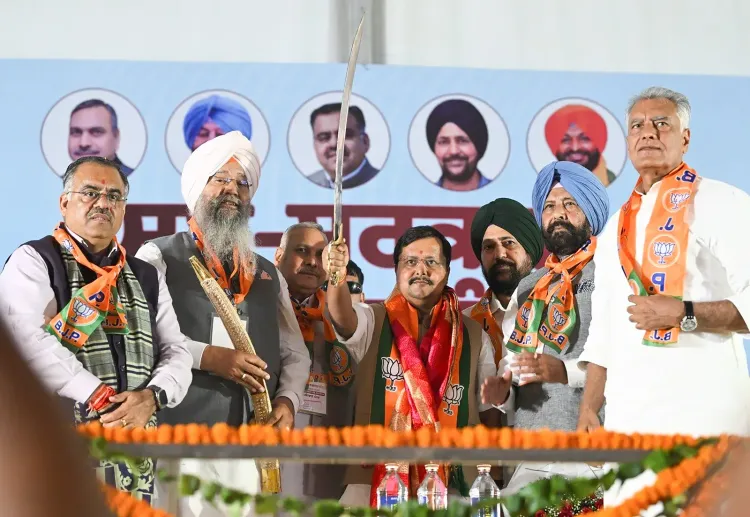
Bharatiya Janata Party (BJP) President Nitin Nabin on Sunday, 21 June declared that rescuing Punjab from its current crisis and transforming it into a secure, prosperous, and strong state is the party's central mission. Addressing saints and spiritual leaders at the Sant Sammelan in Jalandhar, Nabin framed Punjab not merely as a border state but as the 'soul of India' — a land shaped by Sikh Gurus, martyrs, and centuries of spiritual tradition.
Key Developments at the Sant Sammelan
Nabin, who is on a three-day visit to Punjab, met with gurdwara committees, ashram heads, dera leaders, and temple committees, appealing to each to take a public pledge against drug addiction. 'Punjab is not merely a state; it is the land of the Gurus' teachings, the penance of saints, and the blood of martyrs,' he said, describing it as 'a living tradition of service, dedication and sacrifice.'
The BJP chief identified the drug menace as Punjab's most pressing crisis and called on religious institutions to lead the fight from the ground up. 'If all religious organisations come forward, no force can stop Punjab's situation from changing,' he asserted.
What the BJP Chief Said on Punjab's Spiritual Identity
Drawing on Sikh scripture and history, Nabin invoked the teachings of Guru Nanak Dev, the sacrifice of Guru Arjan Dev, the supreme martyrdom of Guru Tegh Bahadur, and the bravery of Guru Gobind Singh and the Sahibzadas. He cited the Sikh principle of 'Sarbat da Bhala' (welfare of all) as the philosophical foundation for the BJP's proposed governance model in the state.
He also referenced the Sikh teaching of 'Na no bairi, nahi begana' (no one is an enemy, no one is a stranger), calling it 'the true spirit of Punjab and the true spirit of India.' Alongside Sikh traditions, he paid tribute to the legacies of Guru Ravidas, Maharishi Valmiki, and Baba Jiwan Singh, signalling an outreach across Punjab's diverse religious communities.
BJP's Governance Vision for Punjab
Nabin outlined a vision anchored in the BJP's national slogan — Sabka Saath, Sabka Vikas, Sabka Vishwas, Sabka Prayas — which he said embodies the principle of Sarbat da Bhala. He promised a Punjab where 'every religion, every sect, every dera and every community moves forward with equal dignity and respect.'
Notably, he was explicit that his appeal was not political in character. 'As a humble servant, I stand before all of you saints seeking your guidance,' he said, positioning the BJP's outreach to religious leaders as a social and moral campaign rather than an electoral one. Critics may, however, note that such engagements with influential religious institutions ahead of state elections carry inherent political weight.
Context and What Comes Next
Punjab has long grappled with a drug crisis that has disproportionately affected its youth, a challenge that successive state governments — including the current Aam Aadmi Party (AAP) administration — have struggled to contain. The BJP, currently out of power in the state, has been intensifying its ground-level outreach, and Nabin's Sant Sammelan appearance is part of a broader strategy to rebuild the party's presence in a state it has historically found difficult to win.
The BJP chief's three-day Punjab visit is expected to include further interactions with community leaders and party workers. Whether the religious mobilisation translates into electoral momentum will likely depend on the party's ability to present a credible governance alternative to Punjab voters.
Point of View
The BJP sidesteps its weak organisational base in Punjab while tapping into institutions that command genuine community trust. The drug crisis framing is effective precisely because it is real and bipartisan in its failure: the AAP government, elected on a promise to eradicate drugs, has not delivered a decisive turnaround. The BJP's challenge is that invoking Guru Nanak and Maharishi Valmiki in the same breath, while electorally inclusive, risks appearing performative to a Punjab electorate that has seen many such appeals before. Credibility in Punjab will require policy specifics, not just spiritual solidarity.
NationPress
21 Jun 2026
Frequently Asked Questions
What did BJP President Nitin Nabin say at the Sant Sammelan in Jalandhar?
Nitin Nabin declared at the Sant Sammelan on 21 June in Jalandhar that bringing Punjab out of its current crisis and making it secure, prosperous, and strong is the BJP's core agenda. He appealed to religious institutions across the state to lead the fight against drug addiction and outlined a governance vision rooted in equal dignity for all communities.
Why is the BJP focusing on Punjab's drug crisis?
Punjab has faced a severe drug addiction problem for years, affecting its youth disproportionately and remaining a key political issue that successive governments have struggled to resolve. The BJP, currently in opposition in Punjab, is positioning itself as an alternative by calling on religious leaders — who command grassroots trust — to mobilise communities against addiction.
What is the significance of Nitin Nabin's three-day Punjab visit?
The visit signals the BJP's intensified ground-level outreach in a state the party has historically found difficult to win. Engaging saints and spiritual leaders, rather than just party workers, is part of a broader strategy to rebuild the BJP's social base in Punjab ahead of future state elections.
Which religious traditions did Nitin Nabin reference in his speech?
Nabin drew on Sikh traditions — invoking Guru Nanak Dev, Guru Arjan Dev, Guru Tegh Bahadur, Guru Gobind Singh, and the Sahibzadas — as well as the legacies of Guru Ravidas, Maharishi Valmiki, and Baba Jiwan Singh, reflecting an outreach that spans Punjab's multiple religious communities.
What governance model did the BJP chief propose for Punjab?
Nabin proposed a model anchored in the BJP's national principle of Sabka Saath, Sabka Vikas, Sabka Vishwas, Sabka Prayas, which he linked to the Sikh concept of Sarbat da Bhala (welfare of all). He envisioned a Punjab where every religion, sect, dera, and community advances with equal dignity, and where youth hold education and employment rather than drugs.