655 million people lack electricity worldwide, UN report warns
Synopsis
The UN's latest SDG 7 report puts a number on the world's energy failure: 655 million people still in the dark, 1.8 billion cooking on polluting fuels, and Sub-Saharan Africa so far behind that its electrification pace must triple just to hit 2030 targets. Renewables are the one bright spot — but they cannot mask a widening gap between ambition and delivery.
Key Takeaways
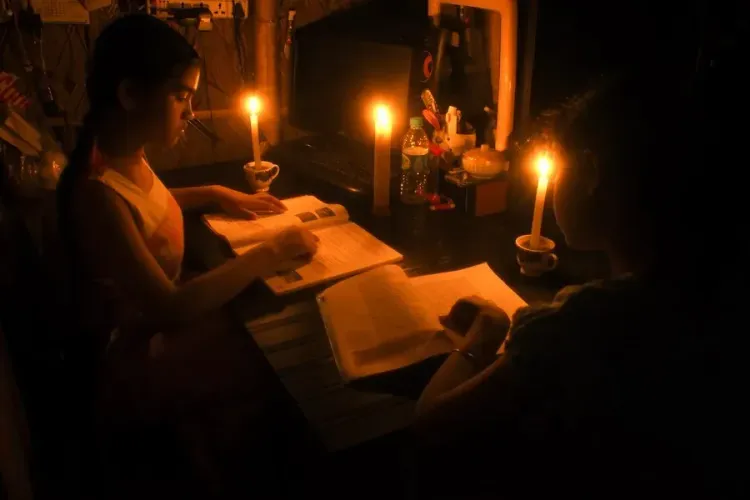
655 million people — 8% of the global population — still live without electricity, according to the UN SDG 7 Energy Progress Report released on 25 June .
Sub-Saharan Africa accounts for over 560 million of those without electricity and 970 million without clean cooking access.
1.8 billion people worldwide rely on polluting fuels and technologies for cooking, posing serious health risks.
The pace of electrification in Sub-Saharan Africa must triple to achieve universal access by 2030 .
Renewable energy now exceeds 30% of global electricity consumption, the report's primary positive signal.
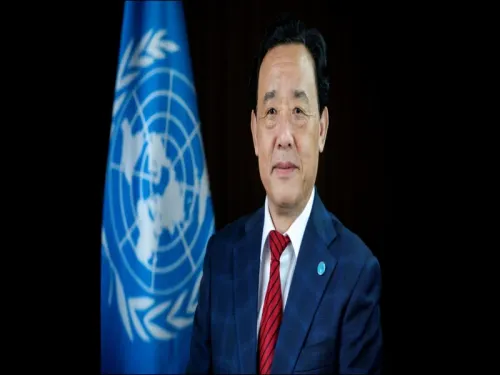
UN Under-Secretary-General Li Junhua called for 'substantial scaling-up of international support and investment' with immediate urgency.
A total of 655 million people — roughly 8 per cent of the global population — still live without electricity, with the overwhelming majority concentrated in Sub-Saharan Africa, according to the latest edition of the Tracking Sustainable Development Goal (SDG) 7: The Energy Progress Report, released on 25 June. The findings underscore a widening gap between global energy ambitions and ground-level reality.
Scale of the Energy Deficit
The report reveals that Sub-Saharan Africa bears a disproportionate share of the global energy shortfall, with over 560 million people living without electricity and 970 million lacking access to clean cooking solutions. Separately, 1.8 billion people worldwide continue to rely on polluting fuels and technologies for cooking, placing their health and well-being at serious risk. According to the report, the pace of electrification in Sub-Saharan Africa must triple to achieve universal access by 2030.
Renewable Energy's Encouraging Rise
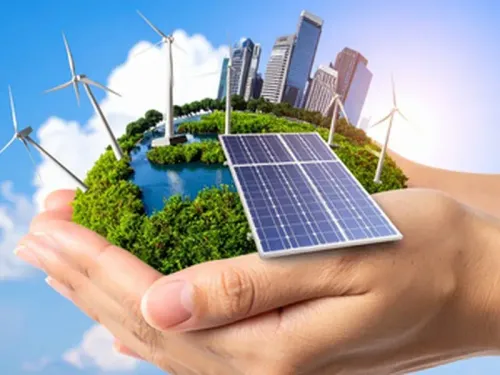
Despite these stark gaps, the report highlighted meaningful progress on the clean energy front. Renewable energy now accounts for over 30 per cent of global electricity consumption, continuing its strong expansion trajectory. This represents one of the few areas where SDG 7 progress is broadly on track, offering a blueprint for accelerating the overall transition.
What the UN Said
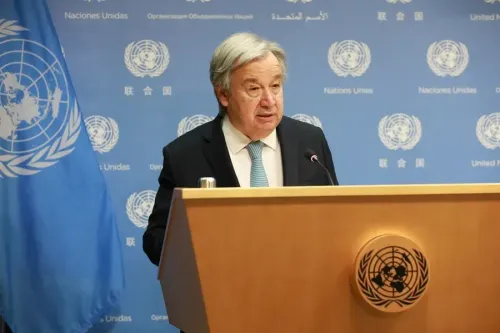
Li Junhua, UN Under-Secretary-General for Economic and Social Affairs, acknowledged the mixed picture. 'We have seen encouraging progress in expanding access to affordable, reliable and clean energy in recent years,' he said. 'However, this year's report shows that millions of people still lack access, making clear that progress is not keeping pace with the ambition of Sustainable Development Goal 7, and that disparities across countries remain significant.'
Li also pointed to the ongoing global energy crisis as a potential inflection point rather than a setback. 'Seizing this opportunity will require substantial scaling-up of international support and investment. We cannot afford complacency. The time to act with greater urgency and ambition is now,' he said.
Barriers and Policy Gaps
The report identified several structural obstacles to meeting the 2030 deadline. It called for stronger political leadership, improved cross-sector coordination, and a sharper focus on communities most at risk of being left behind. Clear policy signals and sustained implementation, the report stressed, are essential to diversifying national energy mixes, expanding renewables, reducing fossil fuel import dependence, and building macroeconomic resilience against global supply chain disruptions.
Notably, this warning comes as the global energy crisis continues to reshape markets and strain economies — a context that the report says could either accelerate or derail the clean energy transition, depending on how governments respond.
What Happens Next
With 2030 less than six years away, the report's authors are pressing for an immediate scale-up of international financing and political commitment. Without urgent action, the world risks locking hundreds of millions of people — predominantly in Africa — into energy poverty for another generation, with cascading consequences for health, education, and economic development.
Point of View
But the more consequential finding is the structural one: Sub-Saharan Africa is so far off-pace that tripling electrification speed is now the minimum, not an aspiration. The global energy crisis cuts both ways — it can accelerate the clean transition or entrench fossil dependence, and the report is notably vague on which path current policy trajectories favour. Meanwhile, the 1.8 billion still cooking on polluting fuels rarely get the same political attention as electricity access, despite causing comparable health burdens. The 2030 deadline is close enough to be a credibility test for multilateral energy commitments.
NationPress
23 Sept 2026
Frequently Asked Questions
How many people in the world still lack electricity?
According to the UN SDG 7 Energy Progress Report released on 25 June, 655 million people — approximately 8 per cent of the global population — currently live without electricity. The majority of them are in Sub-Saharan Africa, which alone accounts for over 560 million people without power.
What is the UN SDG 7 Energy Progress Report?
It is an annual report tracking global progress toward Sustainable Development Goal 7, which aims to ensure universal access to affordable, reliable, sustainable, and modern energy by 2030. The report monitors electricity access, clean cooking, renewable energy expansion, and energy efficiency.
Why is Sub-Saharan Africa highlighted in the report?
Sub-Saharan Africa bears a disproportionate share of the global energy deficit, with over 560 million people lacking electricity and 970 million without access to clean cooking. The report states the region must triple its electrification pace to meet the 2030 universal access target.
What progress has been made on renewable energy?
Renewable energy now accounts for over 30 per cent of global electricity consumption, representing one of the stronger areas of SDG 7 progress. The report cited this as an encouraging trend, even as overall energy access targets remain significantly off track.
Will the world meet its 2030 energy access targets?
The report warns that without urgent, scaled-up action, the world will fall short of SDG 7 targets by 2030. It calls for stronger political leadership, increased international investment, and a strategic focus on the communities most at risk of being left behind.