Mali Terror Attacks: UN Chief Condemns Violence, Curfew Imposed in Bamako
Synopsis
Coordinated terrorist attacks hit Bamako, Kati, Gao, Sévaré, and Kidal on April 26, wounding 16 and triggering a 72-hour curfew in Mali's capital. The UN Secretary-General condemned the violence and called for international support — as Mali's security crisis reaches a dangerous new threshold.
Key Takeaways
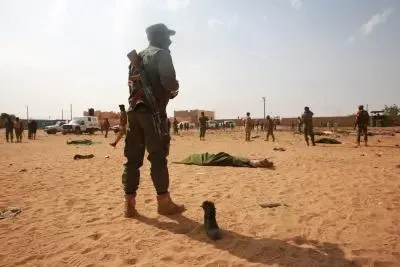
Coordinated terrorist attacks struck five Malian cities — Bamako, Kati, Gao, Sévaré, and Kidal — on April 26, 2025 , marking one of the most geographically widespread militant operations in recent Malian history.
16 people were wounded , including both civilians and military personnel, all transferred to medical facilities; material damage was reported as limited.
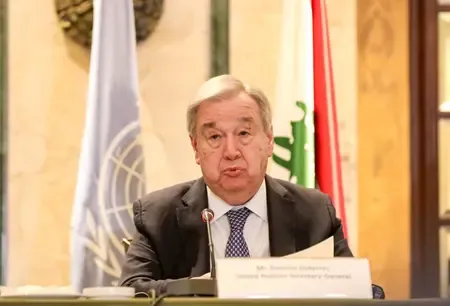
UN Secretary-General António Guterres strongly condemned the attacks and called for coordinated international support to counter violent extremism across the Sahel region .
The Bamako District Governorate imposed a 72-hour curfew (9 PM–6 AM local time) across the capital, with the possibility of renewal.
Malian Armed Forces launched a large-scale sweep operation, claiming several hundred terrorists killed and the attacks brought under control.
The strikes come amid Mali's deepening security crisis following the expulsion of French forces and UN peacekeepers (MINUSMA) in 2023 , raising questions about the current security framework's effectiveness.
United Nations / Bamako, April 26: Coordinated terrorist attacks struck multiple cities across Mali on Saturday, April 26, targeting key garrison towns and the capital Bamako, leaving at least 16 people wounded and prompting UN Secretary-General António Guterres to strongly condemn the violence and express deep concern over the deteriorating security situation in the Sahel region.
UN Secretary-General Condemns Mali Attacks
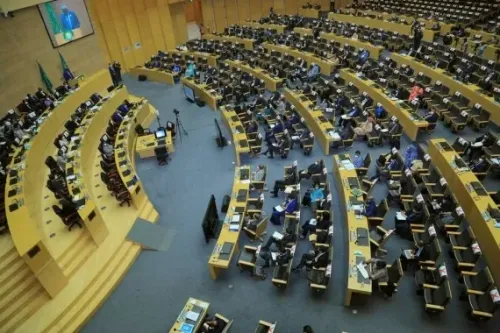
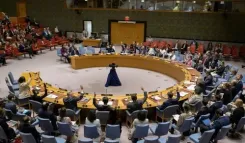
UN Spokesperson Stéphane Dujarric issued a formal statement on behalf of Secretary-General António Guterres, confirming that the UN chief was deeply concerned by the reports emerging from Mali. Guterres expressed solidarity with the Malian people and underscored the urgent need to protect civilians and civilian infrastructure from further harm.
The statement called for coordinated international support to confront the escalating threat of violent extremism and terrorism across the Sahel. Guterres also reiterated his demand for robust security coordination and collaboration across the broader region, signalling that the international community views this not as an isolated incident but as part of a wider, worsening pattern.
Coordinated Attacks Target Bamako, Kati, Gao, Sevare and Kidal
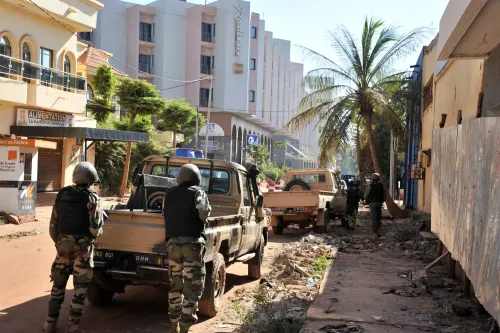
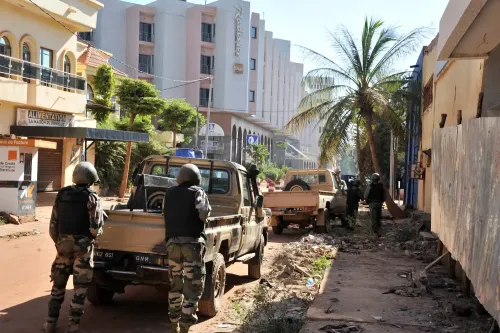
Mali's transitional government confirmed on Saturday evening that armed terrorist groups launched simultaneous, coordinated strikes on several cities earlier in the day. The targeted locations included the strategically significant garrison towns of Kati, Sévaré, Gao, and Kidal, as well as the nation's capital, Bamako.
The General Staff of the Malian Armed Forces stated that a large-scale sweep operation was immediately launched across Bamako, Kati, and other affected localities. According to official statements, several hundred terrorists were killed during the security response, and the attackers' plans were foiled before they could cause wider destruction.
The 16 wounded — comprising both civilians and military personnel — were swiftly transferred to medical facilities. The government noted that material damage remained limited, a testament to the speed of the security forces' response.
72-Hour Curfew Imposed Across Bamako
In a significant security measure, the Bamako District Governorate imposed a 72-hour curfew across the capital, effective from 9:00 PM (2100 GMT) to 6:00 AM (0600 GMT) local time. Authorities reserved the right to renew the curfew if the security situation demands it.
The government also urged the population to remain vigilant and calm, report any suspicious activity to authorities, and rely exclusively on official government channels for information — a move aimed at countering misinformation that often spreads rapidly during security crises.
Broader Context: Mali's Deepening Security Crisis
This attack does not occur in a vacuum. Mali has been locked in a prolonged security crisis since 2012, when a Tuareg rebellion and subsequent jihadist insurgency fractured the country's north. Despite two military coups — in August 2020 and May 2021 — the transitional government has struggled to contain the spread of militant groups linked to both Al-Qaeda (through Jama'at Nusrat al-Islam wal-Muslimin, JNIM) and the Islamic State in the Greater Sahara (ISGS).
Notably, Mali expelled French forces and the UN peacekeeping mission MINUSMA in 2023, pivoting instead to a partnership with Russian Wagner Group mercenaries (now rebranded under Russian state structures). Critics argue this strategic shift has left significant security gaps, as international intelligence-sharing and coordinated counter-terrorism operations have been severely curtailed. The April 26 attacks — striking simultaneously across geographically dispersed cities — suggest a level of planning and resource mobilisation that raises serious questions about the effectiveness of the current security architecture.
This is among the most geographically widespread coordinated attacks Mali has witnessed in recent years, with targets spanning from the northern stronghold of Kidal to the capital itself. The fact that Bamako — historically more insulated from frontline violence — was targeted signals a dangerous escalation in militant ambition and reach.
International Response and What Comes Next
The UN's call for coordinated international support comes at a moment when Mali's transitional government has systematically distanced itself from Western security partners. The diplomatic paradox is stark: Bamako needs international help but has rejected the frameworks through which that help traditionally flows.
The Sahel region — encompassing Mali, Burkina Faso, and Niger, all now governed by military juntas — has seen a dramatic rise in jihadist violence over the past three years. According to data from the Armed Conflict Location and Event Data Project (ACLED), the Sahel accounted for the highest number of terrorism-related fatalities globally in 2023, surpassing even the Middle East.
As investigations continue and the full scale of Saturday's attacks becomes clearer, the international community will be watching closely to see whether Mali's transitional leadership opens dialogue with global partners or doubles down on its current isolationist security posture. The coming days will be critical in determining both the human toll and the political fallout of one of the most audacious militant operations in Mali's recent history.
Point of View
This crisis is a warning: security vacuums created by geopolitical posturing are always filled by the most violent actors. The Sahel is not a distant problem — it is a live laboratory for the consequences of abandoning multilateral security architecture.
NationPress
19 Sept 2026
Frequently Asked Questions
What happened in Mali on April 26, 2025?
Armed terrorist groups launched coordinated attacks on multiple Malian cities on April 26, 2025, including Bamako, Kati, Gao, Sévaré, and Kidal, leaving 16 people wounded. Malian security forces responded swiftly, killing several terrorists and imposing a 72-hour curfew in Bamako.
What did the UN say about the Mali attacks?
UN Secretary-General António Guterres strongly condemned the attacks and expressed deep concern through spokesperson Stéphane Dujarric. He called for coordinated international support to address violent extremism in the Sahel and urged robust regional security collaboration.
Why is Bamako under curfew after the attacks?
The Bamako District Governorate imposed a 72-hour curfew from 9 PM to 6 AM local time following the coordinated terrorist attacks on April 26. The curfew is a precautionary security measure and may be renewed if the situation warrants it.
Which terrorist groups are active in Mali?
Mali faces threats primarily from JNIM (Jama'at Nusrat al-Islam wal-Muslimin), affiliated with Al-Qaeda, and the Islamic State in the Greater Sahara (ISGS). Both groups have expanded their operations significantly since Mali expelled French forces and UN peacekeepers in 2023.
How has Mali's security situation changed since 2023?
Mali expelled the UN peacekeeping mission MINUSMA and French military forces in 2023, replacing them with Russian Wagner Group-linked personnel. Critics argue this shift has weakened coordinated counter-terrorism efforts, contributing to the escalating frequency and scale of attacks across the country.