UN Secretary-General Guterres Hails Israel-Lebanon Ceasefire, Calls for Adherence to International Law
Synopsis
On April 17, UN Secretary-General Antonio Guterres praised the ceasefire between Israel and Lebanon, expressing hope for lasting peace and urging compliance with international law. This announcement follows significant diplomatic efforts and highlights the ongoing conflicts in the region.
Key Takeaways
UN Secretary-General Antonio Guterres welcomed the ceasefire announcement.
The ceasefire aims to foster lasting peace in the region.
The role of the US was pivotal in facilitating this ceasefire.
All parties are urged to comply with international law .
The sustainability of the ceasefire depends on Hezbollah's restraint.
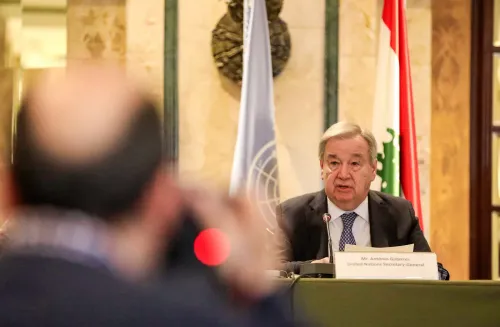
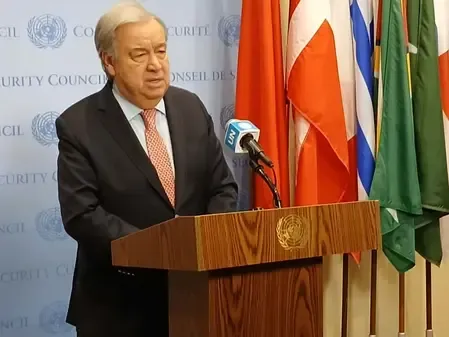
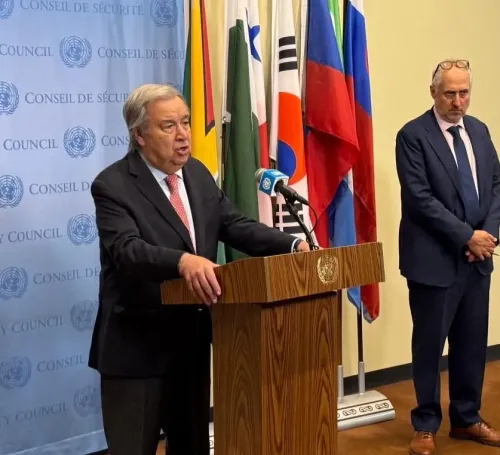
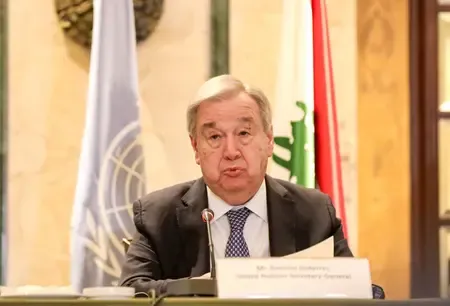
The United Nations, on April 17 (NationPress), saw its Secretary-General, Antonio Guterres, express a positive response to the recent ceasefire declaration between Israel and Lebanon. He conveyed optimism that this development could significantly contribute to the pursuit of enduring peace in the area.
“I applaud the declaration of a ceasefire between Israel and Lebanon, and I acknowledge the pivotal role played by the US in brokering this agreement. My hope is that this will open avenues for discussions aimed at a lasting resolution to the conflict and assist in ongoing endeavors toward a comprehensive and sustainable peace in the region. I call upon all parties to fully adhere to the ceasefire and to consistently observe international law,” Guterres shared on X.
Earlier, on Thursday, Stephane Dujarric, the spokesperson for the UN Secretary-General, urged the relevant parties to honor the newly established ceasefire.
“The citizens of Lebanon have endured significant hardship. The populace in northern Israel also has the right to live in tranquility. We are hopeful that all will respect this ceasefire,” stated Dujarric.
The spokesperson highlighted that the United Nations endorses any measures that aim to cease hostilities and alleviate suffering for both sides along the Blue Line, the boundary established between Lebanon and Israel by the UN in 2000.
“The UN, through our political and peacekeeping initiatives, is prepared to support these efforts and continues to push for the full execution of Security Council Resolution 1701 to achieve a permanent ceasefire and a long-term resolution to the conflict,” he noted, emphasizing that military solutions are not viable for this situation.
Earlier on Thursday, US President Donald Trump announced a ceasefire aimed at temporarily easing tensions along another front related to the Iran conflict, following discussions with Israeli Prime Minister Benjamin Netanyahu and Lebanon’s President Joseph Aoun. The two sides consented to a ten-day ceasefire commencing at 5 p.m. in Washington (2:30 a.m. Friday in India).
This ceasefire is anticipated to halt the hostilities that escalated after Israel initiated actions against Hezbollah, which is affiliated with Iran.
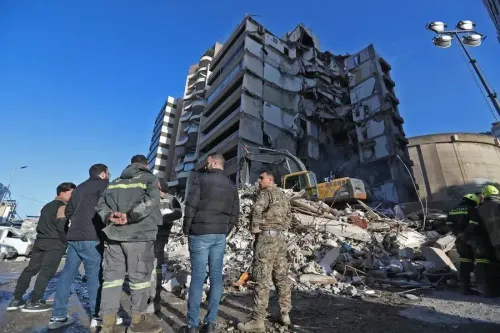
Although Lebanon is not formally in a state of war with Israel, the presence of Hezbollah in southern Lebanon has led to repeated attacks on Israel, resulting in retaliatory strikes.
Due to its inability to control Hezbollah, Lebanon has faced significant consequences from Israel's retaliatory actions.
The sustainability of the ceasefire will likely hinge on Hezbollah's decision to refrain from further assaults.
While Hezbollah is not officially part of the ceasefire agreement, reports suggest that the group may cease its attacks if Israel also demonstrates restraint.
Meanwhile, Iran’s Parliament Speaker Mohammad Bagher Ghalibaf supported the ceasefire, stating on social media: “A ceasefire in Lebanon holds equal importance to a ceasefire in Iran.”
Following the escalation of the Iran conflict, Hezbollah had increased its strikes on Israel.
This ceasefire agreement follows a meeting in Washington between the ambassadors of Israel and Lebanon, which was facilitated by US Secretary of State Marco Rubio.
Point of View
It is vital to recognize the significance of this ceasefire agreement in the context of ongoing regional conflicts. The UN's role in facilitating dialogue and urging compliance with international laws is crucial for fostering a sustainable peace. This event could be a turning point, provided all parties commit to upholding their agreements.
NationPress
19 Sept 2026
Frequently Asked Questions
What prompted the ceasefire between Israel and Lebanon?
The ceasefire was announced following a series of escalations linked to Hezbollah's attacks and Israel's retaliatory strikes, coinciding with diplomatic efforts led by the US.
How long is the ceasefire expected to last?
The ceasefire is set to last for ten days, beginning from the announcement time.
What role did the US play in this ceasefire?
The US facilitated discussions between Israeli and Lebanese leaders, which led to the announcement of the ceasefire.
What are the implications of this ceasefire for regional peace?
The ceasefire presents an opportunity for negotiations aimed at achieving a long-term resolution to the Israel-Lebanon conflict and reducing tensions in the region.
Is Hezbollah officially part of the ceasefire agreement?
No, Hezbollah is not formally part of the ceasefire agreement, but reports suggest they may halt attacks if Israel also demonstrates restraint.