Buildings sector decarbonisation slowing, warns UNEP 2025-26 report

Synopsis
The world is building at a record pace — nearly a Paris-worth of floor space every week — but the green transition in construction has stalled since 2020. A new UNEP report finds the sector responsible for 37% of global emissions and warns that annual investment must nearly double to $592 billion to stay on a net-zero track by 2050.
Key Takeaways
The buildings and construction sector accounts for 37% of global emissions, 50% of material extraction, and 28% of energy consumption, per the UNEP GlobalABC 2025-26 report .
Global building floor area grew 1.7% in 2024 to 273 billion square metres , driven by construction in India and Southeast Asia .
Renewables supplied just 17.3% of buildings' energy demand in 2024 — well below net-zero requirements.
Investment in building energy efficiency must reach $5.9 trillion by 2030 ( $592 billion annually ), against $275 billion invested in 2024.
Progress has slowed since 2020 as construction growth has outpaced the green transition.
India , Germany , Australia , and Pakistan were cited as positive examples of on-site renewable energy growth in buildings.
The decarbonisation of the global buildings and construction sector has slowed significantly, leaving it both a leading source of greenhouse gas emissions and increasingly exposed to climate impacts and energy price shocks, according to the Global Status Report for Buildings and Construction 2025-2026 released on Tuesday, 19 May 2025 by the UN Environment Programme (UNEP) and the Global Alliance for Buildings and Construction (GlobalABC). The report warns that the green transition in construction is failing to keep pace with the rate at which new buildings are being built.
Scale of the Problem
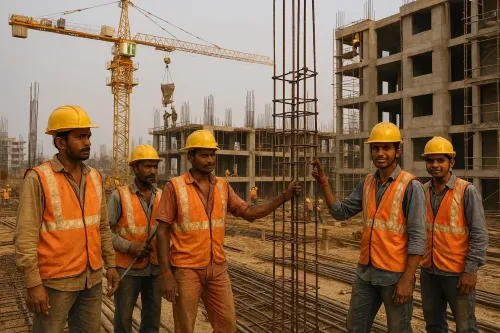
The buildings and construction sector now accounts for nearly 50 per cent of global material extraction, 37 per cent of global emissions, and 28 per cent of global energy consumption. Every day, the world adds an estimated 12.7 million square metres of floor area — roughly equivalent to adding the entire city of Paris in new floor space almost every week. In 2024, the global building floor area expanded by 1.7 per cent, reaching 273 billion square metres, driven largely by construction in emerging economies including India and Southeast Asia.
Key Findings From the Report
The tenth edition of the report assesses progress across seven key indicators covering policies, finance, technologies, and investment aligned with a 2050 net-zero emissions pathway. Among its headline findings: global building energy intensity has reduced by 8.5 per cent since 2015; green building certifications have nearly tripled over the same period; and investment in energy efficiency reached $275 billion in 2024, contributing to a cumulative $2.3 trillion invested since 2015.
However, renewables supplied just 17.3 per cent of buildings' energy demand in 2024 — far below what a net-zero trajectory requires. Critically, since 2020, overall progress has stalled as construction activity has outrun climate action.
What Policymakers Must Do
To align the sector with a net-zero pathway, the report calls on governments to accelerate energy-efficiency improvements and phase out fossil fuels in buildings. Investment in building energy efficiency must reach $5.9 trillion by 2030 — equivalent to $592 billion annually — a figure that dwarfs current spending levels.
Inger Andersen, Executive Director of UNEP, underscored the stakes: 'From homes and schools to hospitals and workplaces, buildings play a fundamental role in our lives. Buildings can either lock in climate risks or deliver safer, healthier, and more affordable living conditions. With half of the world's buildings yet to be built or renovated by 2050, governments have a critical opportunity to drive zero-emission, resilient construction through better policies, codes, and investment,' she said.
Bright Spots Across Regions
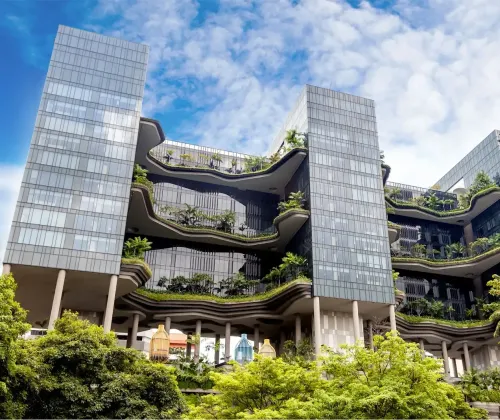
The report identifies positive examples globally. The European Union has deployed policies tackling both operational emissions and embodied emissions — those released before and during construction. Japan and Switzerland have improved building energy performance, while Australia, Germany, India, and Pakistan have recorded growth in on-site renewable energy in buildings.
What Comes Next
Published against the backdrop of a global housing and energy affordability crisis, the report argues that climate action in buildings can simultaneously reduce energy bills, improve living conditions, and strengthen resilience to climate shocks. UNEP and GlobalABC have committed to strengthening data systems, refining methodologies, and supporting national policymaking to equip decision-makers with the evidence needed to accelerate action while addressing affordability and equity challenges. With half the world's building stock yet to be constructed or retrofitted by 2050, the decisions made in the next few years will determine whether the sector becomes a climate solution or a long-term liability.
Point of View
And the construction boom in India and Southeast Asia is adding floor space faster than policy can decarbonise it. The $592 billion annual investment target sounds ambitious until you note that $275 billion was spent in all of 2024 — meaning the world needs to more than double its pace in five years. Green certification tripling since 2015 is a headline that flatters; with renewables at just 17.3% of buildings' energy mix, certification is outrunning actual performance. Governments that treat building codes as a bureaucratic checkbox rather than a climate lever are storing up both emissions and energy-price vulnerability for the next generation.
NationPress
21 Oct 2026
Frequently Asked Questions
What does the UNEP Global Status Report for Buildings and Construction 2025-26 say?
The report, released on 19 May 2025 by UNEP and GlobalABC, finds that decarbonisation of the buildings and construction sector has slowed since 2020, even as the sector accounts for 37% of global emissions and 28% of global energy consumption. It calls for annual investment in building energy efficiency to reach $592 billion by 2030.
Why is the buildings sector so important for climate action?
Buildings account for nearly 50% of global material extraction, 37% of global emissions, and 28% of energy consumption, making the sector one of the largest contributors to climate change. With half the world's buildings yet to be built or renovated by 2050, decisions made now will lock in emissions — or prevent them — for decades.
How much investment is needed to decarbonise the buildings sector?
According to the report, investment in building energy efficiency must reach $5.9 trillion by 2030 — equivalent to $592 billion annually. In 2024, investment stood at $275 billion, meaning the required pace is more than double current levels.
What role does India play in the global buildings emissions picture?
India is cited as one of the emerging economies driving the rapid expansion of global building floor area, which grew 1.7% in 2024. However, India is also highlighted as a positive example for growth in on-site renewable energy in buildings, alongside Australia, Germany, and Pakistan.
What progress has been made in building energy efficiency since 2015?
Since 2015, global building energy intensity has fallen by 8.5%, green building certifications have nearly tripled, and cumulative investment in energy efficiency has reached $2.3 trillion. Despite this, renewables accounted for just 17.3% of buildings' energy demand in 2024, and overall progress has slowed since 2020.