How are the US and Europe Planning to Rebuild Ukraine with BlackRock and the World Bank?

Synopsis
Discover the ambitious economic and reconstruction strategy being crafted by the US and its European allies for Ukraine, driven by BlackRock and the World Bank. With significant implications for regional security and economic viability, this initiative aims to pave the way for a sustainable post-war future. Stay informed about the latest developments in this ongoing effort.
Key Takeaways
Collaboration: US and Europe are working hand-in-hand to support Ukraine's recovery.
Financial Framework: BlackRock and World Bank are creating a robust financial strategy.
Long-term Viability: Focus on ensuring Ukraine's economic stability post-conflict.
Regional Security: Ukraine's stability is vital for European security.
Governance Reforms: Establishing transparent governance is crucial for attracting investments.
Washington, Dec 15 (NationPress) The United States, together with its European allies, is in the process of developing a substantial economic and reconstruction initiative for Ukraine. This effort involves key contributions from BlackRock and the World Bank amidst ongoing discussions aimed at concluding the Russia-Ukraine war, as revealed by a high-ranking official from the US administration on Monday.
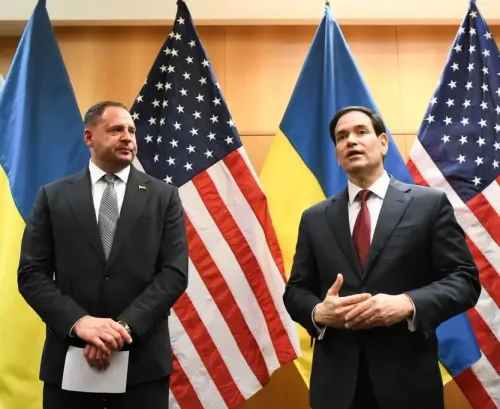
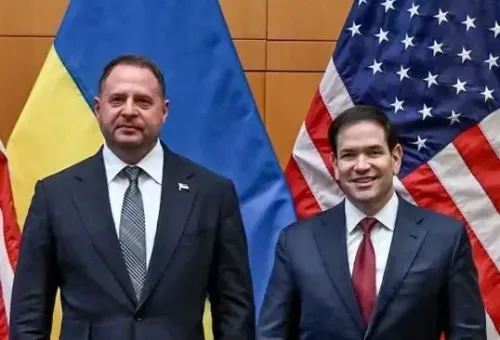
Speaking on the condition of anonymity, the official informed the press that the development agenda was a significant focus during two days of talks in Berlin with Ukrainian representatives, including President Volodymyr Zelensky, alongside senior officials from Europe. Negotiators are concentrating on ensuring Ukraine's long-term economic sustainability once hostilities cease.
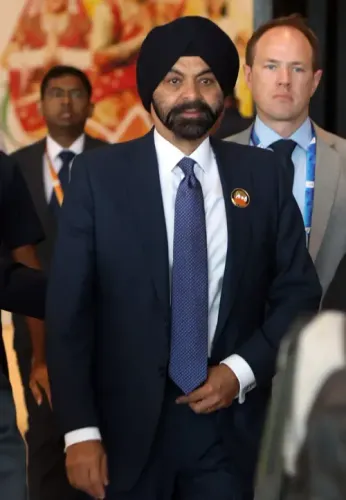
CEO of BlackRock, Larry Fink, “has mobilized a team on a pro bono basis” to collaborate on the recovery strategy with World Bank President Ajay Banga. Both teams are already engaging extensively with their Ukrainian counterparts. According to the official, they have been extensively analyzing the magnitude of Ukraine’s financial hurdles and exploring potential remedies.
“Their financial situation is exceedingly challenging,” noted the senior US official, highlighting the multiple and overlapping challenges Ukraine faces after nearly four years of conflict. These challenges encompass maintaining military strength, compensating civilians for property damages, supporting families of fallen soldiers, and reconstructing devastated infrastructure.
The official emphasized that European leaders have consistently underscored the importance of Ukraine to their security, declaring that Ukraine's economic stability is vital for Europe’s long-term security. Consequently, European allies have signaled their commitment to provide “strong financial assistance” to ensure Ukraine emerges as “financially viable and robust” in the aftermath of the conflict.
The dialogues also focused on strategies to facilitate the return of displaced Ukrainians and structuring a post-war economy that prioritizes transparency and effective governance. The senior official mentioned that plans are underway to “encourage people to return” while ensuring there is “a reliable and transparent government.”
Both BlackRock and the World Bank are leveraging “best practices from around the globe” to formulate a framework that could draw in investments and donor contributions while mitigating corruption risks. Fundraising strategies and the sequencing of support were also discussed with European partners.
Another critical topic was the status of frozen Russian assets. The senior official stated that discussions explored “how to potentially utilize them for reconstruction in a manner that could be mutually agreeable,” although no definitive conclusions have been reached.
The economic strategy, according to the official, aims to complement ongoing political and territorial negotiations rather than replace them. “President Trump is dedicated to preserving Ukraine as a nation and ensuring its future viability,” the official stated, stressing the importance of both military sustainability and long-term success.
The broader goal involves creating incentives for regional stability by encouraging Russia, in case of a peace agreement, to reintegrate into the global economy. This, the official pointed out, could help lower the chances of renewed conflict by redirecting incentives from war toward economic collaboration.
The Berlin discussions, the senior US official noted, showcased an exceptional collaborative effort, with Ukrainians and Europeans actively participating in various meetings and exchanging ideas in real-time.
The Russia-Ukraine war, which began in February 2022, has severely impacted significant portions of the Ukrainian economy, displacing millions and inflicting extensive damage on critical infrastructure.
Major global institutions predict that the costs for Ukraine's reconstruction will reach hundreds of billions of dollars, making sustained external financial support and governance reforms crucial for any lasting post-war resolution.
Point of View
Our commitment is to bring you unbiased perspectives on pivotal global issues. The reconstruction of Ukraine is not just a matter of rebuilding infrastructure; it’s about ensuring a stable future for millions affected by the conflict. The collaborative efforts from the US, Europe, and major financial institutions like BlackRock and the World Bank signal a significant step toward achieving long-term peace and stability in the region.
NationPress
23 Sept 2026
Frequently Asked Questions
What is the significance of the US and Europe's reconstruction plan for Ukraine?
The reconstruction plan is vital for Ukraine's long-term financial viability and regional stability, ensuring that the nation can recover economically and socially from the ongoing conflict.
How are BlackRock and the World Bank involved in this initiative?
BlackRock and the World Bank are collaborating to develop a recovery framework, leveraging their expertise to attract investments and donor funding to support Ukraine's reconstruction.
What are the challenges Ukraine faces in reconstruction?
Ukraine is dealing with multiple challenges including military sustainability, compensating displaced civilians, and rebuilding critical infrastructure that has been damaged during the war.
Why is Ukraine's economic stability important for Europe?
Ukraine's economic stability is essential to European security as it reduces the risk of conflict and promotes regional cooperation and stability.
What role do frozen Russian assets play in the reconstruction efforts?
Discussions are ongoing regarding the potential use of frozen Russian assets for reconstruction, which could provide additional funding sources for Ukraine's recovery.