US Addictive Design Act targets AI chatbots for minors, fines up to $5,000 per child
Synopsis
A new US bill would make it illegal for AI chatbot companies to deploy addiction-by-design tactics on minors — from typing bubbles to two-hour conversation loops. With fines of up to $5,000 per affected child and $10 million for withholding research data, the Addictive Design Act is the most direct legislative challenge yet to how AI platforms are engineered to keep young users hooked.
Key Takeaways
Becca Balint introduced the Addictive Design Act on 28 July to ban AI chatbots from using addiction-fostering features with minors.
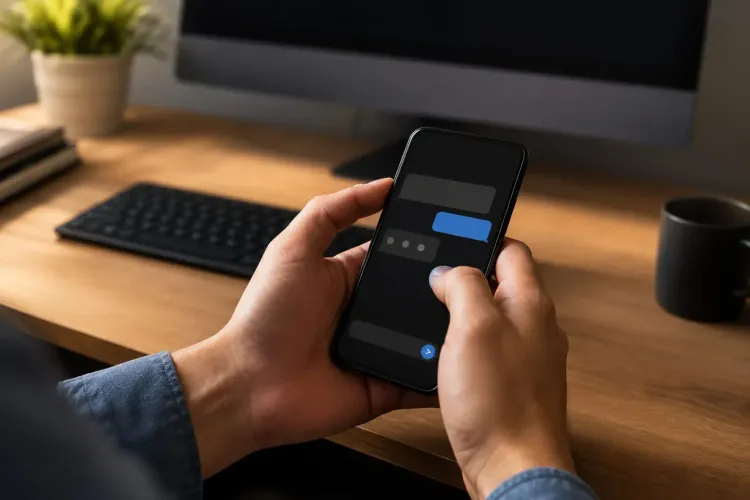
Prohibited features include typing bubbles , avatars , conversation storage, sessions exceeding two hours , and impersonation of real people.
Companies violating the ban could face civil penalties of up to $5,000 per affected minor ; withholding research data could cost up to $10 million .
The bill authorises $3 million for scientific research and $5 million for parent and educator outreach programmes.
An interagency task force would be established to assess mental health risks of chatbot use among young people.
Co-sponsors include Representatives Chris Deluzio , Tom Suozzi , and Bonnie Watson Coleman ; multiple health and consumer advocacy groups have endorsed it.
A US federal bill introduced on 28 July would ban artificial intelligence chatbot companies from offering minors features designed to foster emotional dependence, compulsive use, or addiction. The Addictive Design Act, tabled by Democratic Representative Becca Balint of Vermont, marks one of the first legislative attempts in the United States to directly regulate AI chatbot design as a child safety issue.
What the Bill Prohibits
The legislation would bar companies from allowing young people to access chatbots containing features known to increase addiction, unhealthy emotional attachment, or compulsive use. Specifically identified as potentially addictive features are typing bubbles, avatars, and the storage and use of personal information drawn from previous conversations.
The bill also flags features that require further engagement or payment to continue a conversation, allow conversations to last more than two hours, or involve impersonating a real person. Companies found in violation could face civil penalties of up to $5,000 per affected minor.
Why Balint Introduced the Legislation
The bill arrives as teenagers increasingly turn to AI chatbots for mental health support — a trend that has accelerated sharply over the past two years. According to material released by Balint's office, most chatbots are not designed to respond safely when a young person is experiencing a mental health crisis.
'Technology companies have spent years learning how to capture our attention and keep us engaged for as long as possible. They should not be allowed to apply those same tactics to vulnerable kids who may be turning to an AI chatbot during a mental health crisis,' Balint said. She added: 'We can't make the same mistake with AI. We need clear rules, research, and accountability before more families are forced to suffer the consequences.'
Research Funding and Oversight Mechanisms
The measure would establish an interagency task force to recommend ways to address mental health risks associated with chatbot use among young people. It would also authorise $3 million for scientific research and $5 million for outreach programmes to help parents and educators identify warning signs of chatbot dependency.
Companies would be required to provide relevant data to researchers receiving grants under the programme. Refusing to do so could attract penalties of up to $10 million. Additionally, companies using age-verification systems would be required to minimise data collected and delete it within 24 hours.
Expert and Legislative Support
Rachel Madley, executive director of the Center for Health and Democracy, said: 'AI chatbots should never be designed to keep young people emotionally dependent or endlessly engaged at the expense of their mental health.'
Dr Marketa M. Wills, CEO and medical director of the American Psychiatric Association, acknowledged that AI could improve mental health care but stressed it must be grounded in evidence. 'AI chatbots should never replace the physician-patient relationship, which remains essential to safe, evidence-based, patient-centered care,' she said.
Representatives Chris Deluzio, Tom Suozzi, and Bonnie Watson Coleman are co-sponsoring the legislation. Several mental health, social work, and consumer advocacy organisations have also endorsed the bill.
If passed, the Addictive Design Act would represent a significant shift in how the US regulates AI products aimed at — or accessible to — children, setting a precedent that other democracies may follow.
Point of View
Not content — a meaningful departure from how social media regulation has been framed so far. Critics of past tech-safety bills have argued that content moderation is a whack-a-mole game; regulating the structural hooks (typing bubbles, memory features, session length) goes closer to the root. The $5,000-per-minor penalty, however, may prove too modest to deter large platforms where user acquisition costs already run into multiples of that figure. The more consequential lever is the $10 million data-withholding penalty, which could force companies to open their engagement-design research to independent scrutiny for the first time. Whether the bill survives a divided Congress is another matter — but its framing will likely shape the next round of AI safety debates globally.
NationPress
26 Oct 2026
Frequently Asked Questions
What is the Addictive Design Act?
The Addictive Design Act is a US federal bill introduced by Democratic Representative Becca Balint of Vermont on 28 July, which would prohibit AI chatbot companies from making addiction-fostering design features available to minors. It targets specific features such as typing bubbles, avatars, conversation memory, and sessions longer than two hours.
What penalties do companies face under the bill?
Companies could face civil penalties of up to $5,000 for each minor affected by prohibited addictive design features. Separately, companies that refuse to share data with authorised researchers could face penalties of up to $10 million.
Why is this bill being introduced now?
The bill comes as teenagers are increasingly using AI chatbots for mental health support, yet most chatbots are not equipped to respond safely during a mental health crisis, according to material from Balint's office. Lawmakers argue that without regulation, AI platforms risk replicating — and amplifying — the harms already associated with addictive social media design.
What research funding does the bill provide?
The legislation would authorise $3 million for scientific research into chatbot-related mental health risks and $5 million for outreach programmes to help parents and educators identify warning signs of chatbot dependency in young people.
Who supports the Addictive Design Act?
The bill is co-sponsored by Representatives Chris Deluzio, Tom Suozzi, and Bonnie Watson Coleman. It has also received endorsements from several mental health, social work, and consumer advocacy organisations, as well as the American Psychiatric Association.