US Congressman grills Texas State University over H-1B hire for PR role
Synopsis
A sitting US congressman is demanding that a Texas public university explain why it renewed an H-1B contract for a PR role when the school itself graduates around 140 American PR students each year — and the employee first entered as an international student. The letter lands as Texas Governor Abbott moves to ban H-1B hiring at all state universities statewide.
Key Takeaways
Congressman Chip Roy sent a formal letter to Texas State University President Kelly R.
Damphousse questioning the renewal of an H-1B visa contract for a public relations specialist.
The employee originally entered Texas State as an F-1 international student before graduating and being hired by the university.
Texas State awards roughly 140 PR degrees annually; Roy questioned why a US citizen graduate was not hired instead.
Governor Greg Abbott froze new H-1B petitions at state institutions on 27 January until 31 May 2027 and on 19 August called for a full legislative ban.
Roy cited a 2019 academic study finding most H-1B workers possess skills available in the US labour market.
Texas State has been given until 3 September to provide detailed disclosures on all current H-1B employees and recruitment practices.
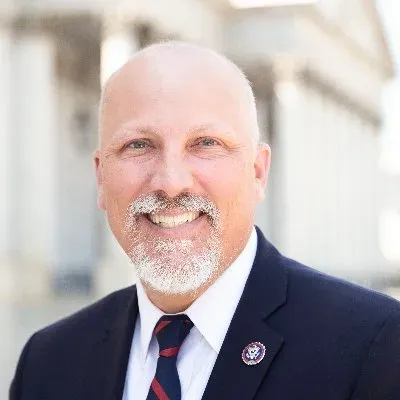
Republican Congressman Chip Roy, who represents Texas' 21st Congressional District, has formally demanded that Texas State University justify its continued employment of an H-1B visa holder in a public relations specialist role, questioning whether the institution made a genuine effort to hire an American graduate first. The letter, released by Roy's office on Monday, 24 August, targets a contract renewal — not a new petition — but raises systemic questions about the university's foreign worker practices.
What Triggered the Letter
Texas State had renewed the existing contract of a foreign national who had originally entered the university as an F-1 international student, graduated, and then secured employment at the same institution. The university clarified that the H-1B filing was for an existing employee rather than a fresh hire, but Roy said that explanation, while offering some clarity, deepened his concerns about the university's broader recruitment pipeline.
Roy pointed out that Texas State awards approximately 140 Bachelor of Science degrees in public relations annually. He questioned why the university could not fill the position with one of its own US citizen graduates rather than retaining a visa holder. He also raised the possibility that the university may be systematically facilitating a pathway from F-1 student status to Optional Practical Training (OPT) and ultimately to the H-1B programme for longer-term employment.
The Broader Texas Crackdown on H-1B
Roy's letter arrives amid a statewide push by Texas Governor Greg Abbott to curtail H-1B usage at public institutions. On 27 January, Abbott directed state agencies and universities to freeze new H-1B petitions until 31 May 2027 and conduct a comprehensive review of the programme. On 19 August, he went further, calling on the state legislature to outright prohibit higher education institutions from employing H-1B recipients across Texas. Roy asked Texas State to explain how it is complying with Abbott's January directive.
Roy's Key Allegations and Data
The congressman cited recent data showing Texas among the leading states for Labour Condition Applications filed by employers seeking H-1B workers. He alleged that employers and educational institutions may be bypassing qualified Texans in favour of lower-cost foreign labour. Roy also referenced a 2019 academic evaluation that found, in his words, that 'most H-1B workers have no more than ordinary skills, skills that are available in the U.S. labour market.' He backed stricter scrutiny of H-1B applications by the Trump administration, arguing it could help verify whether applicants possess genuinely specialised skills not available domestically.
'The H-1B visa program does not serve the interests of Texas nor the nation,' Roy wrote in the letter.
What Roy Has Demanded From the University
Roy has set a response deadline of 3 September and requested extensive disclosures from Texas State, including the total number of H-1B holders currently employed, their occupations, qualifications, specialised skills, and workplaces within the institution. He also sought salary data from the dates of hire, prevailing wages for their roles, and details on whether workers entered through the capped lottery or were cap-exempt. Additionally, Roy asked for annual H-1B hiring figures since fiscal year 2020, details of related job postings, and information on public advertisements and recruitment measures used to attract US citizens.
Whether Texas State's response satisfies Roy — or triggers further legislative action — could set a precedent for how public universities across Texas navigate the H-1B programme going forward.
Point of View
But it surfaces a genuine structural question that public universities have largely avoided: when an institution both trains domestic graduates and employs foreign visa holders in the same field, the burden of justification should be high. The F-1-to-OPT-to-H-1B pipeline Roy describes is not unique to Texas State — it is a well-documented pattern at universities nationwide, and one that federal and state regulators have historically under-scrutinised. Abbott's statewide freeze and now a potential legislative ban represent an unusually aggressive state-level intervention in a federally governed visa programme, raising constitutional questions that the courts may eventually have to resolve. The real test will be whether these moves produce genuine hiring outcomes for American graduates or serve primarily as political signalling ahead of the 2026 election cycle.
NationPress
25 Aug 2026
Frequently Asked Questions
Why is Congressman Chip Roy targeting Texas State University over H-1B?
Roy sent a formal letter demanding the university justify renewing an H-1B contract for a public relations specialist role, arguing that Texas State graduates roughly 140 American PR students each year and should have prioritised a US citizen hire. The employee in question had originally joined as an F-1 international student before being hired by the university.
What is Texas Governor Greg Abbott's position on H-1B visas at state universities?
Abbott directed state agencies and universities to freeze new H-1B petitions on 27 January until 31 May 2027 and ordered a programme review. On 19 August, he called on the state legislature to permanently ban higher education institutions from employing H-1B recipients statewide.
What information has Roy demanded from Texas State University?
Roy has asked for a full disclosure by 3 September, including the number of H-1B holders currently employed, their roles, qualifications, salaries from hire dates, prevailing wages, cap or cap-exempt status, annual hiring figures since fiscal year 2020, and details of recruitment efforts targeting US citizens.
What did the 2019 academic study cited by Roy find about H-1B workers?
The study, cited in Roy's letter, reportedly concluded that 'most H-1B workers have no more than ordinary skills, skills that are available in the U.S. labour market.' Roy used this finding to argue that the programme is being misused to replace available domestic talent rather than fill genuine skill gaps.
What is the F-1 to H-1B pathway Roy raised concerns about?
Roy questioned whether Texas State systematically facilitates a route where international students enter on F-1 visas, transition to Optional Practical Training (OPT) after graduation, and are then sponsored for H-1B status for long-term employment — effectively keeping foreign nationals in roles that could go to US citizen graduates.