UP SHG women firms cross ₹5,716 crore in dairy business since 2019

Synopsis
Five SHG-backed firms in rural Uttar Pradesh have quietly built a ₹5,716 crore dairy business since 2019 — with 3.88 lakh women collecting 12.5 lakh litres of milk daily across 31 districts. It is one of India's largest women-led rural dairy networks, and it is still expanding.
Key Takeaways
Five SHG-linked companies under the UP Rajya Gramin Ajivika Mission have recorded a combined turnover of ₹5,716.26 crore since 2019 .
More than 3.88 lakh women are associated with these firms across 31 districts and 6,500+ villages .
The companies collectively collect approximately 12.5 lakh litres of milk every day.
Operations span over two dozen cities including Varanasi , Ayodhya , Gorakhpur , Jhansi , and Bareilly .
The model aims to reduce rural-to-urban migration by creating local income opportunities for women.
Further expansion across more districts is reportedly planned, though no timeline has been announced.
Five companies formed under Self-Help Groups (SHGs) affiliated with the Uttar Pradesh Rajya Gramin Ajivika Mission have collectively recorded a business turnover of approximately ₹5,716.26 crore since 2019, marking a significant milestone in the state's rural dairy economy. More than 3.88 lakh women are now associated with these enterprises, which span 31 districts and over 6,500 villages across Uttar Pradesh.
Scale of Daily Operations
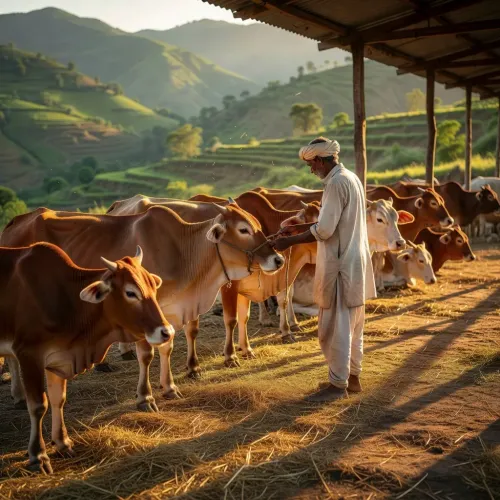
The five women-led milk producer companies collectively handle approximately 12.5 lakh litres of milk every day, covering the full value chain from livestock rearing and milk collection to processing and marketing. Their operations extend across cities including Chitrakoot, Hamirpur, Jalaun, Jhansi, Lalitpur, Mahoba, Varanasi, Ayodhya, Gorakhpur, Bareilly, and more than two dozen other urban centres.
An organised milk collection system has been a key enabler, making it easier for women producers in remote rural belts to access markets that were previously out of reach. This structured approach has transformed what was once a household activity into a formalised, income-generating enterprise.
What Officials Said
Arun Kumar, Director of the Uttar Pradesh State Rural Livelihood Mission, said women dairy producers are emerging as a new force in the rural economy. According to Kumar, companies established through women's groups are connecting women with the entire value chain — from production to business operations — positively impacting their incomes and the economic activity of villages.
He added that increased participation in livestock rearing, milk collection, and allied activities is giving momentum to the local economies of rural households.
Policy Push Under Mission Framework
The initiative operates under the Rajya Gramin Ajivika Mission, which channels SHGs towards livelihood activities and entrepreneurship. A stated objective of the programme is to provide women with local income-generating opportunities, reducing dependence on migration to urban centres for employment.
Dairy farming has emerged as a central pillar of this effort. Livestock rearing, traditionally viewed as a domestic activity, is being systematically repositioned as a viable commercial enterprise — with women's group companies serving as the institutional vehicle for that transition.
Broader Economic Impact
The model's reach — already covering more than 6,500 villages across 31 districts — is being linked to Uttar Pradesh's wider economic ambitions. By connecting women with production, entrepreneurship, and markets, the programme is reportedly expanding economic activity in rural areas, enhancing purchasing power of rural households, and boosting local businesses. Plans for further geographic expansion are reportedly underway, though a specific timeline has not been disclosed.
Point of View
716 crore turnover across five women-run dairy companies is a number that deserves scrutiny beyond the headline — specifically, how much of that revenue is flowing back to the 3.88 lakh women as net income, and not just gross throughput. The daily collection of 12.5 lakh litres is operationally impressive, but the programme's real test is whether it is closing the rural income gap or simply formalising low-margin activity at scale. With expansion plans underway and no independent income-impact data disclosed, the model warrants transparent reporting on per-woman earnings — not just aggregate turnover.
NationPress
25 Aug 2026
Frequently Asked Questions
What is the UP Rajya Gramin Ajivika Mission's SHG dairy programme?
It is a state-run initiative under the Uttar Pradesh Rajya Gramin Ajivika Mission that organises rural women into Self-Help Groups and channels them into dairy-linked enterprises — covering milk production, collection, processing, and marketing. Five companies formed under this framework have recorded a combined turnover of ₹5,716.26 crore since 2019.
How many women are part of these SHG dairy companies in UP?
More than 3.88 lakh women are currently associated with the five SHG-linked milk producer companies. Their operations span over 6,500 villages across 31 districts of Uttar Pradesh.
How much milk do these companies collect daily?
The five companies collectively collect approximately 12.5 lakh litres of milk every day. An organised collection system connects women producers in remote rural areas to processing and marketing channels.
Which districts and cities are covered under this dairy network?
The network covers 31 districts, with operations in cities including Chitrakoot, Hamirpur, Jalaun, Jhansi, Lalitpur, Mahoba, Varanasi, Ayodhya, Gorakhpur, Bareilly, Rampur, and more than two dozen other locations across Uttar Pradesh.
What is the broader goal of the SHG dairy model in UP?
The programme aims to provide rural women with local income-generating opportunities, reducing the need to migrate to cities for work. By formalising livestock rearing and dairy operations through women-led companies, it seeks to raise rural household incomes and strengthen village-level economic activity.