Is the US Defense Strategy Prioritizing China and the Indo-Pacific?
Click to start listening
Synopsis
The United States has made a bold declaration in its 2026 National Defense Strategy, prioritizing China and the Indo-Pacific as crucial to national security. This shift in focus aims to maintain global economic power and safeguard U.S. interests, highlighting the growing importance of regional dynamics in shaping future geopolitical landscapes.
Key Takeaways
- China and the Indo-Pacific are central to U.S. national security.
- The region is projected to comprise over half of the global economy.
- The U.S. strategy focuses on preventing dominance by any single power.
- India's role in the Indo-Pacific is increasingly significant.
- The military posture aims to support diplomacy and stability.
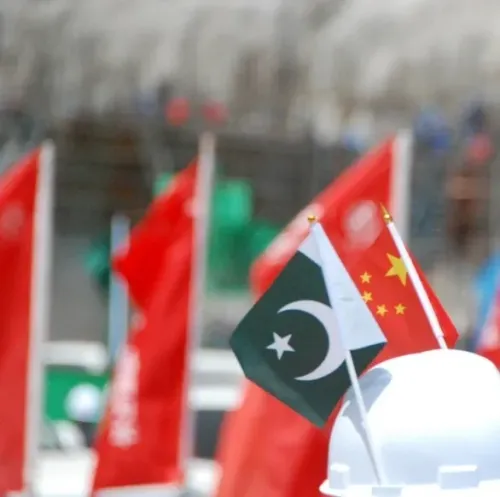
Washington, Jan 25 (NationPress) The United States has positioned China and the Indo-Pacific region at the forefront of its national security agenda, warning that control over this area will dictate global economic dominance and significantly influence America’s security, freedom, and prosperity. This insight comes from the 2026 National Defense Strategy released by the Department of War.
The strategy asserts that the Indo-Pacific “will soon account for over half of the global economy,” rendering American engagement in the region a crucial national interest. It warns that should China or any other nation achieve dominance there, it would possess the capability to “effectively block American access to the world's economic core,” leading to lasting repercussions for US economic vitality and industrial growth.
Characterizing China as “the second most powerful nation globally,” the document underscores the “rapid, extensive, and high-quality military expansion” by China, particularly in forces geared towards operations in the Western Pacific and beyond. While recognizing China’s domestic issues, the strategy indicates that Beijing has demonstrated an ability to “invest significantly in its military” with effectiveness.
Spanning 26 pages, the unclassified version of the strategy emphasizes that the goal of Washington is not to provoke conflict or instigate regime change, but to thwart any single power from achieving dominance in the region. “Our aim is straightforward: To prevent anyone, including China, from dominating us or our allies,” it states, asserting that the United States does not seek to “subjugate China” or to “humiliate them.”
Instead, the Pentagon intends to adopt what it refers to as “deterrence by denial,” focused on ensuring that any aggressive actions are thwarted before they commence. As part of this strategy, the US will “establish a robust denial defense along the First Island Chain” and encourage regional allies and partners to enhance their contributions to collective defense.
The strategy emphasizes that the US military presence in the Indo-Pacific is intended to bolster diplomacy, not undermine it. “A decent peace, favorable to Americans but acceptable to China, is achievable,” the document states, reflecting the premise of President Donald Trump’s approach to dealings with Beijing.
Concurrently, the Department of War expresses intentions to enhance military-to-military communications with the People’s Liberation Army to foster “strategic stability,” “deconfliction,” and “de-escalation.” These interactions will be complemented by a clear exhibition of US strength to guarantee that American leaders can negotiate “from a position of power.”
The strategy directly connects the Indo-Pacific to domestic prosperity, contending that US reindustrialization hinges on secure access to regional markets and maritime routes.
While the document expresses a commitment to stability, it also clarifies that the US military will maintain the capability to execute “devastating strikes and operations against targets worldwide,” including directly from the US mainland, to uphold deterrence credibility.
The emphasis on the Indo-Pacific signifies a clear prioritization as the United States aims to balance its global commitments. The strategy notes that while other threats remain, safeguarding the homeland and deterring China are the primary missions influencing force posture and investment choices.
In recent years, India has emerged as a pivotal player in the Indo-Pacific, with increasing economic influence and a growing role in regional security dialogues. US policymakers have increasingly identified the region as the key theater shaping 21st-century geopolitics.
China’s military modernization and territorial claims in the Indo-Pacific have raised concerns among several regional nations, prompting a stronger emphasis on balance-of-power strategies and multilateral cooperation to maintain stability and freedom of navigation.
Point of View
I believe the emphasis on the Indo-Pacific in the U.S. defense strategy reflects a necessary response to evolving global dynamics. While balancing national interests and regional stability is essential, it is crucial to approach these challenges with diplomacy and collaboration, fostering positive relations with all nations involved.
NationPress
25/01/2026
Frequently Asked Questions
What is the focus of the 2026 National Defense Strategy?
The 2026 National Defense Strategy emphasizes the importance of China and the Indo-Pacific region, asserting that control over this area will influence global economic power and America's national security.
How does the U.S. plan to deter aggression in the Indo-Pacific?
The U.S. intends to use a strategy of 'deterrence by denial,' aiming to prevent aggressive actions before they occur and encouraging regional allies to strengthen collective defense.
What role does India play in the Indo-Pacific strategy?
India has emerged as a key player in the Indo-Pacific, gaining economic influence and participating actively in regional security discussions, which are crucial for maintaining stability.
What are the potential consequences of China dominating the Indo-Pacific?
If China were to dominate the Indo-Pacific, it could effectively restrict U.S. access to vital economic resources and markets, with long-term implications for U.S. economic strength.
Is the U.S. seeking to confront China according to the strategy?
No, the strategy aims to prevent any single nation from dominating the region without seeking to provoke confrontation or regime change in China.