Is US Immigration Policy at a Breaking Point?
Synopsis
In a bold declaration, Congressman Glenn Grothman warns that the US immigration policy is at a critical threshold. He emphasizes the need for action to prevent irreversible changes to America's identity amidst rising immigration levels and challenges to existing laws.
Key Takeaways
US immigration policy is at a critical threshold.
Over 15% of the US population is foreign-born.
Annual naturalisations are around 800,000 .
Large-scale immigration could challenge the political culture .
Birthright citizenship interpretations are under scrutiny.
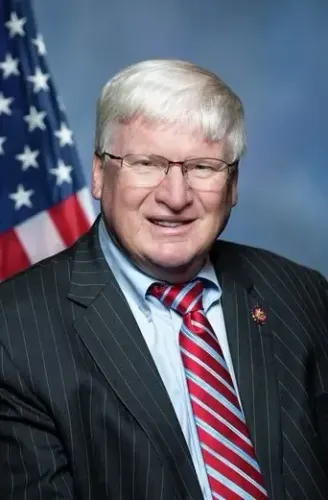
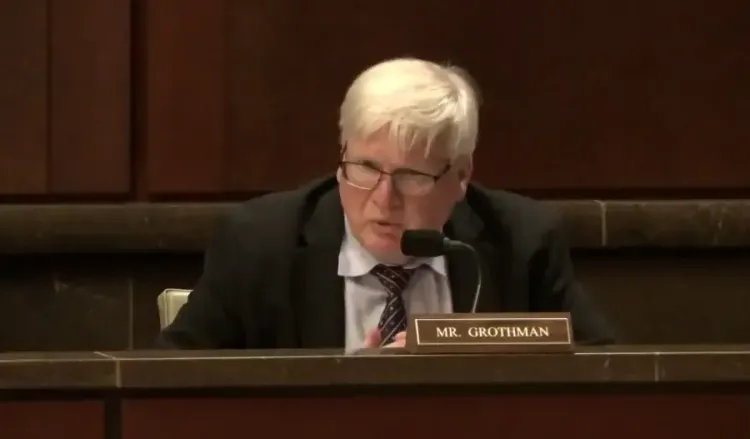
Washington, Jan 24 (NationPress) A prominent Republican Congressman has informed the House that the US immigration policy has hit a critical juncture and cautioned that a lack of action could irrevocably change the nation's identity.
Congressman Glenn Grothman from Wisconsin identified immigration as the most pressing issue confronting Congress and the White House. He asserted that the approach taken will shape whether 'America undergoes fundamental changes.'
Grothman noted that the scale of both legal and illegal immigration is significantly greater than many Americans perceive. 'Currently, around 800,000 individuals are naturalised annually in the United States,' he stated. 'This is a topic that doesn't receive enough attention.'
He emphasized that the national discussion predominantly centers on illegal border crossings, neglecting other critical avenues for entry. Beyond naturalisations, Grothman pointed out that approximately 500,000 individuals enter the country each year on work visas, with another 500,000 arriving on student visas, many of whom remain after their visas lapse.
He criticized the interpretation of birthright citizenship, asserting that the Constitution is being misread when children born to foreign visitors automatically gain US citizenship.
'For instance, if a woman from China travels to San Diego, gives birth, and then departs, our current legal interpretation suggests that child becomes a US citizen,' he explained.
He argued that these policies have escalated immigration to unprecedented levels, with over 15 percent of the US population being foreign-born, a record high.
Grothman revealed that the annual naturalisation figures are approximately four times greater than during his childhood in the 1960s. He contended that the United States has 'no need to apologize' for pursuing limits.
On the issue of illegal immigration, he attributed the surge at the southern border to the Biden administration. While he acknowledged the lack of precise data, he estimated that between 8 to 10 million individuals have entered the country unlawfully during this period.
'In addition to all these other people, between 8 and 10 million have been allowed into the country,' he remarked.
Grothman asserted that the matter transcends mere statistics. He expressed concerns that extensive immigration could undermine the nation’s political culture and commitment to limited government. 'Some newcomers may not uphold our Constitution,' he warned, cautioning that elections might pivot towards demands for government benefits over civic responsibility.
In response to accusations of racism, Grothman contended that US immigration trends do not support such claims. He listed the primary countries from which naturalised citizens originate: Mexico, India, the Philippines, the Dominican Republic, Cuba, Vietnam, China, El Salvador, Jamaica, and Colombia.
'It seems peculiar for a racist nation to permit the top ten nationalities, which critics often label as people of color, to immigrate here,' he stated.
Grothman criticized the lax enforcement of asylum laws, claiming it undermines the entire immigration framework. He stated that if individuals believe they can enter the US illegally and remain indefinitely, it effectively nullifies immigration law.
He condemned governors and mayors who restrict collaboration with federal immigration authorities, citing states like Illinois, Minnesota, New York, and California. He warned that such policies signal a lack of law enforcement.
'What would occur if word spread that individuals could remain simply by reaching these states?' he questioned, suggesting it would lead to overwhelming migration from nations like China, India, and across Africa.
To avert this scenario, Grothman asserted that the United States must rigorously enforce existing laws and limit the number of new citizens. He proposed capping naturalisations at around 800,000 annually or possibly fewer.
Moreover, he argued that global conditions have evolved since prior migration eras, stating that poverty in much of the developing world has significantly decreased, thus weakening the argument for open borders.
'We must enforce our immigration laws,' he said, while admitting this would be a challenging and contentious endeavor.
He urged future presidents to confront state and local officials opposing federal enforcement. The president, he emphasized, must possess 'the courage and moral fortitude' to deport individuals who unlawfully reside in the country.
Point of View
I recognize the concerns raised by Congressman Grothman regarding immigration policy. While his arguments highlight the urgency of the situation, it is essential to engage in a constructive dialogue that balances security, compassion, and the values that define our nation. The discussion must focus on sustainable solutions that respect the rule of law while also addressing humanitarian needs.
NationPress
22 Sept 2026
Frequently Asked Questions
What are the main concerns regarding US immigration policy?
Congressman Grothman highlights the unprecedented levels of immigration, the interpretation of birthright citizenship, and the potential for large-scale immigration to undermine the nation's political culture.
How many people are naturalised in the US each year?
Approximately 800,000 individuals are naturalised annually in the United States.
What impact does illegal immigration have on the US?
The Congressman argues that illegal immigration could lead to a shift in elections towards demands for government benefits rather than civic responsibility.
What is the proposed limit on naturalisations?
Grothman suggests capping naturalisations at around 800,000 per year or possibly even fewer.
How does immigration affect US identity?
Grothman warns that unchecked immigration could lead to irreversible changes in America's character and identity.