US-Iran war raises fears of weakened China focus in Indo-Pacific
Synopsis
The US war with Iran isn't just a Middle East story — it's a China story. Congressional alarm at the Pentagon budget hearing reveals a growing fear that America's carrier groups and military bandwidth are being consumed by an immediate conflict while its principal long-term rival quietly expands its reach across the Pacific.
Key Takeaways
Congress raised concerns at a Pentagon budget hearing on 30 April that the US-Iran war is diverting military focus from China .
House Armed Services Committee chairman Mike D.
Rogers described an "unprecedented global threat environment" with China at its centre.
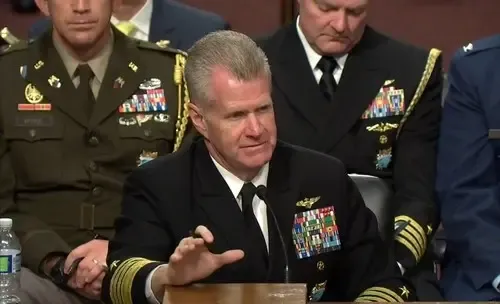
Joint Chiefs Chairman Dan Caine acknowledged strategic trade-offs, saying deployments reflect evolving security priorities.
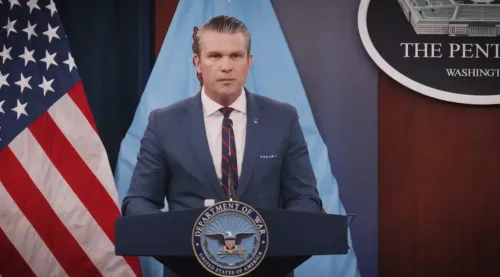
Defence Secretary Pete Hegseth defended the approach, insisting the US military can address threats globally and maintain deterrence across regions.
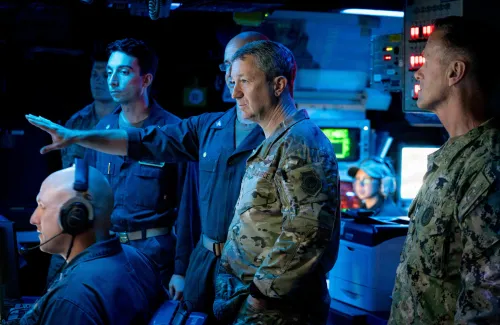
Lawmakers warned that diverting assets — including carrier strike groups — to the Middle East could limit US response capability in the Indo-Pacific .
China's shipbuilding capacity and rising defence spending were cited as key indicators of accelerating strategic competition.
The ongoing US war with Iran is fuelling concerns in Congress that Washington's military attention may be drifting away from its long-term strategic priority of countering China, as lawmakers warn of mounting strain on American resources and deployments. The alarm was raised at a Pentagon budget hearing on 30 April, where legislators pointed to the heavy concentration of US forces in the Middle East at a time when Beijing is rapidly expanding its military reach.
Lawmakers Sound the Alarm
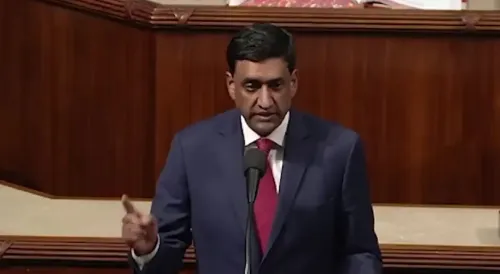
House Armed Services Committee chairman Mike D. Rogers told the hearing that the United States faces
Point of View
And the Iran conflict is forcing that reckoning into the open. The concern isn't just about carrier groups — it's about signalling. Every month that US military bandwidth is consumed by the Middle East is a month Beijing reads as strategic breathing room in the Pacific. Hegseth's assurances that the military can manage global threats simultaneously are the kind of claim that sounds credible in peacetime but frays under the arithmetic of simultaneous deployments. The deeper question mainstream coverage is missing is whether Washington has a credible Indo-Pacific plan that does not depend on the Iran conflict ending quickly — and there is little evidence it does.
NationPress
15 Sept 2026
Frequently Asked Questions
Why is the US-Iran war raising concerns about China?
The US-Iran war is consuming significant military resources, including carrier strike groups deployed to the Middle East, which lawmakers fear limits Washington's capacity to respond quickly to developments in the Indo-Pacific — the primary theatre for long-term strategic competition with China. Congressional members raised this concern at a Pentagon budget hearing on 30 April.
What did House Armed Services Committee chairman Mike D. Rogers say?
Rogers said the United States faces "an unprecedented global threat environment," with China playing a central role. He warned that Beijing's military has evolved from a largely defensive force into one capable of projecting power well into the Pacific, backed by rapid investment in ships, missiles, and space assets.
How did Joint Chiefs Chairman Dan Caine respond to the concerns?
Dan Caine acknowledged that strategic trade-offs are inherent in military planning, telling lawmakers: "There's always trade-offs in all of these things." He said deployments are shaped by evolving security priorities and that decisions are made after weighing risks and options across multiple regions.
What is Defence Secretary Pete Hegseth's position?
Hegseth defended the administration's approach, asserting that the US military remains capable of addressing threats globally and that the strategy is designed to maintain deterrence across regions while managing the immediate challenge posed by the Iran conflict.
Why is the Indo-Pacific considered a priority for US strategy?
The Indo-Pacific is regarded as the central theatre for long-term US strategic competition, primarily because of China's rapid military expansion — including the world's largest shipbuilding capacity by volume and growing defence spending. Washington has been strengthening partnerships with regional allies such as Japan, Australia, and South Korea to counter Beijing's growing influence.