Has the US Initiated Phase Two of the Gaza Peace Plan with Technocratic Governance?
Click to start listening
Synopsis
The United States has initiated phase two of its Gaza peace plan with the establishment of a technocratic governance model, aiming to remove Hamas and the Palestinian Authority from control. This unprecedented move marks a significant shift towards rebuilding and stabilizing the region amid ongoing humanitarian efforts.
Key Takeaways
- The US has initiated phase two of its Gaza peace plan.
- The National Committee for the Administration of Gaza (NCAG) will govern.
- The focus is on demilitarization and reconstruction.
- Over 53,000 aid trucks have entered Gaza post-ceasefire.
- Regional mediators are crucial for the plan's success.
Washington, Jan 15 (NationPress) The United States has transitioned Gaza into a new political structure post-conflict by endorsing a technocratic government and commencing phase two of President Donald Trump's initiative aimed at resolving the ongoing conflict. This marks the inaugural effort supported by the US to displace both Hamas and the Palestinian Authority from their governing roles in the region.
Phase two introduces a transitional governance body, known as the National Committee for the Administration of Gaza (NCAG), and shifts the focus from managing ceasefires to addressing demilitarisation, governance, and reconstruction, as outlined by two senior officials of the administration.
“Today, representing President Trump, we are pleased to announce the initiation of Phase Two of the President’s 20-Point Plan to Conclude the Gaza Conflict, transitioning from ceasefire management to a focus on demilitarisation, governance, and recovery,” stated US Special Envoy for Peace Missions Steve Witkoff in an official statement.
The officials indicated that the NCAG was meticulously chosen following discussions with regional mediators and Palestinian groups, aiming to operate as a non-partisan, service-oriented body dedicated to reviving Gaza and enhancing the living conditions for its inhabitants.
This shift is characterized as the first instance in years where Gaza will not be overseen by either Hamas or the Palestinian Authority.
The decision to advance to phase two comes amidst ongoing efforts to resolve lingering hostage situations, as reported by officials.
All living hostages have been accounted for, and the remains of 27 out of 28 deceased hostages have been retrieved. Efforts are still in progress to locate the final remains while ensuring the ceasefire remains intact, the official added.
Witkoff expressed that Washington anticipates Hamas fulfilling its remaining commitments under the agreement, which includes the recovery of the last deceased hostage.
“Failure to comply will result in significant repercussions,” he warned.
Senior officials recognized the doubts surrounding the likelihood of Hamas fully disarming, noting that the group has invested years in constructing its military capabilities.
Nonetheless, they emphasized that dismantling terrorist capabilities is critical for Gaza’s future, asserting that reconstruction cannot advance if the prospect of further conflict looms.
Officials outlined that eliminating terror infrastructure and heavy weaponry are primary objectives, essential for preventing Gaza from slipping back into cycles of warfare. The intention is to foster conditions conducive to sustainable rebuilding efforts and improved daily life.
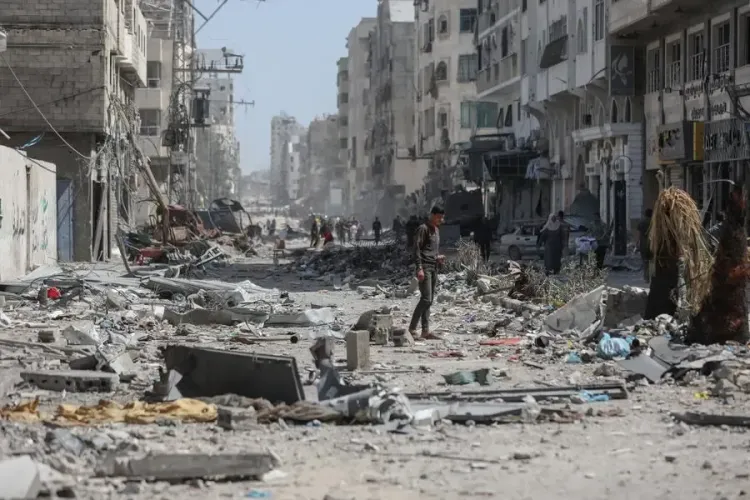
The officials cited substantial humanitarian progress during phase one, reporting that over 53,000 aid trucks entered Gaza post-ceasefire.
More than two million pallets of goods were delivered, vaccination campaigns reached tens of thousands of children, and significant debris removal occurred.
Witkoff also acknowledged the contributions of regional mediators in his social media remarks, expressing gratitude towards Egypt, Turkey, and Qatar for their essential mediation that has facilitated progress thus far.
Officials affirmed that these nations will continue to play a pivotal role as the initiative advances.
Point of View
The announcement of a technocratic governance model in Gaza represents a pivotal moment in Middle Eastern politics. While the intentions behind the US initiative appear aimed at fostering peace and stability, the skepticism surrounding Hamas's disarmament creates a complex landscape. It remains crucial to monitor the developments closely and assess their impact on the humanitarian situation in Gaza.
NationPress
15/01/2026
Frequently Asked Questions
What is the purpose of the National Committee for the Administration of Gaza?
The NCAG is designed to function as a non-political, service-oriented body aimed at rebuilding Gaza and enhancing the daily lives of its residents.
What are the primary goals of phase two of the peace plan?
Phase two focuses on demilitarization, governance, and reconstruction, transitioning from merely managing ceasefires.
What are the consequences if Hamas does not fulfill its obligations?
If Hamas fails to meet its commitments, it may face serious repercussions from the US government.
How has the humanitarian situation improved in Gaza?
During phase one, significant humanitarian aid was delivered, with over 53,000 aid trucks entering Gaza and extensive debris removal.
Which countries are involved in the mediation efforts?
Egypt, Turkey, and Qatar have played pivotal roles in mediating the situation and facilitating progress in the peace plan.