Is the UNGA President Advocating for UNSC Reforms in a Critical Moment?
Synopsis
The UN is at a crucial crossroads, with mounting calls for reforming the Security Council. President Annalena Baerbock emphasizes the need for change, signaling a potential shift in how global governance can address pressing issues effectively.
Key Takeaways
Urgent need for UNSC reform .
General Assembly President emphasizes reform .
UN faces multiple global crises .
Pact for the Future adopted .
Inter-Governmental Negotiations have stalled .
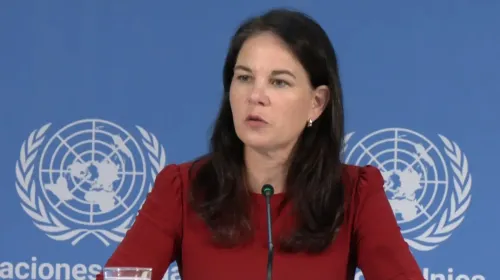
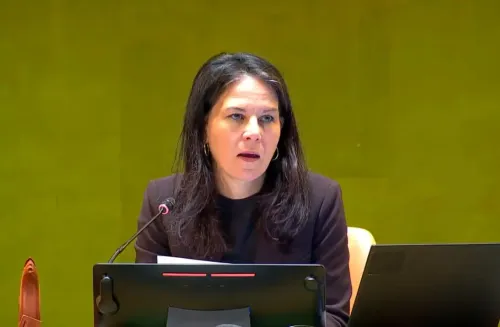
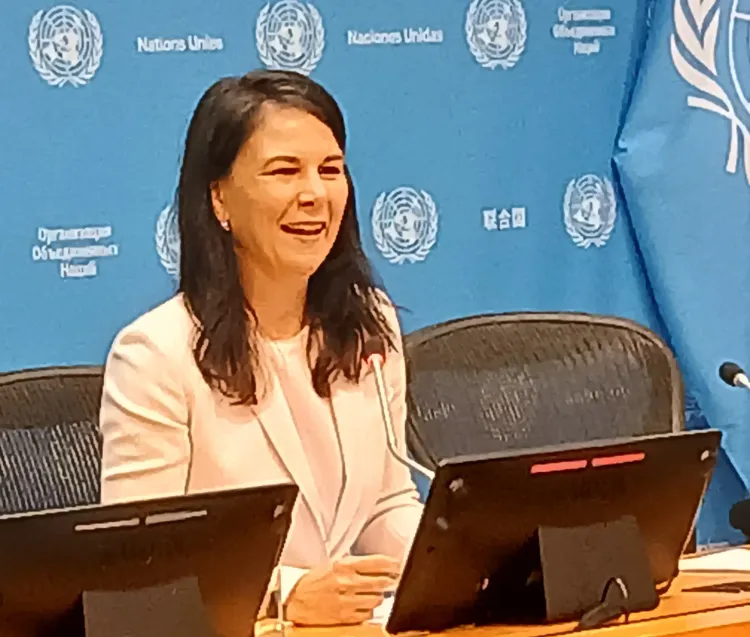
United Nations, Jan 15 (NationPress) In light of the global organization encountering an urgent make-or-break moment and the Security Council facing paralysis, General Assembly President Annalena Baerbock has highlighted the necessity for reforming the UN's top decision-making body.
During her briefing to the Assembly on her priorities this past Wednesday (local time), she criticized the Council, stating, "As the most prominent organ of the United Nations, its failure to act in situations involving breaches of international peace and security undermines the credibility of the entire system."
At this crucial juncture, as initiatives are underway to enhance the UN's relevance, she emphasized that the Council cannot evade reform.
"In this context, I appointed two co-chairs early in the session to propel efforts aimed at refining reform proposals, exploring next steps, in accordance with the calls in the Pact for the Future for a consolidated model" for a reformed Council, she indicated.
She designated Permanent Representatives Tareq M.A.M. Albanai from Kuwait and Lise Gregoire-van Haaren from the Netherlands to lead the Council reform initiative known as the Inter-Governmental Negotiations.
The Pact for the Future, which was adopted in September during the Assembly's high-level meeting, commits the organization to becoming more efficient and aligned with contemporary global needs.
Japan’s Deputy Permanent Representative Mikanagi Tomohiro remarked at the session, "Reform of the Security Council is critically needed as reiterated in the Pact for the Future."
He added that the model for a reformed Council should involve the expansion of both permanent and non-permanent membership categories, a stance supported by a majority of Member States.
It ought to serve as a foundation for future text-based negotiations, Mikanagi said.
India, along with Japan, Brazil, and Germany, forms the G4, which collectively advocates for Council reform.
The Inter-Governmental Negotiations have encountered obstacles due to the reluctance of a small number of countries to adopt a negotiating text, hindering progress in the reform process.
To underscore the significance of the crises the world is grappling with, Baerbock began her address by ironically stating, "In ordinary times, I would wish you a happy New Year, but observing the world outside, how 2026 has commenced, in Caracas… Tehran, frankly, happiness is in short supply."
"We are at an even more urgent make-or-break moment than four months ago when I opened the 80th session" of the Assembly, she noted.
On January 3, the US made an incursion into Venezuela and apprehended its leader, Nicolas Maduro, while Iran is currently experiencing widespread protests, with US President Donald Trump threatening to target locations there, Baerbock warned that multilateralism and the UN are under siege.
"Not all nations are equally committed to the Charter and international law," she expressed.
"No nation can rest easy while an increasing number of Member States, including some P5 (permanent members of the Council), violate the core tenets of our Charter," she emphasized.
"This is the time for Member States from all regions—true advocates of the UN and multilateralism—to unite and forge a cross-regional alliance aimed at safeguarding and promoting the principles of this Charter," she concluded.
(Arul Louis can be contacted at arul.l@ians.in)
Point of View
It is crucial to acknowledge the significance of the UN's reform discussions. The issues at hand are not only pertinent to global governance but also reflect the need for a united stand among nations committed to multilateralism.
NationPress
10 Oct 2026
Frequently Asked Questions
What is the current state of the UN Security Council?
The UN Security Council is currently facing paralysis, affecting its ability to address violations of international peace and security.
Who is leading the reform efforts for the Security Council?
General Assembly President Annalena Baerbock has appointed two co-chairs, Tareq M.A.M. Albanai from Kuwait and Lise Gregoire-van Haaren from the Netherlands, to spearhead the reform process.
What is the Pact for the Future?
The Pact for the Future is a commitment adopted by the UN to enhance its efficiency and relevance in addressing contemporary global challenges.
Why is reforming the Security Council important?
Reforming the Security Council is essential to restore its credibility and effectiveness in responding to international crises.
What challenges are hindering the reform process?
The reform process is impeded by the reluctance of a small group of countries to adopt a negotiating text, which is necessary for progress.