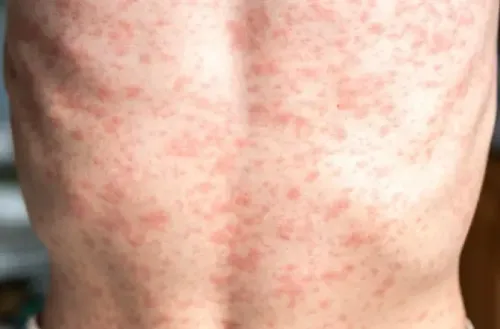
US measles cases hit 5,838 in 2026, highest annual count since 1991
Synopsis
The US has logged its worst measles year since 1991, with 5,838 confirmed cases and 96% involving unvaccinated individuals. Now PAHO has formally stripped the US, Mexico and Bolivia of their measles elimination status — a historic reversal for a region that was the first in the world to eliminate the disease back in 2016.
Key Takeaways
The US has recorded 5,838 confirmed measles cases in 2026 , the highest annual total since 1991 .
About 96 per cent of cases involved unvaccinated individuals or those with unknown vaccination status, according to the CDC .
646 patients (approximately 11 per cent ) have been hospitalised; Pennsylvania alone recorded 1,631 cases and 8 deaths .
The US , Mexico , and Bolivia have lost their measles elimination status after the virus circulated endemically for 12 or more months .
PAHO is urging all countries in the Americas to sustain at least 95 per cent two-dose MMR coverage in every community.
The United States has recorded 5,838 confirmed measles cases in 2026, the highest annual total in the country since 1991, according to the latest figures released by the US Centers for Disease Control and Prevention (CDC). The case count continues to climb, with health authorities warning that declining vaccination coverage is a key driver of the outbreak.
Scale and Spread of the Outbreak
Of the total confirmed cases, 5,820 were reported across 47 US jurisdictions, while an additional 18 cases were recorded among international visitors to the country, the CDC said. Approximately 646 patients — roughly 11 per cent of all confirmed cases — have required hospitalisation, according to CDC data.
About 96 per cent of cases involved individuals who were either unvaccinated or whose vaccination status was unknown, underscoring the central role of immunisation gaps in fuelling transmission. Pennsylvania has emerged as one of the hardest-hit states, recording 1,631 confirmed cases and eight measles-associated deaths as of Friday.
Vaccination Coverage in Decline
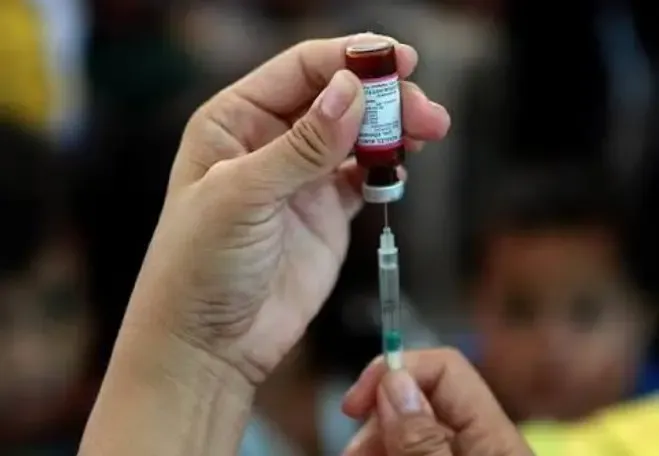
The CDC recommends two doses of the measles, mumps and rubella (MMR) vaccine as the most effective protection against measles. However, CDC data indicate that MMR vaccination coverage among US kindergartners has declined in recent years, creating widening immunity gaps in communities across the country. Public health experts have long warned that coverage must remain above 95 per cent in every community to prevent sustained transmission.
US, Mexico and Bolivia Lose Measles Elimination Status
In a significant regional setback, the Pan American Health Organization (PAHO) announced on Tuesday that the United States, Mexico, and Bolivia have lost their measles elimination status after the virus re-established sustained, endemic transmission in all three countries. The decision followed a review by the Measles, Rubella and Congenital Rubella Syndrome Elimination Regional Monitoring and Re-Verification Commission, which met from 10 to 13 November.
The commission determined that the same measles virus genotype and lineage had circulated uninterrupted for 12 months or more in each country — the threshold for classifying transmission as endemic. PAHO Director Jarbas Barbosa accepted the commission's recommendation to withdraw elimination status from all three nations.
Notably, the Region of the Americas had been the first WHO region to eliminate measles, achieving that milestone in 2016. The region briefly regained its elimination status in 2024 after endemic transmission was interrupted in Venezuela and Brazil, but lost it again in November 2025 following the re-establishment of sustained transmission in Canada.
PAHO's Warning and the Road Ahead
PAHO said in a statement that 'the subsequent loss of elimination status by Bolivia, Mexico and the United States marks a further deterioration in the regional situation and makes the path towards restoring elimination more challenging.' The organisation urged governments across the Americas to strengthen vaccination campaigns, disease surveillance systems, and outbreak response infrastructure.
With the regional measles elimination record now significantly eroded, public health officials face mounting pressure to reverse the trend — and the window for doing so is narrowing as case counts continue to rise into late 2026.
Point of View
Mexico and Bolivia is not merely a bureaucratic reclassification — it is a public health failure with decades of momentum behind it. The Region of the Americas took until 2016 to become the world's first WHO region to eliminate measles; that achievement has now been effectively dismantled in under a decade. What mainstream coverage underplays is the structural cause: the steady erosion of kindergarten MMR coverage in the US, which the CDC has tracked for years without triggering a proportionate policy response. With 96 per cent of cases tied to unvaccinated or unknown-status individuals, this is less a mystery outbreak than a predictable consequence of declining institutional trust in vaccines. The harder question — how the US rebuilds that trust fast enough to prevent 2026 from becoming a floor rather than a peak — remains unanswered.
NationPress
21 Nov 2026
Frequently Asked Questions
How many measles cases has the US reported in 2026?
The US has reported 5,838 confirmed measles cases in 2026, the highest annual total since 1991, according to the CDC. Of these, 5,820 were recorded across 47 jurisdictions, and 18 involved international visitors.
Why is measles spreading so rapidly in the US?
About 96 per cent of confirmed cases in 2026 involved people who were unvaccinated or whose vaccination status was unknown, according to CDC data. The agency has also noted a decline in MMR vaccination coverage among US kindergartners in recent years, widening community immunity gaps.
What does losing measles elimination status mean for the US?
Losing elimination status means the same measles virus strain has circulated uninterrupted for 12 or more months in the US, meeting PAHO's threshold for endemic transmission. It reverses a milestone the Americas region achieved in 2016 as the first WHO region to eliminate measles.
Which other countries have lost measles elimination status alongside the US?
Mexico and Bolivia have also lost their measles elimination status, PAHO announced on Tuesday. The decision was based on findings from the Measles, Rubella and Congenital Rubella Syndrome Elimination Regional Monitoring and Re-Verification Commission, which met from 10 to 13 November.
What is PAHO recommending to stop the measles resurgence?
PAHO is urging all countries in the Americas to strengthen vaccination campaigns, disease surveillance, and outbreak response. It specifically recommends sustaining at least 95 per cent coverage with both doses of the MMR vaccine in every community to close immunity gaps and halt further transmission.