US military pivots to China in cyber and special ops strategy
Synopsis
At a Senate hearing on 29 April, US commanders declared China the defining long-term military challenge and warned that adversaries are already pre-positioning disruptive capabilities inside American critical infrastructure. The Pentagon's sweeping 'Cybercom 2.0' overhaul and an AI arms race with Beijing are now at the centre of Washington's defence posture.
Key Takeaways
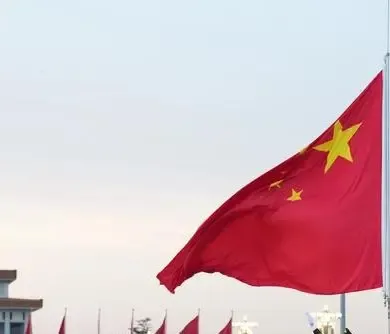
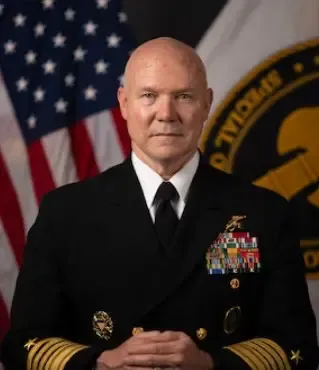
Admiral Frank Bradley told a Senate hearing on 29 April that the US must orient its forces on China as the primary long-term pacing challenge.
General Joshua Rudd stressed that maintaining technological superiority , especially in artificial intelligence , is critical to preserving US military advantages.
Katherine Sutton , Assistant Secretary of Defense for cyber policy , warned adversaries are pre-positioning disruptive capabilities inside US critical infrastructure .
The Pentagon is rolling out "Cybercom 2.0" to strengthen the cyber workforce and accelerate innovation.
Officials described cyber as "the connective tissue of modern warfare" and emphasised Indo-Pacific alliances as central to deterrence against China.
Lawmakers raised concern about personnel strain from sustained high operational tempo across special operations forces.
The United States is sharpening its military focus on China as its primary long-term strategic challenge, with senior commanders warning that cyber capabilities and special operations forces will be critical in maintaining an edge in an increasingly contested global environment. Senior officials made these remarks at a Senate hearing on 29 April, outlining the posture of US Special Operations Command and Cyber Command.
China as the Pacing Threat
Admiral Frank Bradley, testifying before lawmakers, said American forces must simultaneously address multiple threats while remaining oriented toward Beijing. "We must also orient our force on the long-term pacing challenge of China," Bradley told the Senate panel, describing a security landscape shaped by overlapping risks from Russia, Iran, and transnational networks.
He said US forces no longer have "the luxury of focusing on only a single goal or mission," characterising the strategic environment as one defined by what officials termed "simultaneity" — managing competition and conflict across regions and domains simultaneously. This framing reflects a broader shift in US defence posture that has been building since the 2018 National Defense Strategy formally elevated China to the status of primary competitor.
AI and Technological Superiority
Cyber Command leaders stressed that technological competition, particularly in artificial intelligence, is central to countering China's military rise. General Joshua Rudd said maintaining superiority in advanced technologies is essential to preserving US advantages. "I think it's critical that the US has the technological advantage in every aspect of warfighting," he said, adding that Washington must "retain and maintain our advantage" as AI becomes more deeply embedded in military operations.
Lawmakers noted that China is actively leveraging emerging technologies, with officials at the hearing agreeing that Beijing is deploying artificial intelligence in military applications. The exchange underscored the urgency of the technological race between the two powers, a competition that now extends well beyond traditional hardware into software, data, and autonomous systems.
Cybercom 2.0 and Critical Infrastructure Threats
The Pentagon is responding through a sweeping overhaul known as "Cybercom 2.0," aimed at strengthening the cyber workforce and accelerating innovation. Katherine Sutton, Assistant Secretary of Defense for cyber policy, warned that adversaries have moved well beyond passive espionage. "Our adversaries have moved beyond conducting espionage and theft, and are preparing for conflict by pre-positioning disruptive capabilities inside our nation's critical infrastructure," Sutton said.
Sutton also described cyber as "the connective tissue of modern warfare," arguing that integration across domains is essential to counter increasingly sophisticated threats. This framing positions cyber not as a standalone capability but as the backbone linking land, sea, air, and space operations — a doctrinal evolution with significant implications for how the US structures its forces.
Alliances and Special Operations in the Indo-Pacific
Highlighting the growing role of partnerships in countering China, particularly in the Indo-Pacific, Admiral Bradley said strengthening alliances and building partner capacity remain central to deterrence. He pointed to long-standing relationships in the region, emphasising that trust and credibility built over decades enable the United States to share intelligence and support partners facing evolving threats. "Foremost and most important in any strategy of deterrence is to have that stronger alliance," he said.
Special operations forces, which make up a small fraction of the overall military, were described as providing "an indispensable asymmetric advantage," particularly in contested environments where conventional forces may be limited. Lawmakers, however, also raised concern about the pace of operations and strain on personnel, warning that sustained high demand could affect readiness over the long term.
What Comes Next
The hearing signals that Cyber Command and Special Operations Command will face growing expectations — and scrutiny — as the US recalibrates its defence architecture around the China challenge. With Cybercom 2.0 still in rollout and AI integration accelerating, the coming months will test whether institutional reform can keep pace with the speed of the technological competition Washington says it cannot afford to lose.
Point of View
Not merely at the gate. The emphasis on AI superiority is right in direction but raises a harder question — whether bureaucratic reform cycles can match the speed of an adversary that faces fewer institutional constraints. The Indo-Pacific alliance rhetoric is familiar, but its credibility now depends on whether partners see Washington as a reliable anchor given the turbulence in US foreign policy posture more broadly.
NationPress
19 Sept 2026
Frequently Asked Questions
What did US commanders say about China at the Senate hearing on 29 April?
Senior commanders, including Admiral Frank Bradley, told the Senate that China is the United States' primary long-term strategic challenge, requiring the US to orient its cyber and special operations forces toward countering Beijing even while managing threats from Russia, Iran, and transnational networks.
What is Cybercom 2.0?
Cybercom 2.0 is a sweeping Pentagon overhaul of US Cyber Command aimed at strengthening the cyber workforce and accelerating innovation. It was described at the hearing as the US response to adversaries who are rapidly exploiting vulnerabilities in American critical infrastructure.
Why is artificial intelligence central to the US-China military competition?
General Joshua Rudd testified that technological superiority in AI is essential to preserving US military advantages, as China is actively deploying AI in military applications. Officials at the hearing agreed that the AI arms race is now a defining dimension of the broader strategic competition.
What threat to US critical infrastructure did officials describe?
Assistant Secretary of Defense Katherine Sutton warned that adversaries have moved beyond espionage and are pre-positioning disruptive capabilities inside US critical infrastructure, preparing for potential conflict rather than merely gathering intelligence.
How do alliances factor into the US strategy against China in the Indo-Pacific?
Admiral Bradley emphasised that strengthening alliances and building partner capacity are central to deterrence in the Indo-Pacific. He noted that trust and credibility built over decades allow the US to share intelligence and support partners, calling a strong alliance network the most important element of any deterrence strategy.