Sanctions Key Tool to Block Adversaries: US Treasury Official
Synopsis
US Treasury's Jonathan Burke told Congress on April 25 that sanctions are a vital tool to cut adversaries off from American finance — but warned that shell companies, crypto, and alternative payment systems are increasingly being used to evade them, signalling a major strategic rethink in Washington.
Key Takeaways
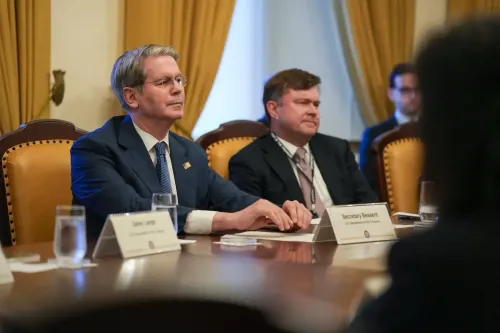
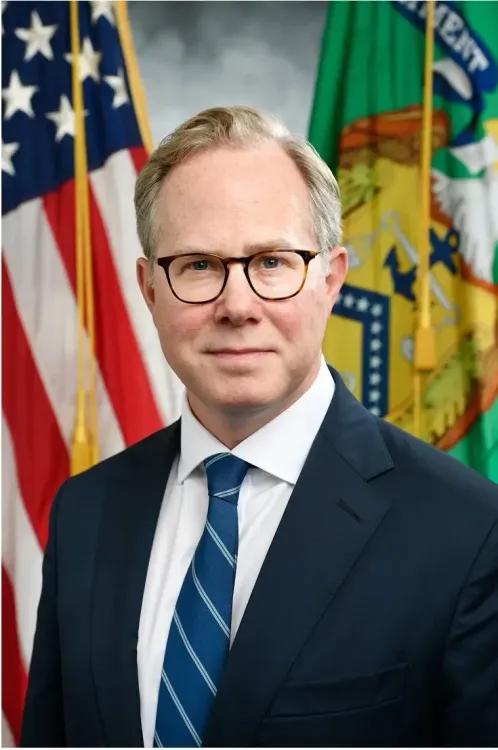
Jonathan Burke , US Treasury Assistant Secretary for Terrorist Financing, testified before a House subcommittee on April 25, 2025 that sanctions are essential to blocking adversaries from the American financial system .
Burke warned that adversaries are using shell companies, digital assets, and alternative payment systems to evade US sanctions with growing sophistication.
The US Treasury is shifting toward a risk-based enforcement approach , directing more compliance resources at higher-risk activities and fewer at lower-risk ones.
Burke stated that sanctions effectiveness should be measured by outcomes and national security results , not by the volume of names added to sanctions lists.
Current compliance practices generate high volumes of false positives , straining financial institutions and diverting resources from genuine threats, Burke acknowledged.
Sanctions remain one tool among many and must be used alongside diplomacy and law enforcement to be fully effective, according to Burke.
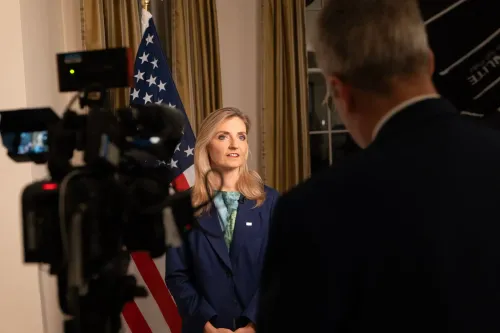
Washington, April 25, 2025 — US Treasury Assistant Secretary for Terrorist Financing Jonathan Burke has affirmed before Congress that sanctions remain one of the most critical instruments available to the United States to isolate adversaries from the American financial system and disrupt illicit financial flows. Testifying before a House subcommittee, Burke outlined both the strengths and evolving challenges of Washington's sanctions framework in an increasingly complex global financial environment.
Burke's Core Argument: Sanctions as Isolation and Deterrence
Burke told lawmakers plainly: "Sanctions can be useful to isolate those sanctions targets and make sure they don't have access to the US financial system." He framed sanctions as serving a dual purpose — direct enforcement and strategic deterrence — capable of freezing assets, blocking financial flows, and restricting access to global markets.
Crucially, Burke stressed that even the threat of sanctions carries weight. "The prospect of sanctions… can be effective at changing behaviour of various actors," he said, signalling that Washington views the sanctions regime not just as a punitive tool but as a behaviour-modification instrument in geopolitical negotiations.
This testimony comes amid heightened global scrutiny of US sanctions policy, particularly as Washington continues to enforce restrictions on Russia, Iran, North Korea, and China-linked entities — all of whom have been actively seeking workarounds to dollar-dominated financial infrastructure.
Adversaries Using Sophisticated Evasion Methods
Burke acknowledged a growing and serious challenge: adversaries are no longer passive in the face of sanctions. "Adversaries are also using increasingly sophisticated methods to evade sanctions," he warned, specifically citing shell companies, digital assets, and alternative payment systems as the primary vectors of evasion.
This is not a new concern — but its urgency has escalated. Since 2022, following sweeping sanctions imposed on Russia after its invasion of Ukraine, Moscow has accelerated its use of third-country intermediaries, cryptocurrency exchanges, and bilateral trade in local currencies to sidestep the SWIFT-based financial system. Iran and North Korea have similarly deepened their use of crypto-based laundering networks, according to multiple UN and OFAC reports.
Burke indicated that Treasury is actively reviewing how its sanctions lists are managed to sharpen their effectiveness. "We're looking at how can we make the list most effective," he said, noting that designations must align directly with national security priorities rather than being applied broadly or reactively.
Compliance Burden on Financial Institutions
One of the more pointed observations Burke made was about the strain sanctions compliance places on US and global financial institutions. He acknowledged that "current compliance practices… often generate high volumes of false positives and divert resources from higher-risk threats."
This is a long-standing industry complaint. Major banks including JPMorgan Chase, Citibank, and HSBC have spent billions annually on sanctions screening infrastructure, yet regulators and compliance officers have repeatedly flagged that over-broad lists create inefficiencies that can paradoxically weaken enforcement by drowning compliance teams in noise.
Burke signalled a shift toward a risk-based enforcement approach — one that would allow financial institutions to concentrate resources on genuinely high-risk transactions rather than treating all flagged names with equal urgency. "It's important that… resources are spent against higher-risk activities and less resources spent against lower-risk activities," he said.
Measuring Impact by Outcomes, Not Volume
In a notable departure from how sanctions effectiveness has traditionally been communicated, Burke said the Treasury Department intends to judge sanctions by results rather than the sheer number of designations. "We don't want to measure the impact of sanctions by how many names we put on a list," he stated.
This reflects a broader recalibration within the Biden and Trump-era Treasury — a recognition that an ever-expanding sanctions list can dilute credibility and create diplomatic friction without delivering proportional national security gains. Critics, including former OFAC officials and foreign policy analysts, have long argued that over-sanctioning risks accelerating global de-dollarisation efforts.
Lawmakers at the hearing pressed Burke on enforcement gaps and the consistency of US sanctions policy, with some raising concerns about whether the current framework is strategically coherent or reactive. Burke maintained that sanctions must work in tandem with diplomacy and law enforcement. "Sanctions can be used for different reasons and to complement other tools," he said.
Broader Implications for Global Finance and US Foreign Policy
Sanctions have evolved from a niche foreign policy instrument into a cornerstone of US national security strategy, now covering terrorism financing, nuclear proliferation, organised crime, cybercrime, and financial fraud. The Office of Foreign Assets Control (OFAC) currently administers over 30 sanctions programs targeting thousands of individuals and entities worldwide.
For India, the implications are significant. Indian banks and businesses engaged with sanctioned entities — particularly in the context of Russian oil imports and trade with Iran — have faced secondary sanctions risks. The Reserve Bank of India and Indian financial institutions have had to navigate an increasingly complex compliance landscape, balancing national energy and trade interests against exposure to US financial system restrictions.
As Treasury moves toward a more outcome-driven, risk-calibrated sanctions framework, global markets and foreign governments will be watching closely. The next major test will likely come in how Washington handles sanctions enforcement related to China-linked technology transfers and continued Russian energy revenues — both of which remain active flashpoints in 2025.
Point of View
Pushing adversaries like Russia, Iran, and increasingly China toward alternative financial architectures. For India, caught between US pressure and its own strategic autonomy, this recalibration offers a narrow but important window: a more risk-based, outcome-focused US sanctions approach could reduce the secondary sanctions threat that has long complicated Indian trade and energy policy.
NationPress
19 Sept 2026
Frequently Asked Questions
What did US Treasury's Jonathan Burke say about sanctions in April 2025?
Jonathan Burke, US Treasury Assistant Secretary for Terrorist Financing, told a House subcommittee on April 25, 2025 that sanctions remain a central tool to isolate adversaries from the American financial system and disrupt illicit activity. He also called for a shift toward risk-based enforcement and measuring sanctions by outcomes rather than the number of designations.
How are adversaries evading US sanctions?
According to Burke, adversaries are using increasingly sophisticated methods including shell companies, digital assets, and alternative payment systems to circumvent US sanctions. These tactics have grown significantly since sweeping sanctions were imposed on Russia following its 2022 invasion of Ukraine.
What is the US Treasury's new approach to sanctions enforcement?
The US Treasury is moving toward a risk-based approach to sanctions enforcement that prioritises higher-risk activities over lower-risk ones. Burke indicated Treasury is also reviewing how sanctions lists are managed to improve effectiveness and align designations with national security priorities.
Why do US sanctions create compliance problems for banks?
Burke acknowledged that current sanctions compliance practices generate high volumes of false positives, diverting resources away from genuinely high-risk threats. This is a longstanding concern among major financial institutions that spend billions annually screening transactions against large and complex sanctions lists.
How do US sanctions affect India and Indian banks?
Indian banks and businesses trading with sanctioned entities — particularly in the context of Russian oil imports and Iran trade — face secondary sanctions risks from the US. As Treasury moves toward a more targeted, risk-based approach, Indian financial institutions may see some easing of compliance pressures, though the core framework remains in place.