USFK chief calls for year-round US-South Korea drills, not just biannual exercises
Synopsis
USFK Commander General Xavier Brunson is pushing to overhaul the US-South Korea exercise model — replacing the two big annual drills with continuous, distributed training throughout the year. The call comes just months after the Ulchi Freedom Shield was cut in half on Trump's orders, raising quiet alarm among alliance planners about readiness against North Korea.
Key Takeaways
USFK Commander General Xavier Brunson on 21 October 2026 called for year-round combined US-South Korea military training, moving beyond the current biannual model.
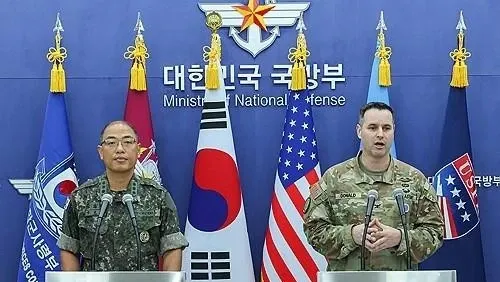
Brunson met JCS Chairman General Jin Yong-sung this week to begin planning the upcoming Freedom Shield spring exercise.
The two allies currently hold two flagship exercises annually: Freedom Shield (FS) in spring and Ulchi Freedom Shield (UFS) in summer.
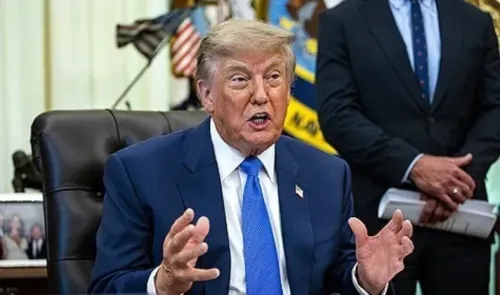
The most recent UFS in August was cut roughly in half following directives from President Donald Trump , who cited cost concerns and sought a conciliatory signal toward Pyongyang .
Brunson also promoted a 'regional sustainment hub' concept to use South Korea's defence industry for in-theatre MRO of US military hardware, reducing reliance on shipments back to the US.
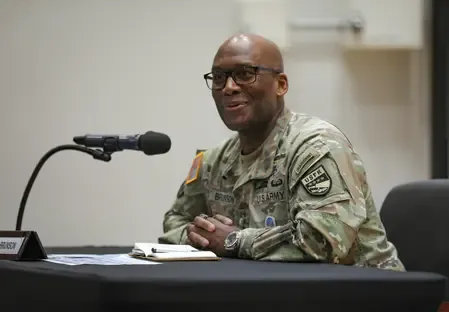
US Forces Korea (USFK) Commander General Xavier Brunson on Wednesday, 21 October 2026, called for a fundamental shift in how the United States and South Korea conduct combined military training — moving away from two large-scale annual exercises toward a more continuous, year-round training model. Brunson made the remarks during a dialogue session in Seoul hosted by the American Chamber of Commerce in Korea (AMCHAM).
The call signals growing concern within the US military establishment that a biannual drill schedule is no longer sufficient to keep pace with a rapidly shifting security environment on the Korean Peninsula.
What Brunson Said
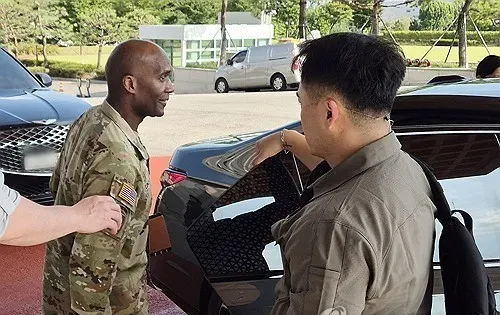
Speaking at the AMCHAM event, Brunson revealed he had met earlier in the week with South Korea's Joint Chiefs of Staff (JCS) Chairman General Jin Yong-sung to discuss planning for the upcoming Freedom Shield (FS) spring exercise. 'I just had a meeting this week with General Jin, and we talked about how we might train in the upcoming Freedom Shield exercise,' Brunson said.
He went further, arguing that readiness cannot be built around just two events on the calendar. 'We can't hinge our readiness on two exercises a year. It has got to be training throughout the entirety of the year, where we continue to shape ourselves to meet the objectives set forward for us by our national command authorities,' he said.
Brunson had made similar remarks at a forum in Washington the previous week, where he proposed conducting drills in a more 'distributed fashion' and 'in between' the two major exercises.
Background: The Current Exercise Calendar
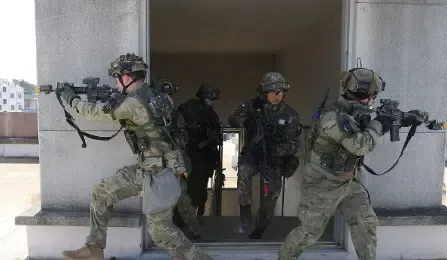
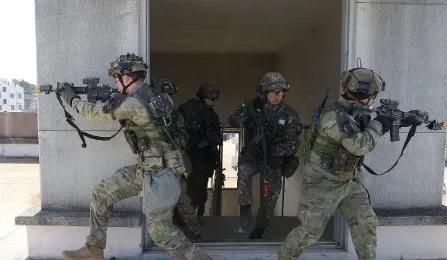
The two allies currently hold two flagship large-scale exercises annually — the Freedom Shield (FS) in spring and the Ulchi Freedom Shield (UFS) in summer. Both are designed primarily to train for contingencies involving North Korea. The exercises combine field training, command post simulations, and live-fire components, drawing tens of thousands of troops from both militaries.
Notably, the most recent UFS exercise in August was cut to roughly half its usual duration following directives from US President Donald Trump, who cited cost concerns and framed the reduction as a goodwill gesture toward Pyongyang amid renewed diplomatic interest in engaging North Korean leader Kim Jong-un. The curtailment drew quiet unease among defence planners on both sides of the alliance.
The Regional Sustainment Hub Concept
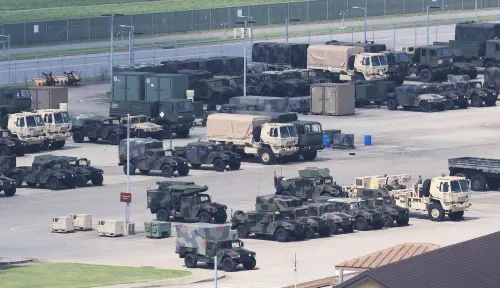
Beyond training, Brunson used the AMCHAM forum to advance the idea of a 'regional sustainment hub' centred on South Korea's robust defence manufacturing sector. The concept envisions using Korean industrial capacity for maintenance, repair, and overhaul (MRO) of US military hardware in theatre, rather than shipping equipment back to the United States.
Brunson described the goal as creating a 'depot-like forward' on the Korean Peninsula. 'If we don't have to send things back to the United States for repair, for overhaul, for parts, and we are able to keep those things in theatre, then what we've demonstrated is endurance,' he said. He added that the concept could eventually extend across multiple operational domains.
Why This Matters Now
The push for more distributed training comes at a delicate moment for the US-South Korea alliance. North Korea has continued to develop ballistic missile and nuclear capabilities, while diplomatic channels between Washington and Pyongyang remain uncertain. At the same time, the Trump administration's cost-sharing pressures and its periodic outreach to North Korea have introduced new variables into alliance planning.
Critics argue that reducing or concentrating exercises risks signalling a weakened deterrence posture, while proponents of engagement contend that large-scale drills inflame tensions unnecessarily. Brunson's push for continuous, smaller-footprint training throughout the year appears designed to thread that needle — maintaining operational readiness without the political visibility of a major biannual exercise.
How the two allies translate Brunson's vision into a concrete training calendar, and whether Washington formally endorses the shift, will be closely watched in the months leading up to the next Freedom Shield exercise.
Point of View
Year-round training is essentially a workaround for a political problem: the Trump administration's willingness to curtail large-scale exercises as diplomatic leverage with Pyongyang. By spreading readiness activity across the calendar in smaller increments, the alliance can theoretically maintain operational edge without generating the headlines that a full-scale biannual exercise produces. The deeper tension is unresolved — whether US deterrence commitments on the peninsula are being quietly diluted for deal-making purposes, and whether Seoul is comfortable with that trade-off. The regional sustainment hub concept is a smart hedge, deepening industrial interdependence so that even if the political alliance wobbles, the logistical and economic ties become harder to unwind.
NationPress
21 Oct 2026
Frequently Asked Questions
Why is the USFK commander calling for year-round combined exercises with South Korea?
General Xavier Brunson argues that the current biannual exercise schedule — Freedom Shield in spring and Ulchi Freedom Shield in summer — is insufficient to maintain readiness against an evolving security environment on the Korean Peninsula. He wants training spread across the year in a more distributed fashion to keep both forces continuously prepared.
What are the Freedom Shield and Ulchi Freedom Shield exercises?
Freedom Shield (FS) and Ulchi Freedom Shield (UFS) are the two flagship large-scale combined military exercises held annually by the United States and South Korea. Both are designed primarily to train for contingencies involving North Korea, combining command post simulations, field training, and live-fire components.
Why was the Ulchi Freedom Shield exercise cut short in August?
The August UFS exercise was reduced to roughly half its usual duration following directives from US President Donald Trump, who cited cost concerns and sought to signal goodwill toward Pyongyang amid renewed interest in diplomatic talks with North Korean leader Kim Jong-un.
What is the regional sustainment hub concept Brunson proposed?
The regional sustainment hub concept involves using South Korea's defence manufacturing sector to maintain, repair, and overhaul US military equipment in theatre rather than shipping it back to the United States. Brunson describes it as building a 'depot-like forward' capability on the Korean Peninsula to demonstrate military endurance.
Who did General Brunson meet to discuss the upcoming Freedom Shield exercise?
Brunson met South Korea's Joint Chiefs of Staff Chairman General Jin Yong-sung earlier in the week of 21 October 2026 to discuss planning for the upcoming Freedom Shield spring exercise and broader training approaches for the alliance.