South Korea-US Ulchi Freedom Shield cut short after Trump order
Synopsis
Trump's unilateral order to cut the Ulchi Freedom Shield exercise nearly in half is more than a scheduling change — it signals a deliberate tilt toward Pyongyang ahead of a possible Trump-Kim summit. For Seoul, the fallout is immediate: the cancellation of the second phase directly threatens its timeline for reclaiming wartime operational control, a cornerstone of South Korean defence sovereignty.
Key Takeaways
The Ulchi Freedom Shield (UFS) exercise, originally scheduled 17–27 August , will end on Friday — nearly halved — following a unilateral request from Washington .
US President Donald Trump called for the reduction in a social media post on Sunday , citing costs and his relationship with Kim Jong-un .
The Pentagon confirmed 'substantial' reductions, with certain live-training events cancelled or converted to simulations, but said there would be 'no degradation' to US training objectives.
South Korean Defence Minister Ahn Gyu-back confirmed the second phase — focused on counterattack scenarios — is being cancelled.
The cutback complicates Seoul's timeline to reclaim wartime operational control ( OPCON ) before the Lee Jae Myung administration's term ends in June 2030 .
Unlike the 2019 drill reductions under Trump's first term, this week's scaling back followed a unilateral Washington request rather than bilateral consultations.
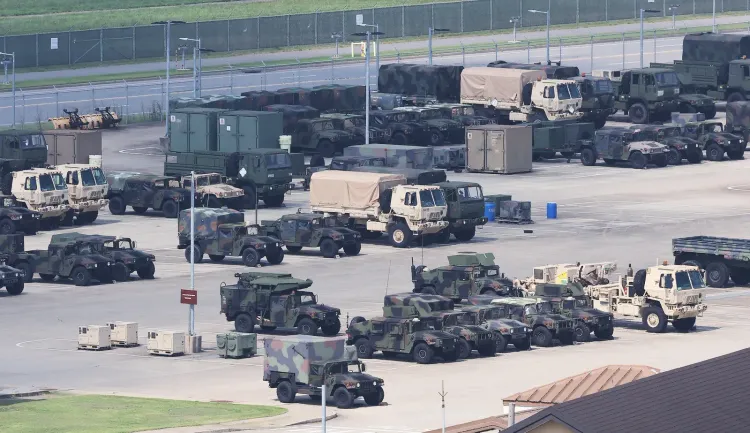
South Korea and the United States are curtailing their annual Ulchi Freedom Shield (UFS) combined military exercise at Washington's request, the two allies confirmed on Wednesday, 19 August, after US President Donald Trump ordered a reduction in the drills he described as sending a 'totally inappropriate and hostile' signal to Pyongyang. The 11-day exercise, originally scheduled to run from 17 to 27 August, will now conclude on Friday — nearly halved in duration.
What Has Been Cut
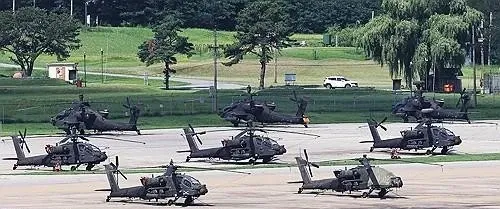
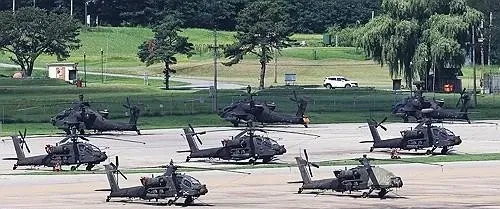
According to Seoul's Joint Chiefs of Staff (JCS) and the US Defense Department, field training exercises (FTX) — a core component of the UFS — are being scaled back, with detailed plans still under discussion between the two militaries. The Pentagon said it has 'substantially' reduced the exercise, with certain live-training events cancelled or converted to simulations.
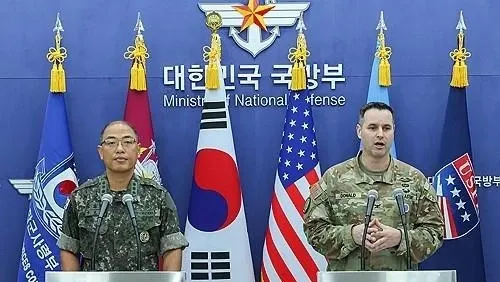
South Korean Defence Minister Ahn Gyu-back confirmed that the allies are cancelling the second phase of the exercise, which typically focuses on counterattack scenarios. 'We appear to be leaning toward cancellation,' he told reporters. The allies had originally planned 14 field manoeuvres at the battalion level or above; those are also being scaled down. Talks are reportedly under way on whether to hold live drills separately or have South Korea conduct them independently.
Trump's Rationale and the North Korea Angle
Trump called for scaling down the joint drills in a social media post on Sunday (US time), citing the financial cost burden and his 'good relationship' with North Korean leader Kim Jong-un. The move comes amid growing speculation about a resumption of direct dialogue between Trump and Kim. The Wall Street Journal reported on Tuesday that Trump is pushing for an in-person meeting with Kim this autumn, possibly on the sidelines of the Asia-Pacific Economic Cooperation (APEC) summit in China.
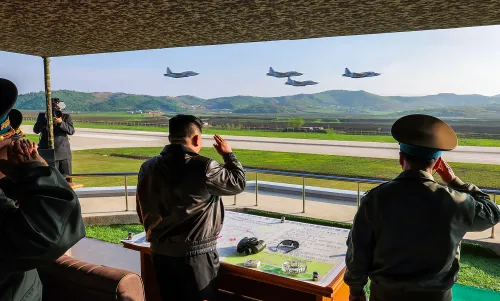
North Korea has historically decried the allies' exercises as rehearsals for invasion and has conducted weapons tests in apparent protest. Both Seoul and Washington have consistently maintained that the drills are defensive in nature.
Pentagon: No Degradation to Readiness
Despite the cutbacks, the Pentagon pushed back against characterisations of weakened military capability. 'These adjustments preserve essential readiness and training objectives. There will be no degradation to US training objectives,' a Pentagon official said. The defence ministry in Seoul similarly downplayed concerns that the scaled-back drills would weaken deterrence against North Korea.
Notably, the Combined Forces Command (CFC) is already conducting the exercise from two separate command posts — at the wartime CP Tango bunker in Seongnam and at Camp Humphreys, the main US base in Pyeongtaek, approximately 50 kilometres south of the capital — a split that itself reflects the readjusted scope of the UFS.
The OPCON Dilemma for Seoul
The curtailment poses a significant strategic dilemma for Seoul. South Korea has been using the UFS to validate its capabilities ahead of reclaiming wartime operational control (OPCON) from Washington — a long-standing national security objective. The Lee Jae Myung administration aims to complete the OPCON transfer before its five-year term ends in June 2030, and had hoped to conclude the second phase of the three-stage conditions-based transition plan and set a target timeline by the end of this year.
Minister Ahn sought to limit the political fallout, arguing that the evaluation of South Korea's OPCON readiness takes place during the first week of the exercise — which has not been cancelled. However, analysts note that the cancellation of the second phase, focused on counterattack scenarios, directly undermines the validation process Seoul needs.
A Pattern With a Key Difference
This is not the first time the alliance has scaled back joint exercises under Trump. The allies reduced their drills in 2019 during Trump's first term, when high-stakes nuclear diplomacy with Pyongyang was at its peak. Crucially, however, that decision emerged from bilateral consultations. This week's reduction, by contrast, followed a unilateral request from Washington — a distinction that has drawn scrutiny in Seoul over alliance management and the degree of US deference to North Korean sensitivities.
With Trump reportedly pursuing a fresh summit with Kim and the UFS now curtailed, the coming weeks will test whether diplomatic signalling translates into any verifiable movement on denuclearisation.
Point of View
Subordinating it to personal diplomacy with Pyongyang. Seoul's muted public response masks a real strategic cost: the OPCON transition, already a politically sensitive project, now loses a critical validation window. The broader question mainstream coverage underplays is whether this is a one-off concession or the opening of a sustained pattern of US unilateralism that erodes the credibility of the alliance as a deterrent — precisely when North Korea is watching for exactly that signal.
NationPress
3 Oct 2026
Frequently Asked Questions
What is the Ulchi Freedom Shield exercise and why is it being cut short?
The Ulchi Freedom Shield (UFS) is one of two major annual theatre-level combined exercises conducted by South Korea and the United States to train for contingencies against North Korea. It is being cut nearly in half — from an 11-day schedule ending 27 August to a conclusion on Friday, 22 August — after US President Donald Trump ordered a reduction, citing the cost burden and his relationship with North Korean leader Kim Jong-un.
What parts of the exercise have been cancelled or reduced?
The second phase of the UFS, which focuses on counterattack scenarios, is being cancelled, according to South Korean Defence Minister Ahn Gyu-back. Field training exercises at the battalion level or above — 14 of which were originally planned — are also being scaled back. The Pentagon said certain live-training events have been cancelled or converted to computer simulations.
How does this affect South Korea's plan to reclaim wartime operational control (OPCON)?
South Korea has been using the UFS to validate its military capabilities as a prerequisite for reclaiming wartime operational control (OPCON) from the United States. The cancellation of the second phase — which is part of the conditions-based OPCON transition process — could delay Seoul's goal of completing the transfer before the Lee Jae Myung administration's term ends in June 2030.
How is this different from the 2019 drill reductions under Trump?
In 2019, during Trump's first term, the allies also scaled back joint exercises amid nuclear diplomacy with Pyongyang — but that decision was reached through bilateral consultations between Seoul and Washington. This week's reduction followed a unilateral request from Washington, a distinction that has drawn scrutiny over alliance management.
Is there a connection between the drill cuts and a possible Trump-Kim summit?
The timing is significant. The Wall Street Journal reported on Tuesday that Trump is pushing for an in-person meeting with Kim Jong-un this autumn, possibly on the sidelines of the APEC summit in China. The drill reductions are widely seen as a diplomatic signal to Pyongyang ahead of any such meeting.