South Korea expects North Korea-US leader ties to revive peninsula talks
Synopsis
Trump's reported order to 'substantially' cut US-South Korea joint military exercises has triggered a cautious but hopeful response from Seoul, which is now banking on the Trump-Kim personal rapport to reopen Korean Peninsula diplomacy. It is the most significant US gesture toward Pyongyang since the 2019 Panmunjom meeting — and Seoul wants to be the pacemaker.
Key Takeaways
South Korea's presidential office on 17 August said it expects the Trump-Kim friendship to lead to meaningful North Korea-US talks.
President Donald Trump reportedly ordered the Pentagon to 'substantially' reduce joint US-South Korea military exercises, calling them 'costly' and 'hostile' in signal to Pyongyang .
The announcement coincided with the scheduled start of the Ulchi Freedom Shield (UFS) exercise on Monday .
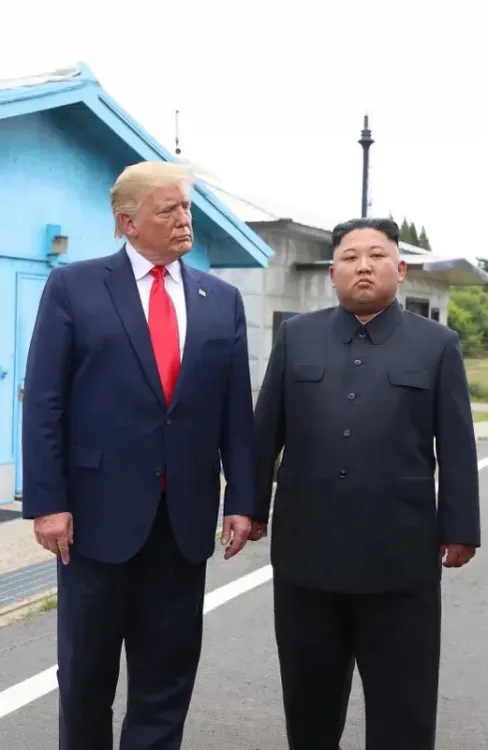
Trump met Kim Jong-un three times during his first term — in Singapore (2018) , Hanoi (2019) , and Panmunjom (2019) — without a binding denuclearisation deal.
Seoul pledged to act as a 'pacemaker' for diplomacy while reaffirming its commitment to a firm combined defence posture with Washington .
South Korea's presidential office on Monday, 17 August said it expects the personal rapport between North Korean leader Kim Jong-un and US President Donald Trump to pave the way for meaningful bilateral dialogue on peace and stability on the Korean Peninsula. The statement came hours after Trump reportedly ordered the Pentagon to 'substantially' scale back joint military exercises with Seoul.
Trump's Social Media Post and the Exercise Controversy
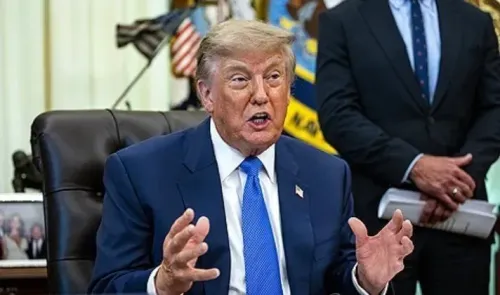
In a post on social media on Sunday (US time), Trump said he had instructed the Pentagon to significantly reduce the scope of joint South Korea-US military drills. He described the exercises as not only 'costly' but also 'totally inappropriate and hostile' in their signal to Pyongyang — language widely read as a conciliatory overture toward North Korea.
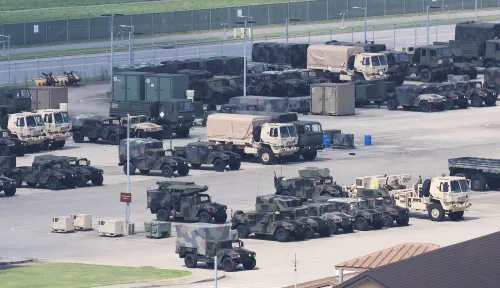
The timing was notable: the summertime Ulchi Freedom Shield (UFS) exercise between Seoul and Washington was scheduled to commence on Monday in South Korea. North Korea has long condemned these annual drills as a rehearsal for an invasion, and Pyongyang's objections have historically been a sticking point in any diplomatic engagement.
Seoul's Measured Response
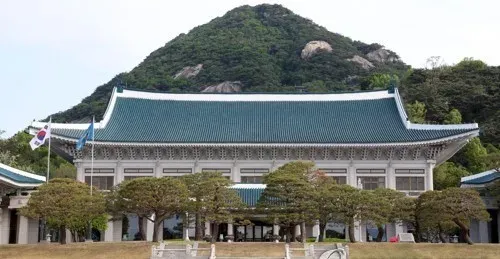
'The government takes note of President Trump's social media message,' the presidential office said in a statement. 'We expect friendly relations between the North Korean and US leaders to lead to meaningful North Korea-US talks and the start of discussions aimed at advancing peace and stability on the Korean Peninsula,' the office, known as Cheong Wa Dae, added, pledging to play the role of a 'pacemaker' in the process.
Notably, Seoul simultaneously reaffirmed its commitment to a firm combined defence posture, stating that both Seoul and Washington 'have closely coordinated on maintaining a firm combined defence posture and conducting joint drills and exercises, and will continue such coordination on related matters.' The dual messaging — welcoming diplomacy while reaffirming deterrence — reflects the delicate line South Korea must walk.
Trump-Kim History and the Diplomatic Backdrop
Trump met Kim Jong-un three times during his first term: in Singapore in June 2018, in Hanoi in February 2019, and at the inter-Korean border village of Panmunjom in June 2019. None of those summits produced a binding denuclearisation agreement, but the personal chemistry between the two leaders has been cited repeatedly as a potential diplomatic asset.
The White House has repeatedly affirmed that Trump remains open to dialogue with Pyongyang 'without any preconditions,' a posture that differs markedly from the conditions-based approach favoured by previous administrations.
Iran and the Strait of Hormuz: A Side Note
In the same social media post, Trump also revealed that he had asked South Korean President Lee Jae Myung whether Seoul would consider joining international efforts to denuclearise Iran — and was told, 'No thanks.' Separately, the presidential office noted that Seoul has actively participated in international discussions on a ceasefire in Iran and efforts to restore freedom of navigation in the Strait of Hormuz, and is consulting with Washington on practical and military contributions.
What Comes Next
Whether Trump's exercise reduction order translates into a formal diplomatic opening remains to be seen. Analysts will watch for any direct communication between Washington and Pyongyang, and whether North Korea responds to the gesture with a reciprocal signal. Seoul's self-described 'pacemaker' role suggests it intends to remain central to any process — even as the key relationship, for now, appears to run directly between Trump and Kim.
Point of View
Via social media, without apparent prior coordination with Seoul. That Seoul's response is measured rather than alarmed speaks to the bind it is in: push back and risk straining the alliance, or acquiesce and potentially undercut the deterrence posture it has spent decades building. The deeper problem is structural: Trump-Kim personal diplomacy has already run its course once without producing a verifiable deal. Banking on personal rapport, without a technical framework for denuclearisation, risks repeating the Hanoi collapse at a higher diplomatic cost. Seoul's 'pacemaker' framing is aspirational — the real question is whether Washington will let it set any pace at all.
NationPress
1 Oct 2026
Frequently Asked Questions
Why did Trump order a reduction in US-South Korea joint military exercises?
President Donald Trump reportedly ordered the Pentagon to 'substantially' reduce joint military exercises with South Korea, describing them as 'costly' and as sending a 'totally inappropriate and hostile' signal to North Korea. The move is widely interpreted as a conciliatory gesture toward Pyongyang ahead of potential renewed diplomacy.
How did South Korea respond to Trump's exercise reduction order?
South Korea's presidential office said it 'takes note' of Trump's message and expressed hope that the personal friendship between Trump and Kim Jong-un would lead to meaningful North Korea-US talks. Seoul pledged to act as a 'pacemaker' for Korean Peninsula peace discussions while also reaffirming its commitment to a firm combined defence posture.
What is the Ulchi Freedom Shield exercise?
The Ulchi Freedom Shield (UFS) is an annual summertime joint military exercise conducted by South Korea and the United States. North Korea has long condemned the drills as a rehearsal for an invasion. The exercise was scheduled to begin on Monday, 17 August, the same day Trump's social media post about scaling it back emerged.
How many times has Trump met Kim Jong-un?
Trump met North Korean leader Kim Jong-un three times during his first term: in Singapore in June 2018, in Hanoi in February 2019, and at the inter-Korean border village of Panmunjom in June 2019. None of the summits produced a binding denuclearisation agreement.
What did Trump say about South Korea and Iran?
In the same social media post, Trump revealed he had asked South Korean President Lee Jae Myung whether Seoul would join international efforts to denuclearise Iran, and was told 'No thanks.' South Korea's presidential office separately noted that Seoul is actively participating in discussions on an Iran ceasefire and freedom of navigation in the Strait of Hormuz.