South Korea opposition slams Lee's praise of Trump military drill cuts
Synopsis
South Korea's opposition has turned President Lee Jae Myung's praise of Trump's military drill cuts into a domestic political flashpoint — exposing a rare and public rift between Seoul's government and its own security establishment over how far deference to Washington should go on peninsula defence.
Key Takeaways
People Power Party leader Jang Dong-hyeok criticised President Lee Jae Myung on Thursday, 21 August for praising Trump's drill reduction.
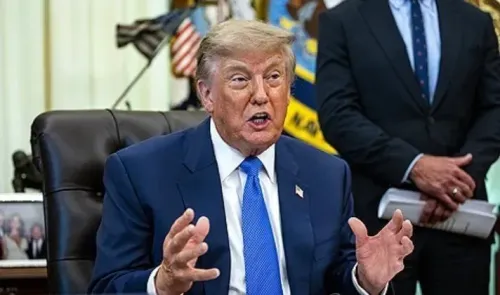
Lee called Trump's order 'a big decision' for Korean Peninsula peace and pledged to act as a 'pacemaker' to Trump's 'peacemaker.' Trump instructed the Pentagon on Sunday to 'substantially reduce' joint exercises, calling them 'totally inappropriate and hostile' to North Korea.
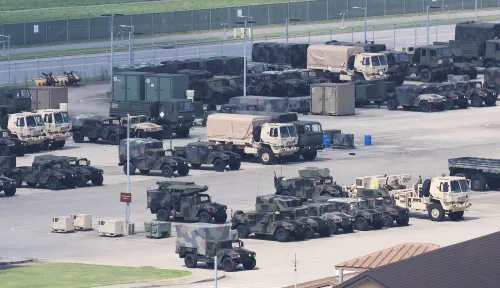
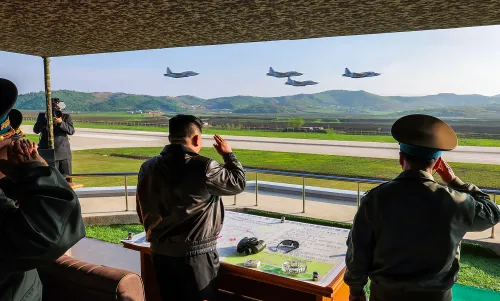
The Ulchi Freedom Shield exercise was cut short following Trump's directive, a significant shift in allied military posture.
Trump also revealed Seoul declined a US request to join efforts to denuclearise Iran , adding a second layer of friction to the alliance.
Lee said South Korea remains willing to contribute to Strait of Hormuz passage efforts within its legal and policy limits.
South Korea's main opposition People Power Party (PPP) on Thursday, 21 August sharply criticised President Lee Jae Myung for publicly lauding US President Donald Trump's decision to scale back joint South Korea-US military exercises, calling Lee's framing of the move an 'unprecedented moral victory' deeply misguided. The rebuke came a day after the allies confirmed they had curtailed the Ulchi Freedom Shield exercise at Trump's directive.
The Criticism from the Opposition
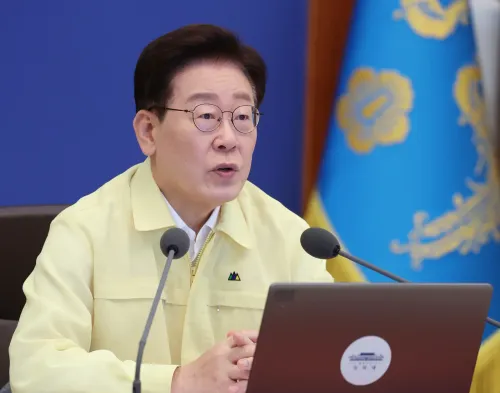
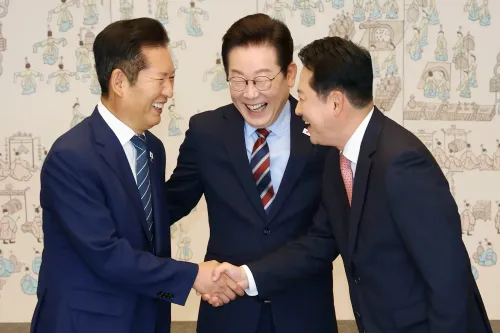
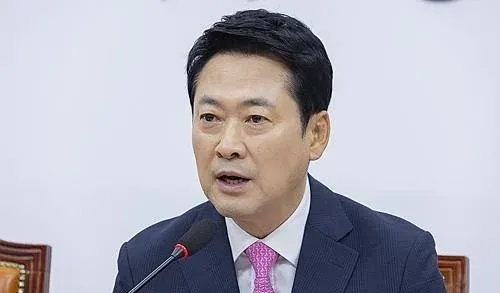
Jang Dong-hyeok, leader of the People Power Party, delivered the attack at a party leadership meeting in Seoul, targeting remarks Lee had posted on his X account late Wednesday. In that post, Lee had described Trump's order as 'a big decision reflecting the serious thought he put into creating peace beyond hostility and confrontation on the Korean Peninsula.' Jang argued that framing a reduction in allied defence readiness as a moral achievement was both premature and dangerous.
What Lee Said — and Why It Sparked Backlash
In his X post, Lee went considerably further than diplomatic courtesy. He declared that South Korea 'shares President Trump's commitment and efforts to create the conditions for dialogue toward establishing a peace regime on the Korean Peninsula, even if that means scaling back the South Korea-US combined exercises and field training,' and said his government expressed 'respect' for that decision. He also pledged to act as a 'pacemaker' supporting Trump's role as a 'peacemaker' — a framing drawn from a proposal Lee himself had floated during their first summit last year. Critics argue the language effectively endorsed a unilateral US security decision that directly affects South Korea's own defence posture without any reciprocal concession from Pyongyang.
Trump's Rationale and the Iran Dimension
Trump had written in a Sunday social media post that he had instructed the Pentagon to 'substantially reduce' joint military exercises, describing them as sending a 'totally inappropriate and hostile' signal to North Korea. Notably, the same post revealed a separate flashpoint: Trump said he had recently asked Lee whether Seoul would join US efforts to denuclearise Iran and was told, 'No thanks.' Some analysts have interpreted the drill reduction as, at least in part, a signal of Washington's displeasure over Seoul's refusal to participate in the Iran standoff.
Lee appeared to address that charge directly in his X message, stating that the South Korean government had 'repeatedly stated its intention to actively participate in international efforts to restore free passage in the Strait of Hormuz,' while committing to 'communicate closely with the United States regarding various substantive ways in which we can contribute within the scope that we can bear under the Republic of Korea's laws and basic policies.'
Broader Security Implications
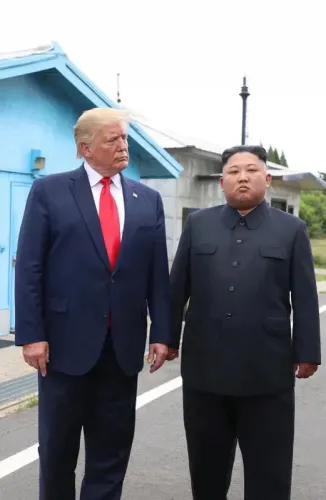
The Ulchi Freedom Shield exercises are among the largest annual combined drills conducted by US and South Korean forces, designed to simulate responses to a range of contingencies on the peninsula. Their curtailment — even partially — is a significant shift in allied posture. This is not the first time Trump has moved to scale back such exercises; during his first term, he similarly suspended drills after summits with North Korean leader Kim Jong Un, a period that ultimately yielded no lasting denuclearisation progress. Lee closed his post by expressing hope for an early meeting with Trump 'in the United States in the near future,' signalling that diplomatic engagement remains a priority for Seoul despite the turbulence.
Point of View
Lee's 'pacemaker' rhetoric is a response to coercion dressed up as partnership — a distinction the South Korean public may eventually demand its president address directly.
NationPress
5 Oct 2026
Frequently Asked Questions
Why did South Korea's opposition criticise President Lee Jae Myung?
The People Power Party criticised Lee for publicly praising US President Trump's decision to reduce joint South Korea-US military exercises, calling it 'an unprecedented moral victory.' Opposition leader Jang Dong-hyeok argued that framing a cut in allied defence readiness as a peace achievement was misguided and potentially dangerous.
What did Trump order regarding South Korea-US military exercises?
Trump instructed the Pentagon on Sunday to 'substantially reduce' joint military exercises with South Korea, describing the drills as sending a 'totally inappropriate and hostile' signal to North Korea. The Ulchi Freedom Shield exercise was subsequently cut short in line with that directive.
What did President Lee Jae Myung say about Trump's decision?
In a post on his X account late Wednesday, Lee described Trump's move as 'a big decision reflecting serious thought' about creating peace on the Korean Peninsula. He also pledged South Korea would act as a 'pacemaker' supporting Trump's efforts as a 'peacemaker,' and expressed hope for an early meeting with Trump in the United States.
How does the Iran dispute connect to the military drill reduction?
Trump revealed in his Sunday post that he had asked Lee whether South Korea would join US efforts to denuclearise Iran and was told 'No thanks.' Some analysts interpret the drill reduction as partly linked to Washington's displeasure over that refusal, adding a second dimension beyond Korean Peninsula diplomacy.
Has the US reduced South Korea joint drills before?
Yes. During Trump's first term, joint exercises were similarly suspended following summits with North Korean leader Kim Jong Un. Those pauses did not produce a lasting denuclearisation agreement, a precedent critics cite when questioning the current reduction's strategic value.