South Korea's Lee respects Trump's move to scale back US-South Korea drills for North Korea talks
Synopsis
South Korean President Lee Jae Myung has publicly endorsed Donald Trump's decision to cut short the Ulchi Freedom Shield exercise, calling it a 'big decision' for Korean Peninsula peace. The move also surfaces a quiet tension: Trump's Sunday post revealed that Seoul declined a US request to join efforts against Iran — and some analysts see the drill reduction as connected to that friction.
Key Takeaways
South Korean President Lee Jae Myung expressed respect for Donald Trump 's decision to scale back joint military exercises on 20 August .
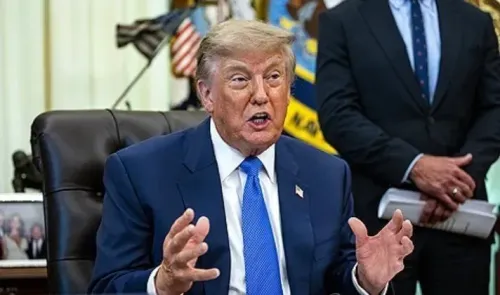
The Ulchi Freedom Shield exercise was cut short after Trump ordered the Pentagon to 'substantially reduce' joint drills with South Korea.
Trump described the exercises as sending a 'totally inappropriate and hostile' signal to North Korea .
Lee pledged to act as a 'pacemaker' supporting Trump's 'peacemaker' role in any renewed Washington–Pyongyang dialogue.
Trump revealed that he asked South Korea to join efforts to denuclearise Iran and was told 'No thanks'; Lee responded by reaffirming Seoul's commitment to free passage in the Strait of Hormuz .
Lee indicated he hopes to meet Trump again in the United States in the near future.
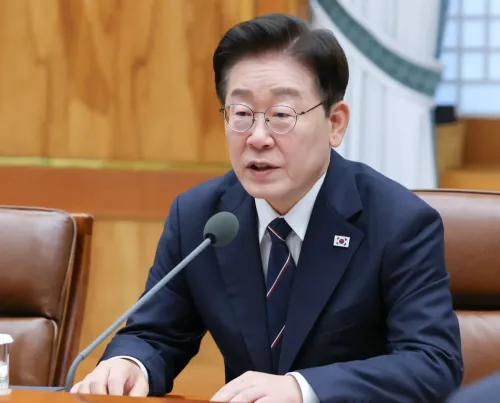
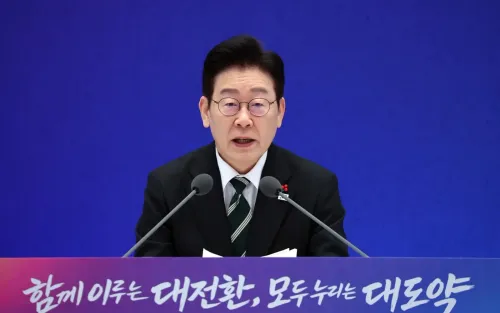
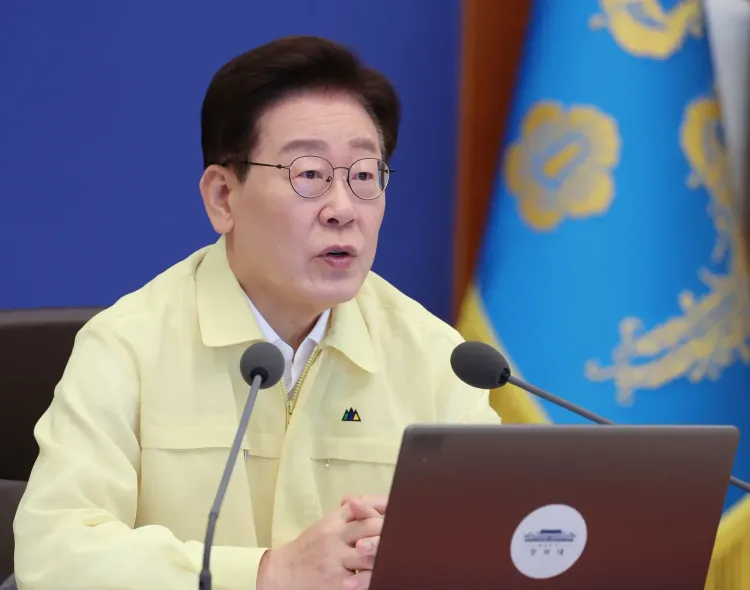
South Korean President Lee Jae Myung on Wednesday, 20 August expressed respect for US President Donald Trump's decision to scale back joint South Korea-US military exercises, framing it as a meaningful step toward creating conditions for dialogue on the Korean Peninsula. Lee made the remarks in a post on his official X account, hours after both allies confirmed that the Ulchi Freedom Shield exercise had been cut short on Trump's orders.
What Lee Said
In his post, Lee described Trump's move as 'a big decision reflecting the serious thought he put into creating peace beyond hostility and confrontation on the Korean Peninsula.' He went on to state that South Korea shares Trump's commitment to building conditions for dialogue, even if that means reducing combined field training. 'We express our respect for that decision,' Lee wrote.
Lee also expressed hope that Trump's step would ultimately lead to a stable peace regime on the peninsula through confidence-building and a resumption of direct dialogue between Washington and Pyongyang.
The 'Pacemaker' Pledge
Lee vowed to fulfil his role as a 'pacemaker' — a term he first proposed during his initial summit with Trump — in support of Trump's broader 'peacemaker' ambitions on the peninsula. The framing signals Seoul's intent to position itself as an active facilitator rather than a passive observer in any renewed US-North Korea engagement.
The Iran Dimension
Trump's decision to curtail the exercises has been interpreted by some analysts as partly linked to what he reportedly perceives as Seoul's reluctance to support US efforts against Iran. In a social media post on Sunday, Trump said he had asked Lee whether South Korea would join efforts to denuclearise Iran and was told, 'No thanks.'
Lee appeared to respond to that characterisation in his X post, stating that the South Korean government has 'repeatedly' declared its intention to actively participate in international efforts to restore free passage through the Strait of Hormuz. He added that Seoul would continue to communicate closely with Washington on 'various substantive ways' it can contribute within the bounds of South Korean law and basic policy.
Background: Ulchi Freedom Shield and the Scaling Back
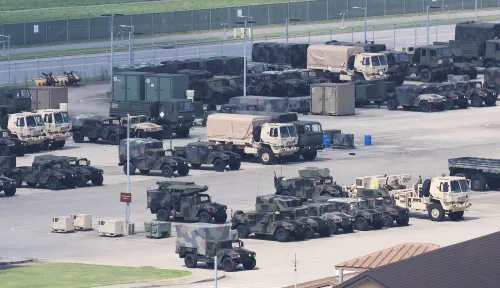
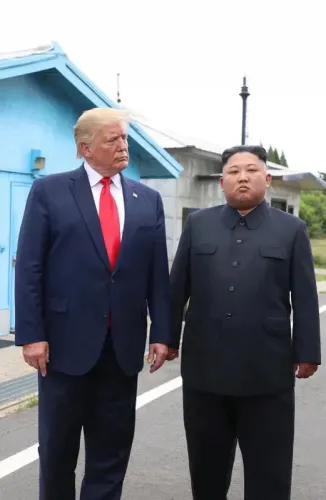
The Ulchi Freedom Shield is one of the largest annual joint military exercises conducted by the US and South Korea, designed to bolster combined readiness against potential threats from the North. Trump's instruction to 'substantially reduce' the exercises — which he described in his Sunday post as sending a 'totally inappropriate and hostile' signal to North Korea — marks a notable shift in alliance posture. It echoes his first-term approach, when he similarly suspended major drills during the 2018–2019 US-North Korea diplomatic engagement.
Lee closed his post by expressing a desire to meet Trump again 'in the United States in the near future,' signalling that a bilateral summit may be in the works as both sides navigate the delicate diplomacy ahead.
Point of View
But the Iran subplot is the more revealing thread. The fact that Trump publicly disclosed Seoul's 'No thanks' on Iran — and that the drill reduction followed — suggests alliance management is now entangled with Middle East policy in ways that go beyond the Korean Peninsula. Lee's careful X post, which praised Trump while quietly defending Seoul's Iran stance, is a tightrope act: keeping Washington warm without committing to a conflict Seoul has no legal or political appetite for. The deeper question is whether scaling back exercises — a concession that cost the US little — will actually move Pyongyang, which has shown no reciprocal interest in dialogue under current conditions.
NationPress
5 Oct 2026
Frequently Asked Questions
Why did South Korea's President Lee Jae Myung praise Trump's military exercise decision?
Lee said Trump's move to scale back joint South Korea-US exercises reflects 'serious thought' toward creating peace on the Korean Peninsula. He expressed that Seoul shares Trump's commitment to building conditions for dialogue with North Korea, even at the cost of reduced combined military training.
What is the Ulchi Freedom Shield exercise and why was it cut short?
The Ulchi Freedom Shield is one of the largest annual joint military exercises between the US and South Korea, aimed at maintaining combined combat readiness. It was cut short after President Trump ordered the Pentagon to 'substantially reduce' the drills, which he characterised as sending a hostile signal to North Korea.
What is the connection between the drill cuts and Iran?
Trump's Sunday post revealed he had asked South Korean President Lee whether Seoul would join US efforts to denuclearise Iran, and was told 'No thanks.' Some analysts have interpreted the subsequent decision to scale back military exercises as partly linked to Trump's displeasure with Seoul's response on Iran.
How did South Korea respond to Trump's Iran remarks?
In his X post, Lee stated that South Korea has repeatedly declared its intention to participate in international efforts to restore free passage in the Strait of Hormuz. He said Seoul would continue to communicate closely with Washington on ways it can contribute within the limits of South Korean law and policy.
What is the 'pacemaker' role Lee Jae Myung referred to?
Lee first proposed the 'pacemaker' concept during his initial summit with Trump, positioning South Korea as an active facilitator of US-North Korea engagement. In his Wednesday post, he reaffirmed this role, pledging to support Trump's broader 'peacemaker' ambitions on the Korean Peninsula.