South Korea's Lee vows permanent peace regime to replace Korean War armistice
Synopsis
South Korean President Lee Jae Myung used the anniversary of the 2018 Pyongyang Declaration to push his most direct case yet for replacing the Korean War armistice with a permanent peace regime — and signalled that a 'hand is tapping the door' on renewed North Korea–US diplomacy. With Unification Minister Chung proposing a 'basket' approach that sidelines denuclearisation as a precondition, Seoul is quietly repositioning its entire negotiating framework ahead of any Trump–Kim revival.
Key Takeaways
President Lee Jae Myung reaffirmed on 18 September 2026 his commitment to replacing the 1953 Korean War armistice with a permanent peace regime.
Remarks were made at a ceremony marking the 7th anniversary of the Pyongyang Joint Declaration signed on 19 September 2018 .
Lee cited signs of renewed North Korea–US dialogue, referencing Donald Trump's overtures toward Kim Jong-un .
Unification Minister Chung Dong-young rejected denuclearisation as a precondition for talks, calling for a multi-issue 'basket' approach instead.
The basket covers formally ending the Korean War, Pyongyang–Washington normalisation, halting North Korea's nuclear programme, and reviving inter-Korean economic cooperation.
The Korean War ended in an armistice in 1953 , never a formal peace treaty — a legal limbo the Lee administration calls a root cause of persistent instability.
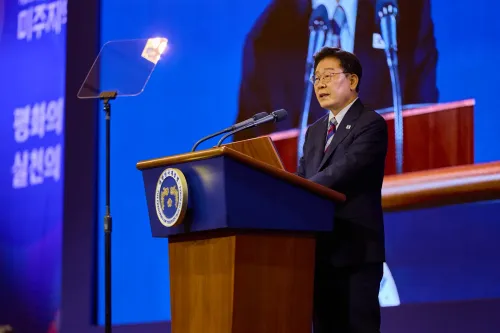
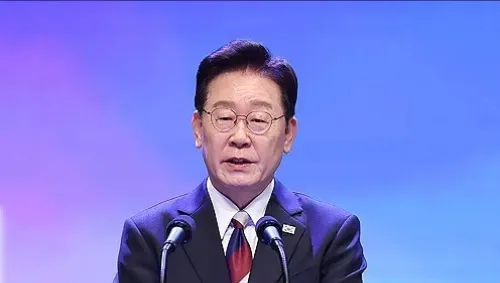
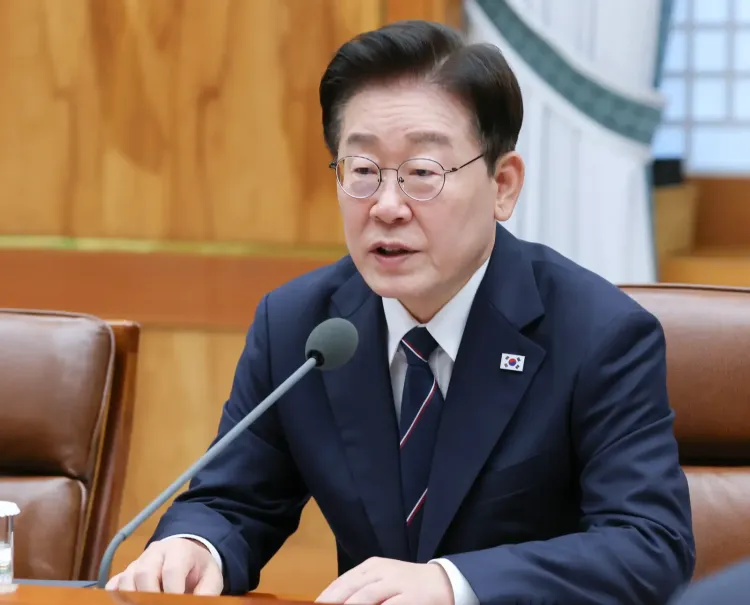
South Korean President Lee Jae Myung on Friday, 18 September 2026, reiterated his government's commitment to replacing the 1953 armistice that suspended the Korean War with a permanent peace regime on the Korean Peninsula. The remarks, delivered at a ceremony at the National Assembly in Seoul marking the anniversary of the Pyongyang Joint Declaration, signal a clear diplomatic posture as signs of renewed North Korea–US dialogue emerge.
The Pyongyang Declaration Anniversary
The ceremony commemorated the Pyongyang Joint Declaration signed on 19 September 2018 by then South Korean President Moon Jae-in and North Korean leader Kim Jong-un following their Pyongyang summit. That declaration affirmed both Koreas' determination to end military hostility across their shared border and to deepen inter-Korean cooperation. President Lee's speech was read on his behalf by Kim Kyoung-soo, his special aide for political affairs.
Lee acknowledged that despite the 2018 declaration, inter-Korean dialogue and cooperation have effectively ceased, while tensions have sharply risen — driven in large part by North Korea's rapid advancement of its nuclear weapons capabilities over the same period.
A 'Hand Tapping the Door' for North Korea–US Talks
'There is a hand tapping the door for North Korea–US talks again,' Lee said, in an apparent reference to US President Donald Trump's repeated overtures to resume diplomacy with Kim Jong-un. Lee pledged that his administration would do its utmost to help such gestures translate into substantive dialogue. 'Our government will do its utmost to have the gesture lead to the resumption of North Korea–US dialogue and develop into discussions to end war on the Korean Peninsula and establish a peace regime,' the president said.
Unification Minister Calls for a 'Basket' Approach
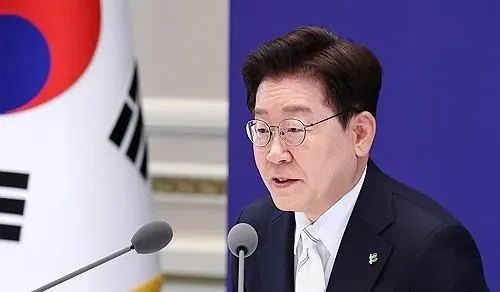
A day earlier, on Thursday, South Korea's Unification Minister Chung Dong-young argued at a ministry-hosted academic forum on peaceful coexistence that demanding denuclearisation as a precondition for any dialogue would doom talks before they began. 'We cannot start any discussion by repeating the past approach; action first, compensation later, with denuclearisation as a precondition,' he said, adding that such a framework would keep any dialogue from ever getting off the ground.
Chung instead proposed a 'basket' approach — handling multiple interconnected issues simultaneously. The basket includes formally ending the Korean War, institutionalising peaceful coexistence, normalising Pyongyang–Washington relations, halting North Korea's nuclear programme, and reviving inter-Korean economic cooperation. He described these issues as 'interconnected and mutually reinforcing,' arguing they must advance together rather than sequentially.
Why the Armistice Question Matters
The 1950–53 Korean War technically never ended — it was suspended by an armistice agreement, not a formal peace treaty. This legal ambiguity has underpinned decades of instability on the peninsula. The Lee Jae Myung administration contends that lasting peace is structurally impossible as long as this armistice framework persists. Notably, this argument cuts against the US and South Korea's traditional sequencing, which has historically placed denuclearisation at the front of any negotiating queue.
This comes amid a broader diplomatic moment: President Trump has reportedly signalled openness to renewed engagement with Pyongyang, echoing his first-term summits with Kim in Singapore in 2018 and Hanoi in 2019, both of which ultimately produced no binding agreement. Whether the current opening proves more durable will depend heavily on whether Seoul's multilateral 'basket' approach finds traction in Washington.
What Comes Next
The Lee administration has stopped short of announcing a specific diplomatic initiative or timeline, but both the president's remarks and the minister's forum address signal an active effort to shape the framework for any eventual North Korea–US engagement. South Korea's ability to position itself as a facilitator — rather than a spectator — in those talks will be a defining test of Lee's foreign policy in the months ahead.
Point of View
And it largely passed without scrutiny. For decades, the US-South Korea alliance has treated denuclearisation as the gateway to any engagement — Lee's government is now explicitly arguing that approach is a dead end. That is not a minor procedural tweak; it is a fundamental reframing that could put Seoul and Washington out of sync if Trump moves toward direct Kim engagement on his own terms. The 'basket' metaphor is also a diplomatic hedge: it allows Lee to claim progress on peace-regime language without conceding ground on nuclear issues, but it also risks producing an agreement that looks comprehensive on paper and delivers little in practice — much like the 2018 declarations it commemorates.
NationPress
18 Sept 2026
Frequently Asked Questions
What is South Korean President Lee Jae Myung calling for on the Korean Peninsula?
President Lee Jae Myung is calling for the 1953 Korean War armistice to be replaced with a permanent peace regime. He reiterated this commitment on 18 September 2026, framing it as essential to lasting stability on the peninsula.
What is the Pyongyang Joint Declaration and why is it being commemorated?
The Pyongyang Joint Declaration was signed on 19 September 2018 by then South Korean President Moon Jae-in and North Korean leader Kim Jong-un at their Pyongyang summit. It affirmed both Koreas' intent to end military hostility and boost cooperation, though inter-Korean dialogue has since stalled and tensions have risen sharply.
What is South Korea's 'basket' approach to North Korea talks?
Unification Minister Chung Dong-young's 'basket' approach proposes handling multiple issues simultaneously rather than sequentially, covering an end to the Korean War, peaceful coexistence, Pyongyang–Washington normalisation, halting North Korea's nuclear programme, and reviving inter-Korean economic ties. It explicitly rejects denuclearisation as a precondition for starting dialogue.
Why does the Korean War armistice still matter in 2026?
The Korean War ended in 1953 with an armistice, not a formal peace treaty, leaving the peninsula technically in a state of suspended conflict. The Lee administration argues this legal ambiguity is a structural barrier to lasting peace and must be resolved through a formal peace regime.
What role does the United States play in the current diplomatic moment?
President Lee referenced what he called 'a hand tapping the door' for renewed North Korea–US talks, widely interpreted as a reference to US President Donald Trump's signals of openness to resuming diplomacy with Kim Jong-un. South Korea has pledged to facilitate and help develop such engagement into formal peace-regime discussions.