South Korea's Lee proposes war-ending talks with North Korea on Liberation Day
Synopsis
On the 81st Liberation Day, South Korean President Lee Jae Myung made his most direct call yet for formal war-ending talks with North Korea — a peninsula still technically at war since 1953. With Pyongyang unresponsive to a year's worth of overtures, the proposal is as much a statement of intent as a diplomatic opening, and its fate hinges entirely on whether Kim Jong Un chooses to answer.
Key Takeaways
President Lee Jae Myung proposed formal Korean War -ending talks with North Korea on 15 August 2025 , during the 81st Liberation Day ceremony in Seoul .
Lee called for discussions on 'effective ways to halt the advancement of the North's nuclear capabilities' as part of any dialogue process.
The two Koreas have remained technically at war since the 1950-53 Korean War ended with an armistice, not a peace treaty.
Pyongyang has not responded to Seoul's repeated reconciliatory gestures since Lee took office in June 2024 .
Lee also highlighted expanded South Korea-Japan cooperation and pledged to pursue those who accumulated assets under Japan's colonial rule ( 1910-1945 ).
Around 3,000 people attended the Liberation Day ceremony, including foreign ambassadors and families of independence fighters.
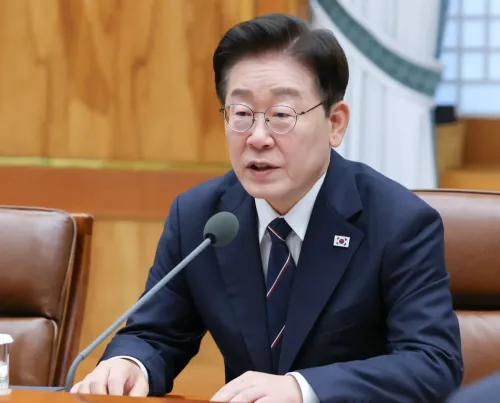
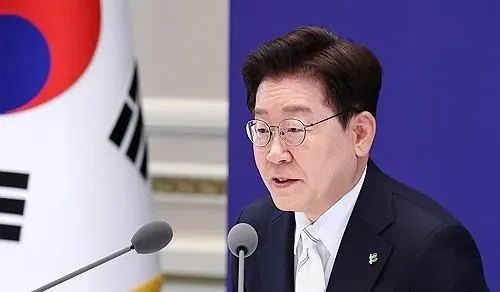
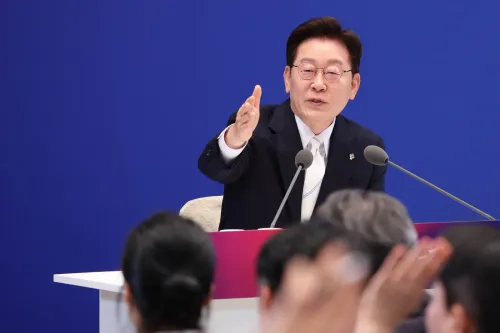
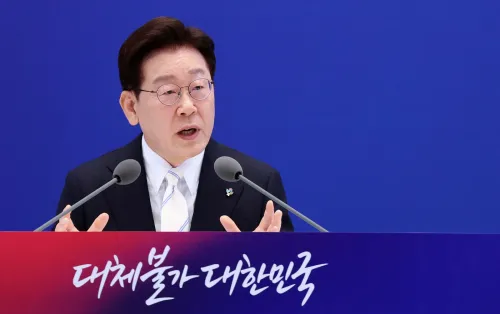
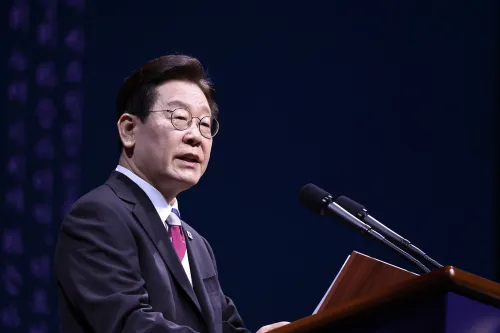
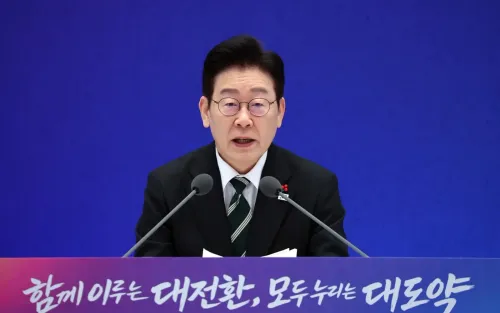
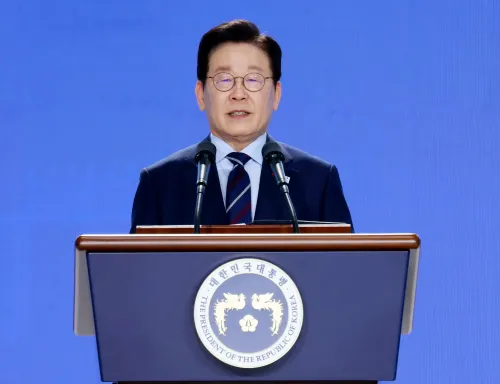
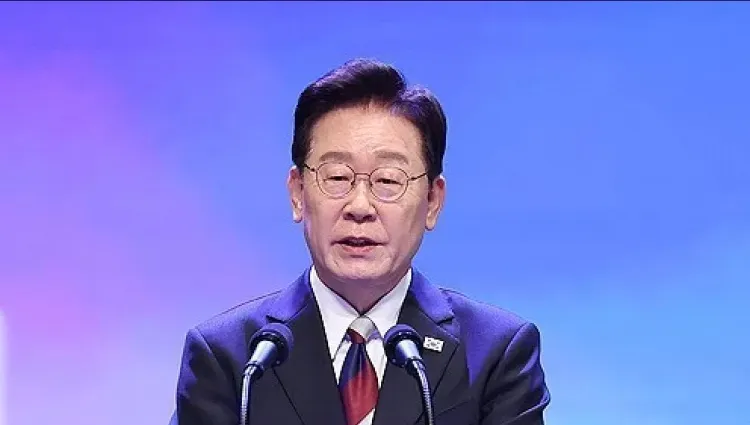
South Korean President Lee Jae Myung on Saturday, 15 August 2025, called on North Korea to open formal dialogue aimed at officially ending the Korean War and exploring concrete steps to freeze Pyongyang's advancing nuclear programme. The proposal was made during a nationally televised speech at the 81st Liberation Day ceremony in Seoul, attended by around 3,000 people including foreign ambassadors, government officials, and families of independence fighters.
The Core Proposal
'Let us put down our intentions to threaten each other and begin discussions to end the long-running war as the directly involved parties,' Lee said in his address. He added that such talks could also cover 'effective ways to halt the advancement of the North's nuclear capabilities.'
Lee pledged to replace what he described as the 'unstable armistice system' with a durable peace regime on the Korean Peninsula. The two Koreas have technically remained in a state of war since the 1950-53 Korean War concluded with an armistice agreement rather than a formal peace treaty.
Context: A One-Sided Overture
The dialogue offer comes despite Pyongyang remaining unresponsive to Seoul's repeated reconciliatory gestures since Lee assumed office in June 2024. During his Liberation Day address last year, Lee had already pledged to respect North Korea's existing political system, rule out unification by absorption, and refrain from hostile acts — overtures that drew no formal reply from the North.
Notably, this is the second consecutive Liberation Day on which Lee has extended an olive branch northward, underscoring what his administration frames as a policy of 'consistent dialogue' regardless of Pyongyang's posture. Critics have questioned whether unconditional engagement signals weakness at a moment when North Korea is accelerating its weapons development.
A 'Multilayered Security' Framework
Lee also outlined what he called a 'multilayered security system' designed to manage tensions and prevent a crisis on the peninsula. He said his government would take 'preemptive and consistent measures for peace' calibrated to the evolving security environment. 'By inducing a positive response from the North, I will create a stable Korean Peninsula,' he said, arguing that peninsular peace could, in turn, advance stability across Northeast Asia and support global non-proliferation goals.
Seoul-Tokyo Relations and Domestic Agenda
Lee used the occasion to highlight progress in South Korea-Japan ties, citing active 'shuttle diplomacy' over the past year that has, according to him, deepened trust and expanded cooperation in supply chains, energy, and advanced technologies. He expressed hope to 'open a new era of peace and prosperity' with Tokyo.
On the domestic front, Lee pledged government support for young people, vowed to build a 'sturdy ladder of opportunities,' and announced plans to investigate and confiscate assets unjustly accumulated by collaborators of Japan's colonial rule of Korea between 1910 and 1945. He also articulated a vision of making South Korea 'irreplaceable' in global advanced-technology supply chains.
What Comes Next
Whether Pyongyang responds to this latest overture remains the central question. Past South Korean administrations — across ideological lines — have made similar proposals that went unanswered for extended periods. Analysts will watch for any signal from the North in the days following the address. The Lee administration has indicated it will continue pursuing dialogue regardless of the immediate response, banking on what it describes as the long-term logic of peaceful coexistence.
Point of View
Building deterrence even as it extends dialogue. Whether that dual-track approach can actually move Pyongyang — or whether it simply allows the Lee administration to claim the moral high ground while the North's nuclear capability advances — is the question this speech does not answer.
NationPress
30 Sept 2026
Frequently Asked Questions
What did South Korean President Lee Jae Myung propose on Liberation Day?
President Lee proposed that South and North Korea begin formal talks to officially end the Korean War and discuss practical steps to halt North Korea's nuclear programme. The offer was made on 15 August 2025 during the 81st Liberation Day ceremony in Seoul.
Why are the two Koreas still technically at war?
The 1950-53 Korean War ended with an armistice agreement, not a formal peace treaty, leaving the peninsula in a legal state of war for over seven decades. President Lee's proposal aims to replace this 'unstable armistice system' with a durable peace regime.
Has North Korea responded to South Korea's previous dialogue overtures?
No. Pyongyang has remained unresponsive to Seoul's repeated reconciliatory gestures since Lee took office in June 2024, including a similar appeal made during last year's Liberation Day address. The Lee administration has nonetheless pledged to continue pursuing dialogue.
What is the 'multilayered security system' Lee mentioned?
Lee described it as a framework to manage tensions, control confrontations, and prevent crises on the Korean Peninsula. He pledged 'preemptive and consistent measures for peace' aligned with the evolving security situation around the peninsula.
What else did President Lee announce in his Liberation Day speech?
Lee highlighted progress in South Korea-Japan relations through 'shuttle diplomacy,' pledged support for young people, and announced plans to investigate and confiscate assets unjustly accumulated by collaborators of Japan's colonial rule of Korea between 1910 and 1945.