North Korea less likely to denuclearise after US-Iran war, says South Korea's Lee
Synopsis
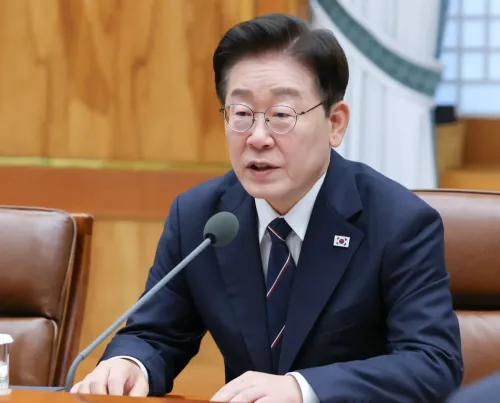
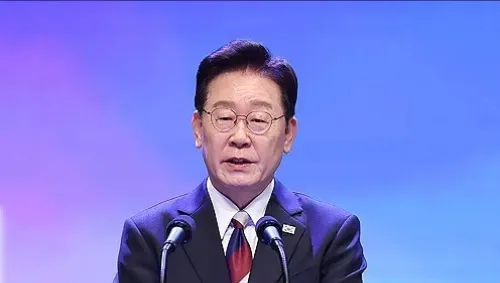
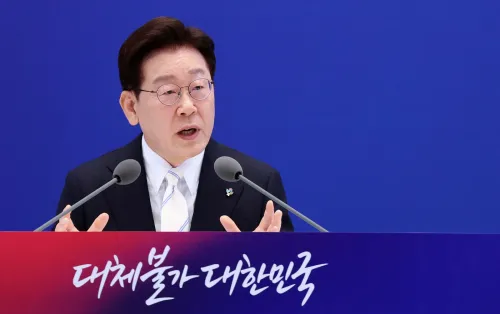
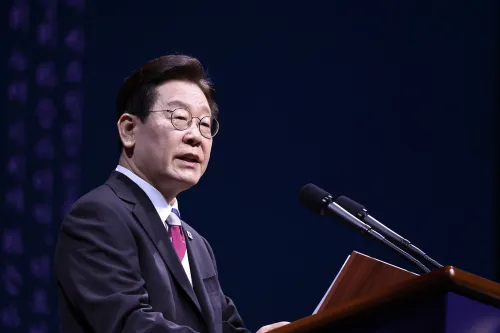
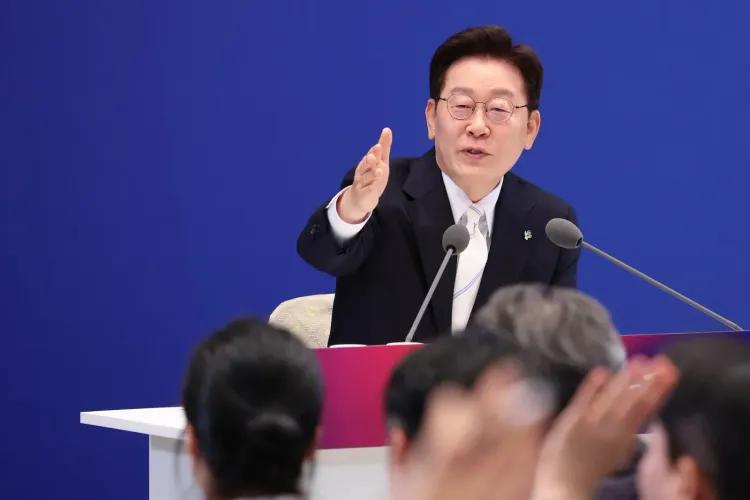
South Korean President Lee Jae Myung has delivered a blunt verdict: the US-Iran war has made North Korean denuclearisation even less likely. Speaking to The Economist on his inauguration anniversary, Lee also admitted his own post-presidency imprisonment is 'pretty high' — a rare moment of political candour that underscores just how volatile South Korea's domestic and regional landscape remains.
Key Takeaways
South Korean President Lee Jae Myung said on 10 June that the US-Iran war has made North Korea less likely to abandon its nuclear programme.
Lee told The Economist that Trump's 'unique personality' could help bring Pyongyang back to dialogue.
Lee reaffirmed that nuclear weapons for South Korea are 'not desirable nor realistic.' He acknowledged the probability of his own impeachment or imprisonment after leaving office is 'pretty high,' with multiple trials currently suspended.
The US military has struck Iran after Iranian forces downed a US Apache helicopter near the Strait of Hormuz , risking broader escalation.
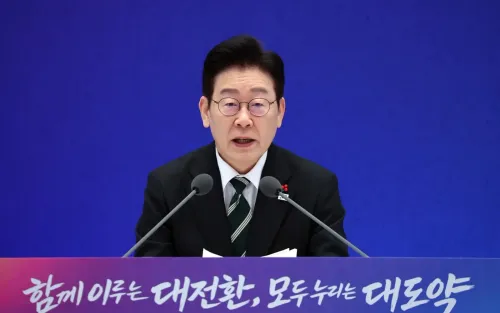
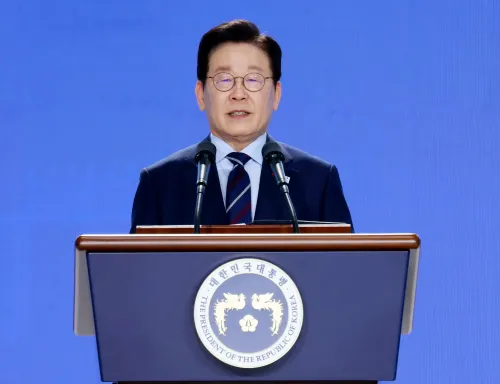
South Korean President Lee Jae Myung said on Wednesday, 10 June that the ongoing US-Iran war has made North Korea even less willing to abandon its nuclear weapons programme. Lee made the remarks in an interview with The Economist, published to mark the first anniversary of his inauguration.
Lee's Assessment of the Nuclear Standoff
Speaking to the British publication, Lee argued that Pyongyang would draw clear lessons from the US-Iran conflict — reinforcing its conviction that nuclear deterrence is non-negotiable. At the same time, he suggested that the 'unique personality' of US President Donald Trump could prove 'very helpful' in coaxing North Korea back to the negotiating table, without elaborating on a specific diplomatic pathway.
Lee also reaffirmed South Korea's own commitment to the global non-proliferation order, telling the journal that it is 'not desirable nor realistic' for his country to possess nuclear weapons — a pointed reassurance amid growing domestic debate on the subject.
On National Defence and Sovereignty
'When it comes to the defense of our nation, we must take matters into our own hands,' Lee said, according to The Economist. The statement signals a more assertive posture on defence self-reliance, even as Seoul maintains its security alliance with Washington.
Domestic Politics: Post-Martial Law Recovery
Addressing the political upheaval triggered by former President Yoon Suk Yeol's martial law declaration in 2024, Lee said South Korea can 'move beyond this normalisation of the abnormal' and emerge as a nation that 'leads the world.' The remarks were framed as a broader vision for democratic consolidation after months of institutional turbulence.
On the economy, Lee floated a basic income grant as a mechanism to 'distribute some of the excess profits to the general public,' citing the windfall gains of chip giants Samsung Electronics and SK Hynix amid the artificial intelligence-driven semiconductor boom.
Lee's Own Legal Jeopardy
In a candid admission, Lee acknowledged that the probability of him being impeached or jailed after leaving office is 'pretty high,' contingent on how multiple trials — linked to his earlier tenures as mayor and governor — conclude. Those proceedings are currently suspended for the duration of his presidency, according to reports.
The US-Iran Conflict: Background
The US military has launched strikes against Iran following Iranian forces downing a US Apache helicopter near the Strait of Hormuz, raising the risk of broader military escalation with Tehran. This comes even as President Trump is reportedly pursuing a negotiated deal to end the conflict — a dual-track approach that analysts describe as characteristic of his administration's foreign policy style. The unfolding war has added a new layer of complexity to an already fraught Northeast Asian security environment, with Pyongyang watching closely.
Point of View
Coming on top of Libya and Iraq, closes the argument for Kim Jong Un's regime. What is underreported is Lee's candid self-assessment on his own legal fate — a sitting president openly pricing in his post-office imprisonment is a measure of how deeply South Korea's judicial-political entanglement runs, and how normalised institutional crisis has become in Seoul.
NationPress
19 Sept 2026
Frequently Asked Questions
Why does Lee Jae Myung say the US-Iran war affects North Korea's nuclear stance?
Lee argues that the US-Iran conflict reinforces North Korea's belief that nuclear weapons are its only reliable security guarantee. Pyongyang is likely to conclude that states without nuclear deterrence remain vulnerable to US military action, making denuclearisation negotiations even harder.
What did Lee say about Trump's role in North Korea diplomacy?
Lee said Trump's 'unique personality' could be 'very helpful' in bringing North Korea back to dialogue, suggesting the unpredictability that alarms allies may actually create diplomatic openings with Pyongyang that a conventional US president could not.
Does South Korea plan to develop its own nuclear weapons?
No. President Lee explicitly told The Economist that nuclear weapons for South Korea are 'not desirable nor realistic,' reaffirming Seoul's commitment to the global non-proliferation framework despite domestic debate on the issue.
What is Lee Jae Myung's legal situation?
Lee faces multiple trials linked to his previous terms as mayor and governor. He acknowledged the chances of impeachment or imprisonment after leaving office are 'pretty high.' The trials are currently suspended while he serves as president.
What is the current status of the US-Iran conflict?
The US military has carried out strikes against Iran after Iranian forces shot down a US Apache helicopter near the Strait of Hormuz. President Trump is simultaneously reported to be pursuing a negotiated deal, creating a dual-track military-diplomatic approach that has raised fears of broader regional escalation.