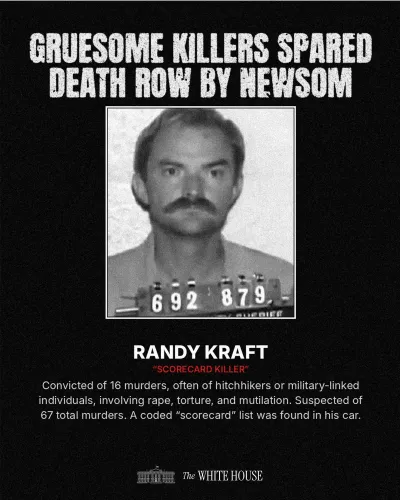
White House attacks Newsom over clemency claim

Synopsis
The White House shared President Donald Trump's attack on California Governor Gavin Newsom, claiming he had granted clemency to 548 people. The specific action could not be independently verified from the available information. The dispute touches a longstanding debate over sentencing, rehabilitation and public safety.
Key Takeaways
The White House shared President Donald Trump's criticism of California Governor Gavin Newsom.
Trump claimed Newsom had granted clemency to 548 people; the specific action could not be independently verified from the available information.
The post did not identify the people allegedly covered or specify their offences.
Newsom has exercised clemency powers and imposed a moratorium on California's death penalty.
Trump signed the federal First Step Act in 2018, while California voters approved Proposition 47 in 2014.
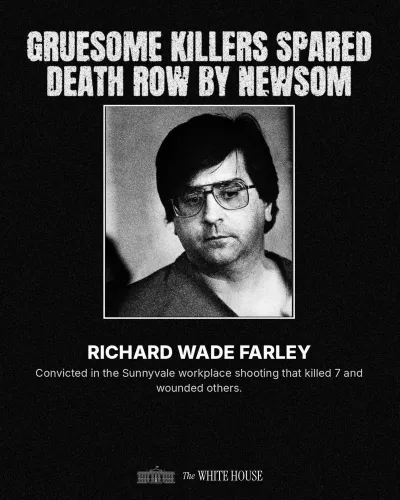
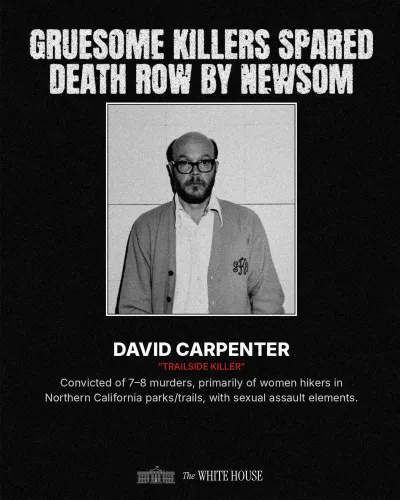
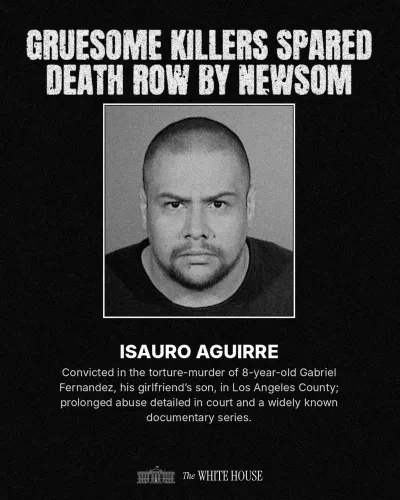
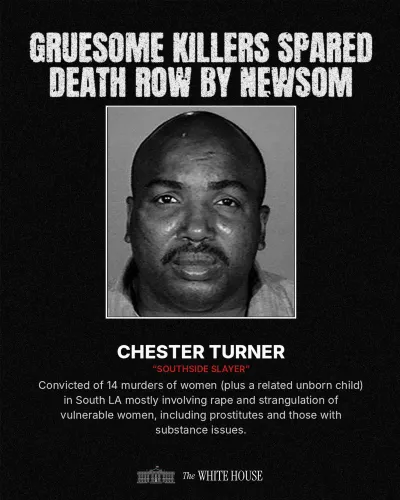
The White House has put California clemency decisions at the centre of a criminal justice clash, sharing President Donald J. Trump's attack on Governor Gavin Newsom. In a post on X, Trump claimed Newsom had granted clemency to 548 people and contrasted that with his administration's approach to public safety.
Trump's claim about Newsom's clemency decisions
Trump said Newsom had granted 'clemency & mercy to 548' people, whom he described as 'the most EVIL monsters'. The specific clemency action and the characterisation of the recipients could not be independently verified from the information available.
Setting out his own position, Trump said, 'In the Trump Admin we believe in the exact opposite, we're fighting to uplift the law abiding & protect the most vulnerable.' The post did not identify the people covered by the alleged action or specify their offences.
California clemency and the sentencing debate
Newsom, who became California governor in 2019, has exercised clemency powers, including sentence commutations, and imposed a moratorium on the death penalty. Clemency can take different forms, so the details of any particular action matter when assessing whom it affects.
The dispute sits within a longer debate over sentencing and incarceration. In 2014, California voters approved Proposition 47, which reclassified certain felonies as misdemeanours; at the federal level, Trump signed the First Step Act in 2018, expanding rehabilitation programmes while preserving strict federal sentences for violent offences.
For crime victims, law enforcement and people serving sentences, the distinction between the claim and the underlying clemency decisions is consequential. The next question is what the documented decisions show about the people affected and their cases.
Point of View
Including who received relief and why.
NationPress
25 Nov 2026
Frequently Asked Questions
What did Trump say about Gavin Newsom's clemency decisions?
Trump claimed that California Governor Gavin Newsom had granted clemency to 548 people and criticised the alleged action. The specific action could not be independently verified from the available information.
What is clemency in California?
Clemency is relief granted through an executive power and can take different forms, including sentence commutations. Newsom has exercised clemency powers as California governor.
What is California's Proposition 47?
Proposition 47 is a measure approved by California voters in 2014 that reclassified certain felonies as misdemeanours.
What was Trump's First Step Act?
The First Step Act is a federal law Trump signed in 2018 that expanded rehabilitation programmes while preserving strict federal sentences for violent offences.