White House Cabinet Joins TikTok in Bold Social Media Push
Synopsis
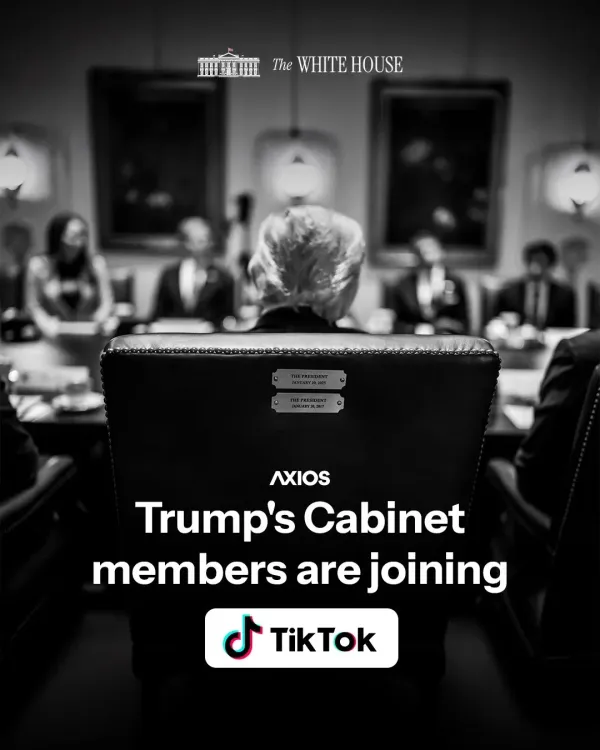
The White House confirmed the US Cabinet has joined TikTok, framing the move as patriotic and energetic. The decision comes even as TikTok remains subject to a 2024 congressional divestiture law targeting parent company ByteDance over national security concerns.
Key Takeaways
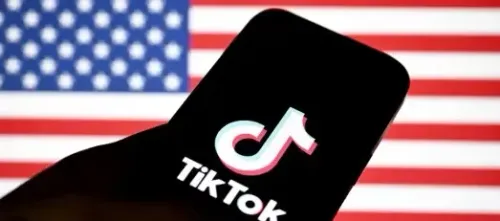
The White House announced on 22 July 2026 that the US Cabinet has joined TikTok .
The official post described the move as bringing 'the memes, the hype, the patriotism' to a new platform.
TikTok is owned by Chinese firm ByteDance and remains subject to a 2024 US law requiring divestiture or a ban.
The US Cabinet includes the heads of all 15 executive departments who advise the President.
The timing coincides with the lead-up to the 2026 US midterm elections , where youth outreach is strategically significant.
The move continues a pattern of US administrations adopting new consumer platforms for direct-to-citizen communication.
The White House announced on Wednesday, 22 July 2026 that the US Cabinet has joined TikTok, marking a significant expansion of the administration's social media presence onto one of the world's most-watched short-form video platforms. The official White House account described the move with characteristic internet energy, pointing to 'the memes, the hype, the patriotism.'
Context
The post, shared from the official @WhiteHouse account, signals that the executive branch's top officials are now actively creating content on TikTok — a platform that has been at the centre of a years-long national security debate in Washington DC. The phrase 'new platform, same energy' suggests the administration views TikTok as simply the next frontier in its direct-to-citizen communication strategy.
The Cabinet comprises the heads of all 15 executive departments, including the Secretaries of State, Defence, Treasury, and others who advise the President and drive policy implementation across the federal government.
Policy Backdrop
TikTok's road in the United States has been anything but smooth. In 2020, the first Trump administration issued executive orders seeking to restrict or force the sale of the platform, citing data-security concerns linked to its parent company ByteDance, which is headquartered in China.
In 2024, Congress passed — and President Biden signed — legislation requiring ByteDance to divest TikTok's US operations or face a ban. The statutory scrutiny the platform faces makes the Cabinet's official embrace of it a notable policy signal, implying the administration's current posture leans toward engagement over restriction.
US administrations have progressively adopted popular consumer platforms for direct outreach — moving from Twitter and Facebook under earlier presidents to newer short-form video apps — reflecting a broader effort to shape narratives and reach younger audiences where they already spend their time.
Stakeholders and Impact
Young voters and social media users are the clearest target audience. TikTok's user base skews younger, and official government presence on the platform can significantly expand the reach of policy messaging beyond traditional media channels.
The move also carries implications for the ongoing debate around TikTok's regulatory status. Critics may argue that official Cabinet accounts lend legitimacy to a platform still under a congressional divestiture mandate, while supporters will frame it as pragmatic outreach in a digital-first era.
For ByteDance and TikTok's corporate stakeholders, a formal White House and Cabinet presence could serve as a de facto endorsement that complicates enforcement of the 2024 divestiture law.
What's Next
Attention will now turn to whether individual Cabinet secretaries post independently or operate under a coordinated White House communications strategy. With 2026 midterm elections approaching, the timing of this platform expansion is unlikely to be coincidental — short-form video has proven decisive in recent electoral cycles.
Any court rulings or executive guidance tied to the 2024 TikTok divestiture law will determine how long official government accounts can operate on the platform, making this a story to watch at the intersection of digital governance and national security policy.
Point of View
Signalling either a softening of the national-security posture toward ByteDance or a deliberate prioritisation of electoral reach over policy consistency. For observers of US digital governance, this is less about memes and more about who controls the narrative pipeline to young voters. The move will test whether official government presence on a legally contested platform can survive judicial or legislative challenge.
NationPress
22 Jul 2026
Frequently Asked Questions
Why has the US Cabinet joined TikTok?
The White House announced the Cabinet joined TikTok to expand direct outreach to younger audiences using memes, patriotic content, and short-form video — part of a broader trend of US administrations adopting popular consumer platforms for communication.
Is TikTok banned in the United States?
TikTok is not currently banned, but a law signed by President Biden in 2024 requires parent company ByteDance to divest TikTok's US operations or face a ban. The legal and regulatory status of the platform continues to evolve.
What is the US Cabinet?
The US Cabinet comprises the heads of all 15 executive departments — including the Secretaries of State, Defence, and Treasury — who advise the President and oversee implementation of federal policy.
Who owns TikTok and why is it controversial in the US?
TikTok is owned by Chinese company ByteDance. US authorities have raised national security concerns about potential Chinese government access to American user data, leading to congressional legislation in 2024 requiring a divestiture of US operations.
What does the White House TikTok move mean for the 2026 midterms?
With midterm elections approaching in 2026, the Cabinet's TikTok presence is widely seen as a strategy to engage young voters on the platform where they are most active, using viral content to shape political narratives.