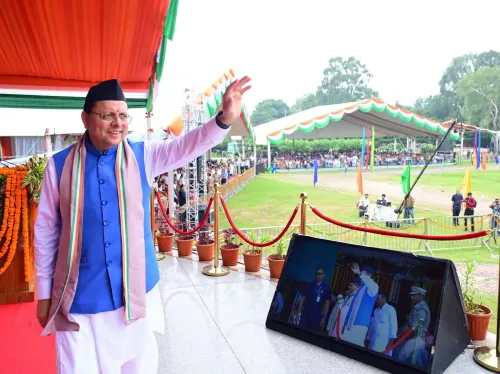
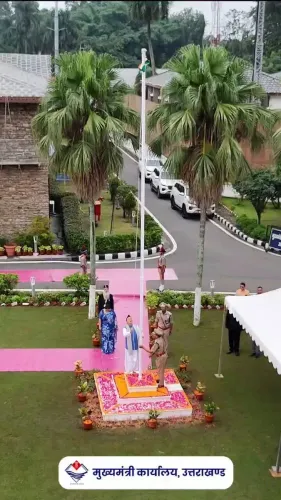
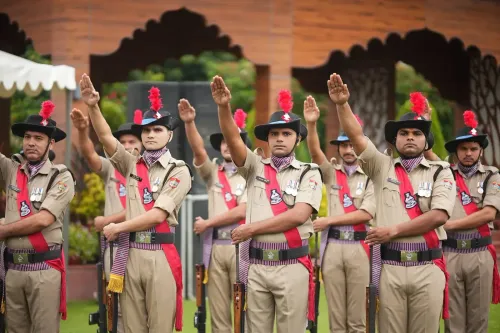
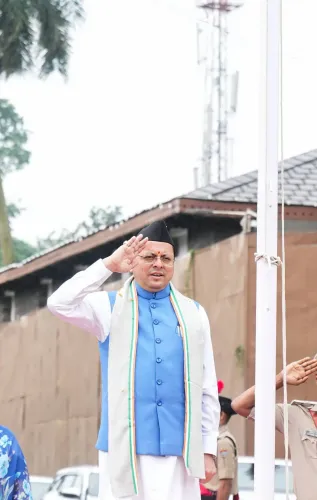
CM Dhami Greets Uttarakhand on National Flag Adoption Day
Synopsis
Uttarakhand Chief Minister Pushkar Singh Dhami marked National Flag Adoption Day on 22 July 2026, greeting state residents and recalling the Constituent Assembly's adoption of the tricolour on this day in 1947 as an immortal symbol of India's unity and self-respect.
Key Takeaways
Pushkar Singh Dhami , Chief Minister of Uttarakhand , posted greetings on National Flag Adoption Day, 22 July 2026 .
The Indian tricolour was formally adopted by the Constituent Assembly of India on 22 July 1947 , 24 days before independence.
Dhami described the flag as the symbol of India's 'unity, integrity, and self-respect' and a source of patriotism for every citizen.
The post is part of a broader pattern of state-level leaders marking national symbol anniversaries, particularly ahead of Independence Day on 15 August .
Flag display and usage in India are governed by the Flag Code of India, 2002 .
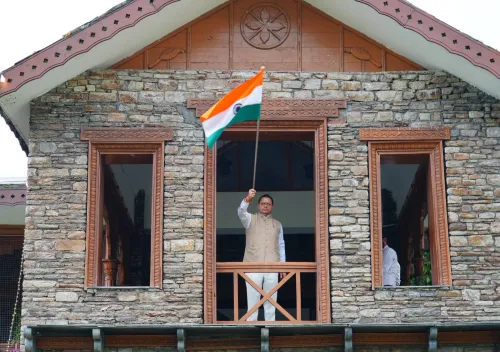
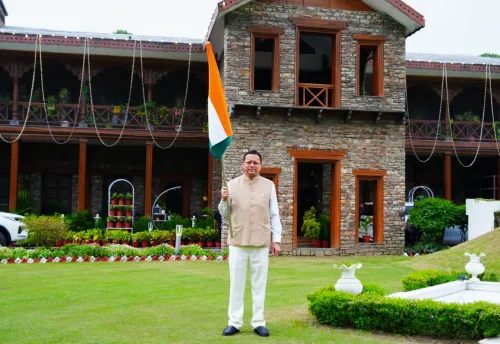
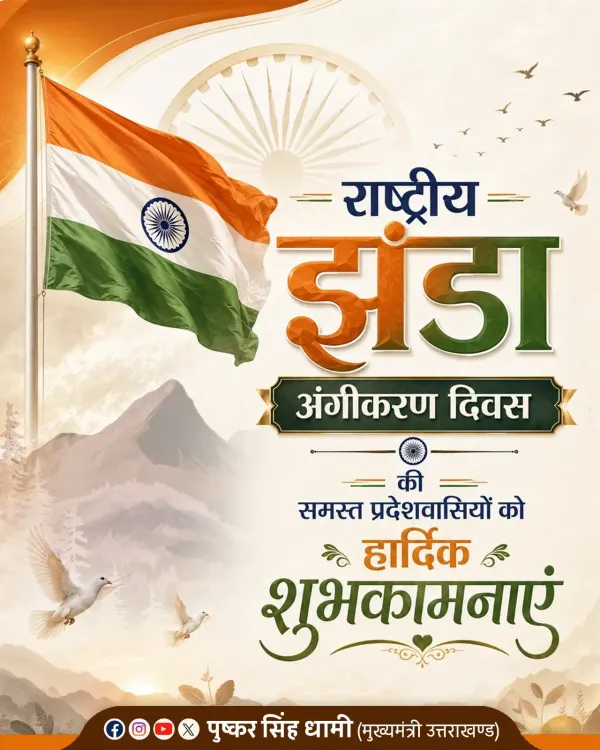
Uttarakhand Chief Minister Pushkar Singh Dhami on Wednesday, 22 July 2026, extended greetings to all residents of the state on National Flag Adoption Day, marking the 79th anniversary of the tricolour's adoption as India's national flag.
Context
In his post, Chief Minister Dhami wrote: 'राष्ट्रीय झंडा अंगीकरण दिवस की समस्त प्रदेशवासियों को हार्दिक बधाई एवं शुभकामनाएं' — 'Heartfelt congratulations and best wishes to all residents of the state on National Flag Adoption Day.' He recalled that on 22 July 1947, the tricolour was formally adopted as the national flag, describing it as the symbol of India's 'honour, pride, and glory' (आन, बान और शान).
Dhami further described the national flag as an 'immortal symbol of the country's unity, integrity, and self-respect,' one that 'ignites the feeling of patriotism and dedication in the heart of every Indian.'
Policy Backdrop
The Constituent Assembly of India, acting as the interim parliament ahead of independence, passed a resolution on 22 July 1947 formally adopting the present tricolour design — saffron, white, and green horizontal bands with the Ashoka Chakra at the centre — as the national flag of India. The adoption predated independence by 24 days, underscoring the assembly's intent to establish core national symbols before the transfer of power on 15 August 1947.
The display and use of the national flag are governed by the Flag Code of India, 2002, which was amended in subsequent years to expand citizens' rights to fly the flag. State governments across India have increasingly used the anniversary to run awareness campaigns about the flag's history and proper protocol.
Stakeholders and Impact
The message was directed at all residents of Uttarakhand, the Himalayan state that Dhami has governed since 2021. As a BJP leader, Dhami's post is consistent with the party's broader emphasis on national pride and the promotion of patriotic observances at the state level.
Such public messaging by chief ministers ahead of Independence Day — now weeks away on 15 August — serves to prime civic participation in flag-related programmes, school events, and community observances. The annual rhythm of such posts has become a standard feature of political communication across party lines, particularly in BJP-governed states.
What's Next
With Independence Day 2026 approaching, the Uttarakhand government is expected to announce or expand state-level programmes centred on the national flag and patriotic themes. Schools, government offices, and public institutions in the state may see intensified flag-hoisting drives and civics awareness sessions in the coming weeks.
The Chief Minister's public messaging on national symbol anniversaries signals that the run-up to 15 August 2026 will likely see a series of similar outreach efforts, reinforcing the state administration's alignment with central government initiatives on national pride and civic education.
Point of View
High-visibility messaging that reinforces both national identity and the BJP's brand of assertive patriotism ahead of Independence Day. By invoking the Constituent Assembly's 1947 resolution, Dhami anchors the ruling party's political persona to a founding-era legitimacy that transcends partisan lines. The timing, weeks before 15 August, is deliberate: such posts seed civic sentiment that state-organised Independence Day events then harvest. Across BJP-governed states, this pattern of calendar-driven patriotic messaging has become a coordinated soft-power tool, blending governance optics with cultural nationalism.
NationPress
20 Oct 2026
Frequently Asked Questions
When was the Indian national flag adopted?
The Indian national flag, the tricolour, was formally adopted by the Constituent Assembly of India on 22 July 1947 , 24 days before India's independence on 15 August 1947.
What is National Flag Adoption Day in India?
National Flag Adoption Day is observed on 22 July each year to commemorate the date in 1947 when the Constituent Assembly officially adopted the tricolour as India's national flag.
What did CM Dhami say on National Flag Adoption Day 2026?
Chief Minister Pushkar Singh Dhami greeted all Uttarakhand residents, calling the tricolour an 'immortal symbol of the country's unity, integrity, and self-respect' that inspires patriotism in every Indian.
What are the colours and symbols on the Indian national flag?
The Indian national flag has three horizontal bands — saffron at the top, white in the middle, and green at the bottom — with the Ashoka Chakra , a navy-blue 24-spoke wheel, at the centre of the white band.
Who is Pushkar Singh Dhami?
Pushkar Singh Dhami is the Chief Minister of Uttarakhand and a leader of the BJP . He has held the office since 2021.