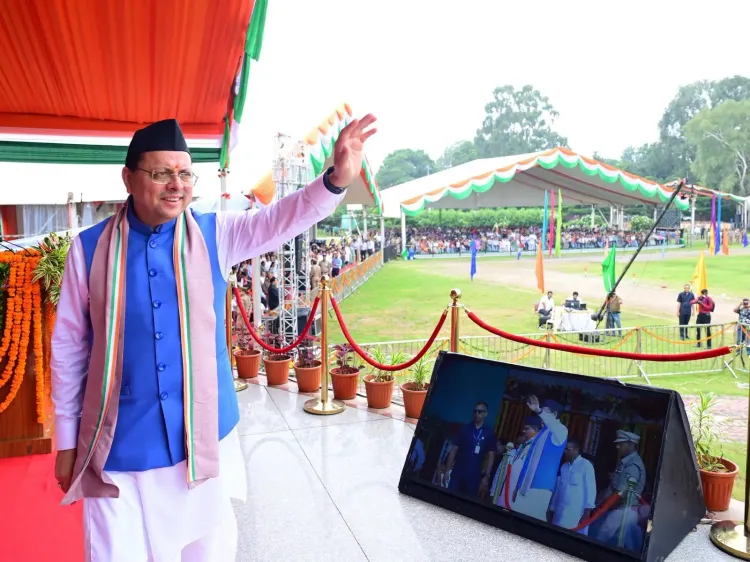
CM Dhami hoists flag at Dehradun's 80th Independence Day parade
Synopsis
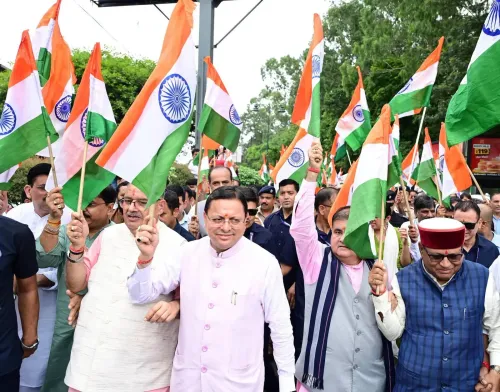
Uttarakhand CM Pushkar Singh Dhami hoisted the tricolour at Dehradun's Parade Ground on India's 80th Independence Day, paying tribute to 1947 freedom fighters, fallen soldiers, and the agitators who fought to create Uttarakhand as a separate state in 2000.
Key Takeaways
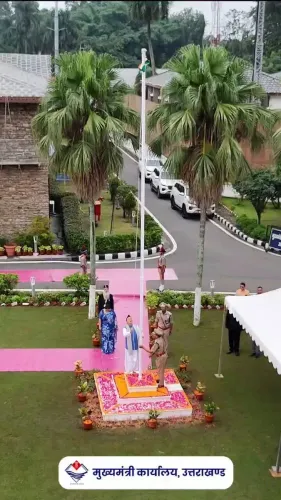
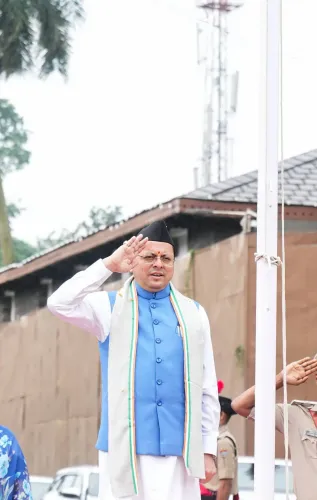
Pushkar Singh Dhami hoisted the national flag at Dehradun's Parade Ground on 15 August 2026 , India's 80th Independence Day .
The CM paid tribute to three groups: martyrs of the independence struggle, patriotic freedom fighters, and Uttarakhand statehood agitators.
Uttarakhand was created as India's 27th state on 9 November 2000 , following decades of regional protests.
Linking the 1947 freedom struggle with the statehood agitation is a consistent feature of Uttarakhand's official Independence Day commemorations.
The ceremony at the Parade Ground is the state's principal national-day event, with the CM as the central figure.
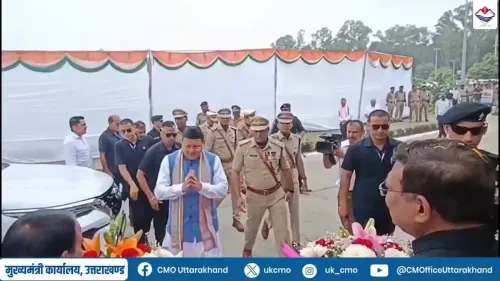
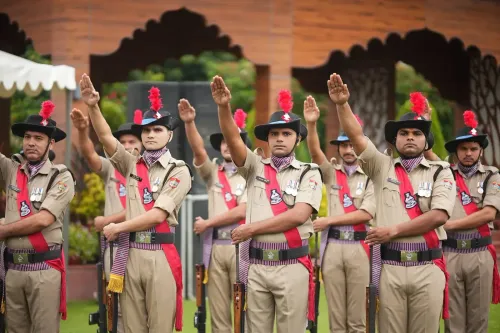
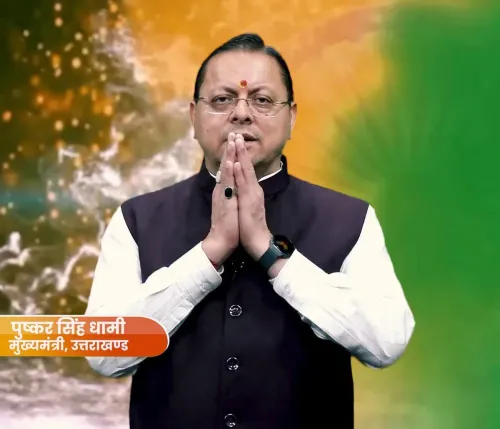
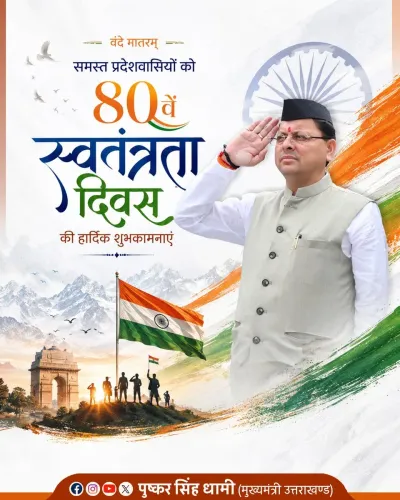
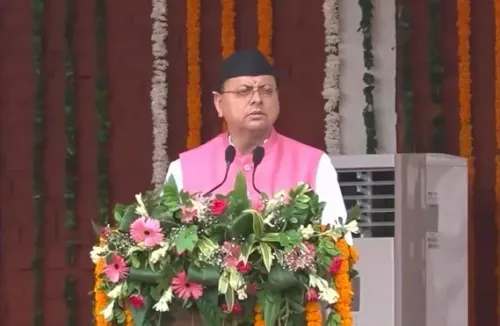
On the morning of 15 August 2026, Uttarakhand Chief Minister Pushkar Singh Dhami raised the tricolour at the Parade Ground in Dehradun, marking India's 80th Independence Day with a solemn tribute to three distinct generations of sacrifice — the freedom fighters of 1947, the soldiers who gave their lives for the nation, and the agitators who fought to carve Uttarakhand into existence as India's 27th state.
In his post on X, CM Dhami wrote that he 'paid gratitude while saluting the indomitable tales of valour of the brave immortal martyrs who offered their lives in the sacred yajna of independence, the patriotic freedom fighters, and the determined agitators of the Uttarakhand statehood movement' — a formulation that has become a defining feature of how the hill state observes its national days.
Three struggles, one salute at the Parade Ground
The Dehradun Parade Ground has long served as Uttarakhand's ceremonial nerve centre on national occasions. By explicitly naming the statehood agitators alongside the 1947 freedom fighters, Dhami continued a tradition unique to Uttarakhand's official commemorations: treating the decades-long demand for a separate hill state — which finally succeeded on 9 November 2000 — as a second chapter of the same unfinished freedom struggle.
That framing carries real resonance in a state where many families have living memory of the statehood agitation, including its most painful episode, the Rampur Tiraha firing of 1994, when protesters demanding a separate state were killed. Veterans of that movement and their families remain a politically and emotionally significant constituency in Uttarakhand.
India's 80th — and what the milestone means for a young state
India's 80th Independence Day arrives as Uttarakhand itself approaches the 26th anniversary of its own formation in November. The convergence gives state-level ceremonies a layered quality: the national milestone and the local one sit close enough on the calendar to reinforce each other in official memory-making. Chief ministers across India deliver flag-hoisting addresses each 15 August, but Uttarakhand's dual historical reference — national independence and regional statehood — gives its ceremony a texture few other states can replicate.
For Dhami, now in his second term as Chief Minister, the Independence Day address is also one of the highest-visibility platforms a state leader commands — a moment when the audience is the entire state, not a constituency or a party hall.
Eighty years after the tricolour first flew over a free India, and twenty-five years after it flew over a newly formed Uttarakhand, the flag at Dehradun's Parade Ground carries the weight of both histories — and the CM's salute acknowledged every fold of it.
Point of View
Dhami reinforces a political narrative that frames the regional movement as an extension of the national liberation struggle — a framing that deepens the BJP's emotional connect with hill communities who lived through that agitation. The 80th Independence Day milestone also gives the state government a high-visibility platform to project continuity between national pride and local identity. As Uttarakhand approaches its own 26th formation anniversary in November, the dual commemoration pattern strengthens the party's claim to be the custodian of both histories. It is a soft but deliberate act of political memory-making.
NationPress
30 Sept 2026
Frequently Asked Questions
Where did CM Dhami hoist the flag on Independence Day 2026?
CM Pushkar Singh Dhami hoisted the national flag at the Parade Ground in Dehradun , the capital of Uttarakhand, on 15 August 2026 .
What is India's 80th Independence Day?
India's 80th Independence Day falls on 15 August 2026 , marking 80 years since the country gained independence from British rule in 1947 .
When was Uttarakhand formed as a separate state?
Uttarakhand was carved out of Uttar Pradesh and established as India's 27th state on 9 November 2000 , following a prolonged statehood agitation.
Why does Uttarakhand's Independence Day tribute include statehood agitators?
Uttarakhand leaders have consistently honoured the statehood movement agitators alongside 1947 freedom fighters, treating the regional struggle for a separate hill state as part of the broader arc of the freedom movement.
Who is Pushkar Singh Dhami?
Pushkar Singh Dhami is the Chief Minister of Uttarakhand and a senior BJP leader, currently serving his second term as the head of the state government.