CM Dhami Marks Uttarakhand's 26th Statehood Day
Synopsis
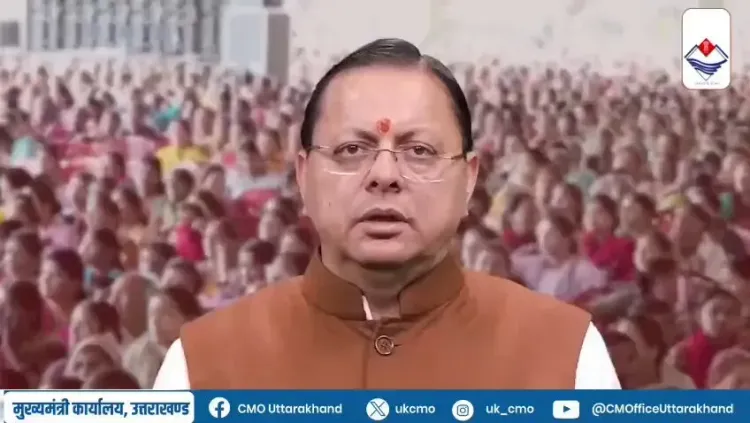
Chief Minister Pushkar Singh Dhami marked Uttarakhand's 26th Statehood Day on 9 November 2026, paying homage to martyrs of the statehood movement and urging residents to help build a prosperous, self-reliant state aligned with PM Modi's Viksit Bharat 2047 vision.
Key Takeaways
Uttarakhand marks its 26th Statehood Day on 9 November 2026 , commemorating the state's formation on 9 November 2000 .
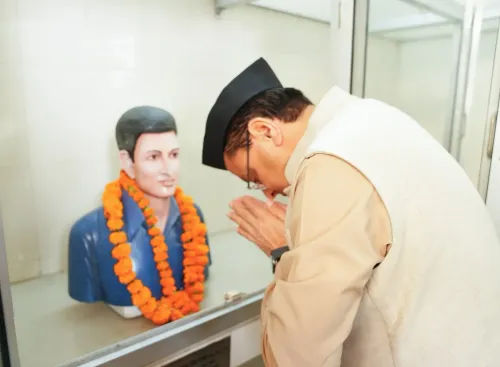
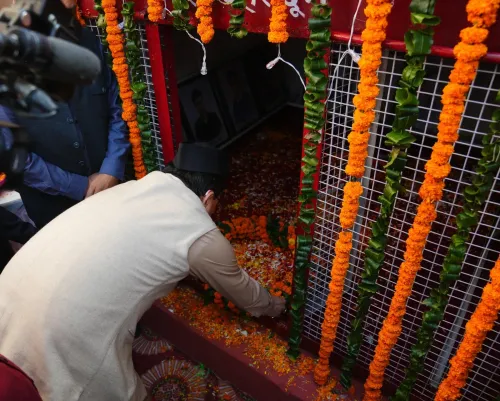
CM Pushkar Singh Dhami paid tribute to the amar shaheed andolankari — martyrs of the 1990s statehood agitation.
Dhami aligned Uttarakhand's development goals with PM Narendra Modi's Viksit Bharat 2047 framework.
The message called for a 'prosperous and self-reliant Uttarakhand' through collective participation.
Uttarakhand was carved out of Uttar Pradesh as India's 27th state after a prolonged hill-region movement.
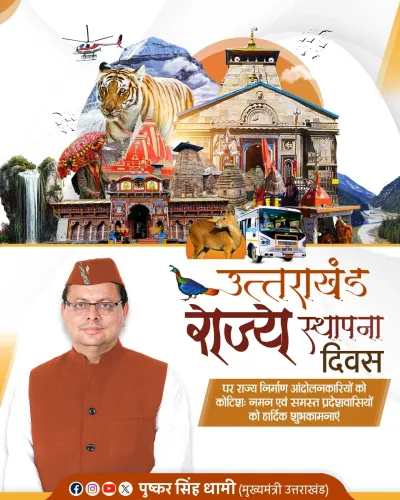
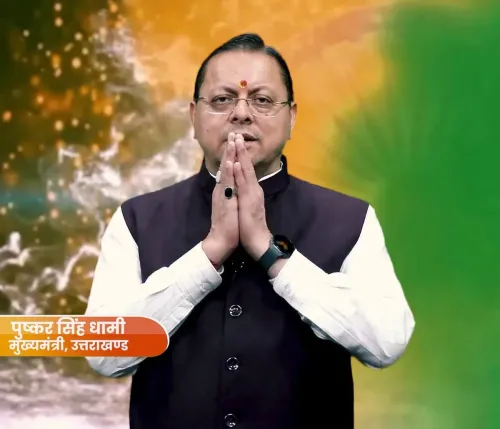
Twenty-six years after a grassroots agitation carved a new state out of the Himalayan hills, Chief Minister Pushkar Singh Dhami marked Uttarakhand Statehood Day on 9 November 2026 with a message of remembrance and resolve — honouring the martyrs of the formation movement while rallying residents toward a self-reliant future.
In his message, CM Dhami opened with a tribute to the amar shaheed andolankari — the immortal martyr-agitators — who, in his words, 'sacrificed everything for the creation of the state.' The acknowledgement is not merely ceremonial. The Uttarakhand statehood movement of the 1990s was a prolonged, often violent struggle for a separate hill state; its fallen participants remain a touchstone of regional identity every November.
From 27th State to Viksit Bharat Partner
Uttarakhand was formally established as India's 27th state on 9 November 2000, carved out of Uttar Pradesh after decades of demand from hill communities who felt administratively marginalised in the plains-dominated parent state. Today it observes the anniversary with official ceremonies, cultural events, and — invariably — a formal message from the Chief Minister's Office.
Dhami's 2026 message goes further than nostalgia. He explicitly aligned the state's development trajectory with Prime Minister Narendra Modi's 'Viksit Bharat 2047' vision — the central government's blueprint for a fully developed India by the centenary of independence. The linkage is deliberate cooperative-federalism signalling: state governments across the country have been publicly anchoring local goals to the Viksit Bharat 2047 framework, and Uttarakhand is no exception.
Heritage Preserved, New Dimensions Sought
'Uttarakhand today is establishing new dimensions of development while preserving its heritage,' Dhami wrote, calling on every resident to become a participant in building a 'prosperous and self-reliant Uttarakhand.' The twin emphasis — cultural preservation alongside economic ambition — reflects a consistent governing theme for a state whose identity is rooted in temple towns, agrarian hill communities, and sensitive Himalayan ecology, even as it courts investment and tourism.
The message closed with 'Jai Hind! Jai Uttarakhand!' — 'Victory to India! Victory to Uttarakhand!' — a double salute that neatly captures the state's standing as both a proud regional entity and a committed partner in the national project.
Twenty-six years on, the question the statehood day always quietly raises is whether the promises of a separate hill state — better governance, faster development, preserved identity — are being fulfilled. That answer, as always, will be written in the budgets and on the ground, not in the greetings.
Point of View
Dhami reinforces BJP's cooperative-federalism narrative, signalling that Uttarakhand's ambitions are coextensive with New Delhi's. The dual homage to movement martyrs and a central government scheme is a careful balancing act: acknowledging the regional identity politics that created the state while embedding the state firmly in the ruling party's national development story. As Uttarakhand approaches its three-decade mark, the statehood day message will increasingly be measured not by its rhetoric but by delivery on the original hill-region promises of equitable governance and economic opportunity.
NationPress
9 Nov 2026
Frequently Asked Questions
When was Uttarakhand formed as a separate state?
Uttarakhand was established as India's 27th state on 9 November 2000 , carved out of Uttar Pradesh following a prolonged regional agitation by hill communities.
Why is 9 November celebrated as Uttarakhand Statehood Day?
9 November is Uttarakhand Statehood Day because the state officially came into existence on 9 November 2000 . The day is marked with tributes to movement martyrs and official government functions.
What is Viksit Bharat 2047?
Viksit Bharat 2047 is the central government's vision to make India a fully developed nation by 2047 , the centenary of independence. State governments, including Uttarakhand, have been aligning their development plans with this framework.
Who is the current Chief Minister of Uttarakhand in 2026?
Pushkar Singh Dhami is the Chief Minister of Uttarakhand. He has held the post since 2021 and issued the official Statehood Day message on 9 November 2026 .
Who were the martyrs of the Uttarakhand statehood movement?
The amar shaheed andolankari refers to activists and protesters who lost their lives during the Uttarakhand statehood agitation of the 1990s , a movement demanding a separate hill state from Uttar Pradesh. They are honoured every year on Statehood Day.