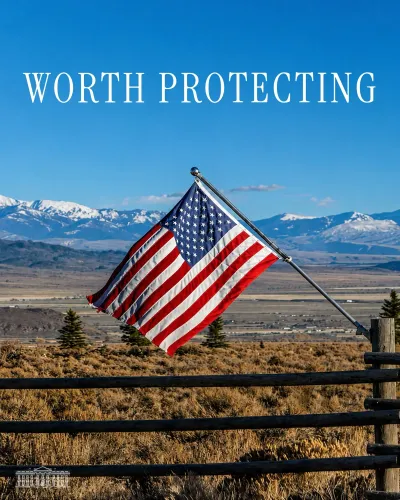
White House Calls US Greatest Force for Peace and Justice
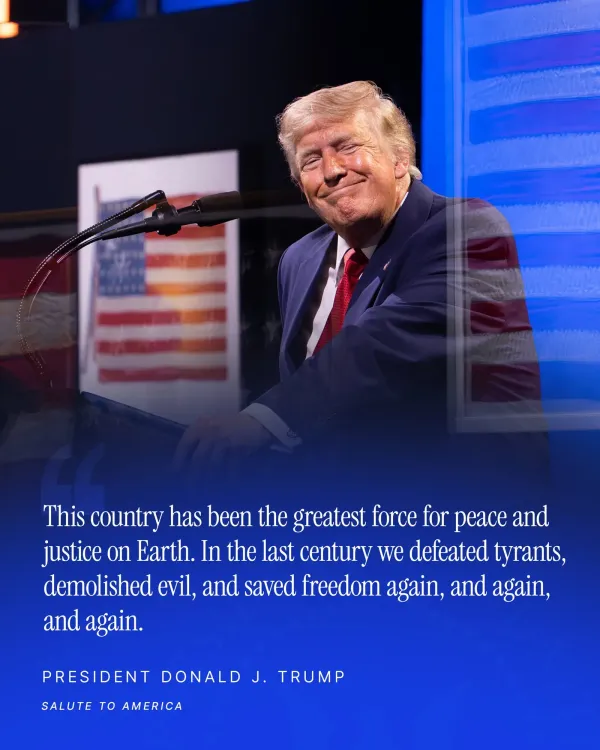
Synopsis
The White House on 8 July 2026 declared the United States 'the greatest force for PEACE and JUSTICE in the world' on X, reaffirming a long-standing doctrine of American exceptionalism that has shaped US foreign policy since the post-World War II era and continues to frame Washington's global diplomatic posture.
Key Takeaways
The White House posted on X on 8 July 2026 calling the US 'the greatest force for PEACE and JUSTICE in the world.' The statement reflects a bipartisan tradition of American exceptionalism in foreign policy dating to at least the Truman Doctrine of 1947 .
The United States played a central role in establishing post- World War II international institutions, including the United Nations in 1945 .
The post carries diplomatic significance for US allies and partners, including India , amid deepening bilateral strategic ties.
Observers will track Washington's positions at upcoming UN General Assembly sessions and multilateral conflict-resolution forums.
The White House, the official communications account of the Executive Office of the President of the United States, on Tuesday, 8 July 2026, declared the United States 'the greatest force for PEACE and JUSTICE in the world,' posting the statement alongside the American flag emoji on X. The post, brief but sweeping in its claim, reflects a long-standing assertion of American primacy in shaping global order.
Context
The White House's post — 'The greatest force for PEACE and JUSTICE in the world' — is a declarative statement of American exceptionalism, a doctrine that has anchored US foreign policy since the post-World War II era. The founding of institutions such as the United Nations in 1945 was deeply shaped by Washington's vision of a rules-based international order. The capitalisation of 'PEACE' and 'JUSTICE' signals deliberate rhetorical emphasis, framing the United States not merely as a participant in global affairs but as its defining force.
Such declarations from the White House are not new. Across administrations — Democratic and Republican alike — the language of American leadership in peace and security has been a consistent feature of official communications, rooted in what scholars describe as the bipartisan consensus on US exceptionalism.
Policy Backdrop
The ideological lineage of this claim stretches back to the Truman Doctrine of 1947, when President Harry S. Truman framed US foreign policy as the defence of 'free peoples' resisting external subjugation. That doctrine set the template for decades of American global engagement, from military alliances to diplomatic initiatives and development assistance. The assertion of the United States as a force for justice has since been invoked to justify interventions, sanctions regimes, and multilateral coalition-building across regions including Europe, the Middle East, and the Indo-Pacific.
The post arrives as the international community watches Washington's positions ahead of major multilateral forums, including sessions at the United Nations General Assembly, where the United States is expected to weigh in on ongoing conflict-resolution efforts and global governance questions.
Stakeholders and Impact
For US allies — particularly in Europe, the Indo-Pacific, and across the Global South — White House statements of this kind carry diplomatic weight, signalling Washington's continued commitment to its self-described role as a guarantor of international stability. For countries that have experienced the friction of US foreign policy decisions, including sanctions or military operations, the framing is more contested.
In India, the statement lands amid an evolving India-US strategic partnership, with both nations deepening defence, technology, and trade ties. New Delhi has historically maintained a non-aligned posture but has increasingly aligned with Washington on key security and economic frameworks, making the tone of White House messaging on global order directly relevant to Indian foreign policy discourse.
What's Next
The broader significance of this post will likely be determined by the diplomatic and policy actions that follow. Observers will watch whether the White House translates this rhetorical positioning into concrete stances at upcoming multilateral forums, including the UN General Assembly and related conflict-resolution dialogues. How the United States engages on active global flashpoints — from Eastern Europe to the South China Sea — will be the real measure against which this claim is assessed. For now, the post stands as a statement of intent and identity, consistent with the long arc of American foreign policy self-presentation.
Point of View
' the post signals a deliberate rhetorical escalation, not merely a routine affirmation. This kind of messaging typically precedes or accompanies active diplomatic positioning, suggesting the statement may be a prelude to a broader foreign policy push at upcoming multilateral forums. For countries like India, navigating a strategic partnership with Washington while maintaining sovereign foreign policy independence, the tone of such declarations shapes the diplomatic context in which bilateral engagement unfolds.
NationPress
8 Jul 2026
Frequently Asked Questions
What did the White House post on X on 8 July 2026?
The White House posted that the United States is 'the greatest force for PEACE and JUSTICE in the world,' accompanied by the American flag emoji.
What is American exceptionalism in foreign policy?
American exceptionalism is the belief that the United States holds a unique and morally superior role in global affairs. It has underpinned US foreign policy since at least the Truman Doctrine of 1947 and is frequently invoked in official White House communications.
Why does the White House make statements about US global leadership?
Such statements reflect a long-standing bipartisan consensus in Washington that the United States bears a special responsibility for maintaining international peace and security, rooted in its central role in building post- World War II institutions like the United Nations .
How does this White House statement affect India?
India and the United States share a deepening strategic partnership. White House statements on global order and American leadership directly shape the diplomatic context of India-US relations, particularly on defence, technology, and multilateral governance.
What should we watch for after this White House post?
Key developments to monitor include the US position at the upcoming UN General Assembly and any diplomatic initiatives on active global conflicts, which will test whether this rhetorical claim translates into concrete policy action.