White House Declares a 'Golden Age of Science' Under Trump

Synopsis
The White House declared a 'Golden Age of Science' on 8 October 2026, with President Trump vowing to empower American scientists to lead the next generation of discovery — a sweeping rhetorical claim with geopolitical implications but no specific policy detail attached.
Key Takeaways
The White House officially declared a 'Golden Age of Science in America' on 8 October 2026 .
President Donald Trump is described as committed to 'empowering great scientists' to drive the next generation of American discovery.
The announcement is framed in sweeping historical terms but contains no specific programme, funding figure, or institutional detail.
The signal carries strategic implications for global scientific competition, including for countries like India that compete for top research talent and partnerships.
The declaration follows a long tradition of US presidents staking a legacy claim on scientific ambition, from the Apollo era onward.
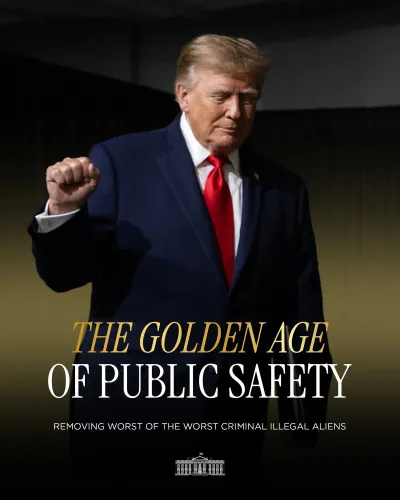
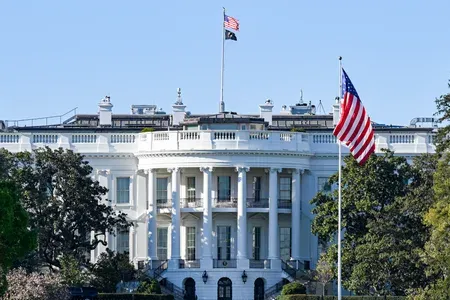
A sweeping proclamation from the highest office in the United States landed on Thursday: America, the White House declared, is entering a 'Golden Age of Science' — and President Donald Trump intends to be the one steering it. The official post, shared on 8 October 2026, signals a deliberate effort by the administration to plant its flag on scientific ambition as a core national identity.
What the White House is Claiming
The message is short but pointed: 'President Trump is committed to empowering our great scientists to drive the next generation of American discovery.' The framing — 'Golden Age' — is an unmistakably bold posture, invoking the language of historical turning points rather than incremental policy progress. It positions the administration not merely as a supporter of science, but as its architect.
Why This Signal Matters Beyond American Borders
For countries like India, which competes with the United States in attracting top scientific talent and securing research partnerships, declarations of this scale carry real strategic weight. When Washington loudly backs science, it sends a ripple through global research funding, talent flows, and technology diplomacy. The question every rival and partner nation will now be asking: what specific policies back up the headline?
The post offers no programme names, no budget figures, no institutional anchors. That absence matters. A 'Golden Age' without concrete scaffolding is a vision statement — powerful as a signal, limited as a blueprint.
The Politics of Owning Discovery
Historically, American presidents have competed fiercely to be remembered as champions of science — from Kennedy's moon shot to Obama-era STEM initiatives. Trump's administration is now staking a similar claim. Whether this translates into research funding, regulatory latitude for emerging technologies, or a reversal of previous constraints on scientific agencies remains the defining question. The rhetoric is ambitious. The details will decide whether history agrees.
Point of View
Such proclamations are worth tracking closely: they often precede bilateral science-and-technology agreements, visa and talent-pipeline debates, and shifts in how US research institutions engage with Indian counterparts. The absence of any specific policy anchor in the post is notable — it suggests the messaging is running ahead of the mechanism, a pattern common in election-adjacent political communications. The real test will come when budget lines, agency mandates, or legislative proposals are attached to this 'Golden Age' framing.
NationPress
8 Oct 2026
Frequently Asked Questions
What did the White House say about science on 8 October 2026?
The White House declared that America is entering a 'Golden Age of Science,' stating that President Trump is committed to empowering scientists to drive the next generation of American discovery.
What specific science policies did Trump announce?
The 8 October post contained no specific policy announcements, budget figures, or programme details — it was a broad rhetorical declaration of intent.
How does Trump's science stance affect India?
Strong US science investment signals can affect global talent flows, research partnerships, and technology diplomacy — all areas where India competes and collaborates with the United States.
What does 'Golden Age of Science' mean in US political terms?
It is a historically loaded phrase invoking transformative eras like the space race, positioning the administration as a champion of scientific ambition rather than just a policy manager.
Is this the first time a US president has made such a science claim?
No — American presidents from Kennedy to Obama have competed to own the legacy of scientific progress, making this declaration part of a long tradition of presidential science branding.