White House Hails US Rescue Teams Aiding Venezuela

Synopsis
The White House on 27 June 2026 publicly praised American search and rescue teams deployed to Venezuela, framing the humanitarian mission as 'America at its best' — a notable signal given the long-strained diplomatic ties between Washington and Caracas.
Key Takeaways
The White House officially acknowledged US search and rescue teams operating in Venezuela on 27 June 2026 .
The post described the deployment as 'America at its best,' signalling strong executive-level endorsement of the mission.
No specific details about the nature of the emergency or the number of personnel deployed were included in the official post.
The deployment is significant given the historically adversarial diplomatic relationship between Washington and Caracas .
Humanitarian missions of this type are typically coordinated through agencies such as USAID or via bilateral emergency frameworks.
The public acknowledgement suggests the White House sees strategic as well as humanitarian value in highlighting US assistance in the region.
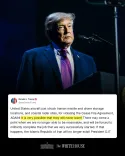
The White House on Saturday, 27 June 2026 publicly commended American search and rescue teams deployed to Venezuela, calling the humanitarian effort 'America at its best' in an official post on X.
Context
The White House post, brief but pointed, stated: 'America at its best. Thank you to the American search and rescue teams providing assistance in Venezuela.' No further operational details were provided in the post itself, but the acknowledgement signals an active US humanitarian presence inside or near Venezuelan territory — a notable development given the historically fraught diplomatic relationship between Washington and Caracas.
Search and rescue deployments of this nature are typically coordinated through agencies such as the US Agency for International Development (USAID) or through bilateral emergency agreements, and often involve specialised teams trained for disaster response in complex environments.
Policy Backdrop
US-Venezuela relations have been strained for well over a decade, marked by sanctions, contested elections, and diplomatic stand-offs. The United States has historically maintained pressure on the government in Caracas through targeted economic measures, making any direct humanitarian cooperation between the two countries a significant diplomatic signal.
American search and rescue teams — often drawn from federal agencies, the military, and specialised civilian corps — have a long record of rapid deployment across Latin America in the wake of natural disasters, including earthquakes, floods, and infrastructure collapses. Their presence in Venezuela, explicitly acknowledged by the White House, suggests a crisis of sufficient scale to prompt cross-border assistance.
Stakeholders and Impact
For ordinary Venezuelans, the arrival of US rescue personnel represents immediate, on-the-ground relief capacity that the country's own overstretched emergency services may be struggling to provide. Venezuela has faced years of economic contraction, emigration of skilled workers, and degraded public infrastructure, all of which compound the impact of any sudden disaster.
For the Biden-era and subsequent US administrations, humanitarian deployments have served a dual purpose: delivering genuine relief while also demonstrating American soft power in a region where China and Russia have expanded their footprint. The White House's decision to publicly highlight this mission — framing it as 'America at its best' — underscores the political value attached to such operations.
What's Next
Details on the nature and scale of the emergency in Venezuela, the number of US personnel involved, and the expected duration of the mission have not yet been officially released. Observers will watch for follow-up statements from USAID, the US State Department, or Venezuelan authorities that clarify the scope of the crisis and the humanitarian response.
The episode could open a narrow channel for limited US-Venezuela engagement on humanitarian grounds, even as broader political tensions remain unresolved — a pattern seen previously in disaster diplomacy across the Western Hemisphere.
Point of View
Positioning US humanitarian capability as a contrast to the political tensions that have long defined Washington's relationship with Caracas. In a region where American influence has faced sustained competition, disaster diplomacy offers a rare lane for engagement that sidesteps the ideological gridlock of sanctions and recognition disputes. For Indian observers tracking US foreign policy, the episode is a reminder that Washington continues to treat Latin America as a theatre where soft power and hard geopolitics intersect. Whether this mission opens any lasting diplomatic channel between the two governments remains the key question.
NationPress
28 Jun 2026
Frequently Asked Questions
Why are US search and rescue teams in Venezuela?
The White House confirmed on 27 June 2026 that American search and rescue teams are providing assistance in Venezuela, though the specific nature of the emergency has not been officially detailed. Such deployments typically follow natural disasters or major infrastructure failures.
What is the relationship between the US and Venezuela?
US-Venezuela relations have been deeply strained for over a decade, characterised by American economic sanctions, disputes over Venezuelan elections, and competing geopolitical alignments. The current humanitarian deployment represents a rare instance of direct US assistance inside Venezuelan territory.
Which US agencies handle international search and rescue missions?
International search and rescue missions are typically led by USAID 's Office of US Foreign Disaster Assistance (OFDA), often working alongside military assets and specialised civilian rescue corps trained for complex disaster environments.
What did the White House say about Venezuela?
The White House posted on X on 27 June 2026: 'America at its best. Thank you to the American search and rescue teams providing assistance in Venezuela,' accompanied by the US flag emoji.
Is this the first time the US has sent rescue teams to Venezuela?
While the US has historically provided some humanitarian aid to Venezuela through international channels, a direct White House-acknowledged search and rescue deployment of this kind is uncommon given the strained bilateral relationship between the two countries.