White House Spotlights Bolivar Memorial Park Fountain
Synopsis
The White House shared a photograph of the Bolivar Memorial Park Fountain on June 1, 2026, spotlighting the monument to Simón Bolívar, the 19th-century liberator of northern South America, in a gesture reflecting longstanding US emphasis on shared hemispheric republican heritage.
Key Takeaways
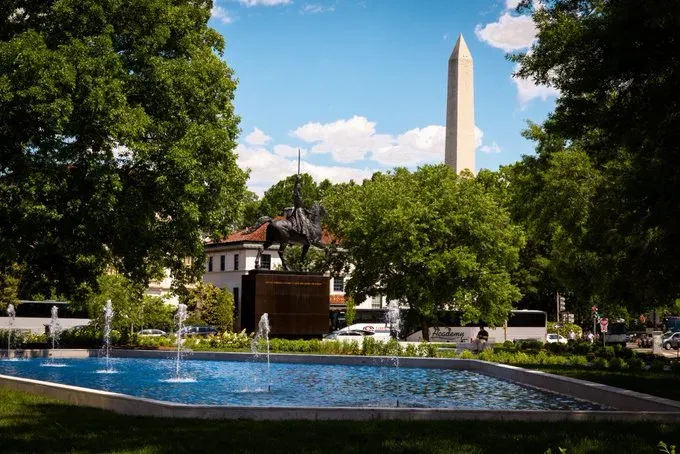
The White House posted an image of the Bolivar Memorial Park Fountain on June 1, 2026 .
Simón Bolívar led independence campaigns across northern South America against Spanish rule in the 1810s–1820s .
The United States formally recognised Gran Colombia in 1822 , one of its earliest diplomatic ties with the new Latin American republics.
White House social-media accounts have a documented pattern of spotlighting Latin American independence monuments as soft-power messaging.
The post may connect to broader Summit of the Americas or State Department cultural-heritage programming for 2025–2026 .
The White House, the official communications account of the Executive Office of the President of the United States, shared an image of the Bolivar Memorial Park Fountain on Monday, June 1, 2026, drawing public attention to a landmark commemorating one of Latin America's most celebrated independence leaders.
Context
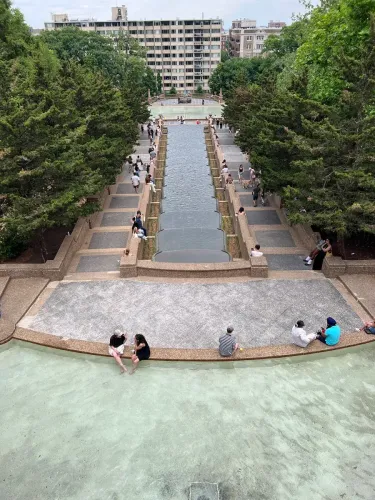
The post, carrying only the caption 'Bolivar Memorial Park Fountain,' features a photograph of the fountain at the park dedicated to Simón Bolívar, the Venezuelan-born military commander who led independence campaigns across northern South America against Spanish colonial rule during the 1810s and 1820s. Bolívar's campaigns liberated territories that became present-day Venezuela, Colombia, Ecuador, Peru, and Bolivia. The memorial park bearing his name serves as a public tribute to his enduring legacy in the story of hemispheric self-determination.
Policy Backdrop
The United States formally recognised Gran Colombia — the short-lived republic that unified much of northern South America under Bolívar's influence — in 1822, marking one of the earliest formal diplomatic acknowledgements of the newly independent Latin American republics. That recognition has since been cited as a foundational moment in US-Latin American relations, reflecting a shared republican heritage that American administrations have periodically invoked in diplomatic messaging. White House social-media accounts have a pattern of spotlighting monuments linked to 19th-century Latin American independence figures as a low-key expression of enduring hemispheric cultural ties, deliberately foregrounding common origins over contemporary bilateral disputes.
Stakeholders and Impact
The post resonates most directly with Latin American diaspora communities across the United States, for whom Bolívar remains a powerful symbol of anti-colonial struggle and national identity. Public historians and cultural-heritage advocates are also key audiences, as official attention to such monuments can elevate their visibility and, in some cases, influence preservation funding conversations. For diplomatic observers tracking US engagement with Latin America, even ceremonial social-media gestures from the White House carry soft-power significance, signalling which historical narratives the administration chooses to amplify.
What's Next
Analysts will watch whether this post is followed by any State Department cultural-heritage programming tied to the monument or any reference to the broader Summit of the Americas agenda for 2025–2026. Such a follow-on signal would suggest the post is part of a coordinated hemispheric outreach effort rather than a standalone commemorative gesture. For now, the image stands as a quiet but deliberate nod to the deep historical roots of US ties with Latin America.
Point of View
Invoking Bolívar's legacy allows the administration to project continuity and goodwill toward the region's diaspora communities. The gesture fits a broader pattern of using cultural and historical touchstones as low-risk diplomatic messaging. Whether it translates into substantive policy engagement with Latin America remains the defining question.
NationPress
20 Sept 2026
Frequently Asked Questions
What is the Bolivar Memorial Park Fountain?
The Bolivar Memorial Park Fountain is a public landmark commemorating Simón Bolívar, the 19th-century military leader who directed Latin American independence movements against Spanish colonial rule.
Why did the White House post about the Bolivar Memorial Park Fountain?
The White House shared the image as part of a recurring pattern of spotlighting monuments tied to Latin American independence figures, reflecting the US emphasis on shared hemispheric republican heritage.
Who was Simón Bolívar?
Simón Bolívar was a Venezuelan-born military commander who led successful independence campaigns across present-day Venezuela, Colombia, Ecuador, Peru, and Bolivia during the 1810s and 1820s.
When did the US first recognise Latin American republics linked to Bolívar?
The United States formally recognised Gran Colombia, the republic Bolívar helped establish, in 1822, marking one of the earliest US diplomatic ties with the newly independent Latin American nations.
What could the White House Bolivar post signal for US-Latin America relations?
Analysts are watching for any follow-on State Department cultural-heritage programming or references to the 2025–2026 Summit of the Americas agenda that might indicate a coordinated hemispheric outreach effort.