White House Launches America.gov, a Single Federal Web Portal

Synopsis
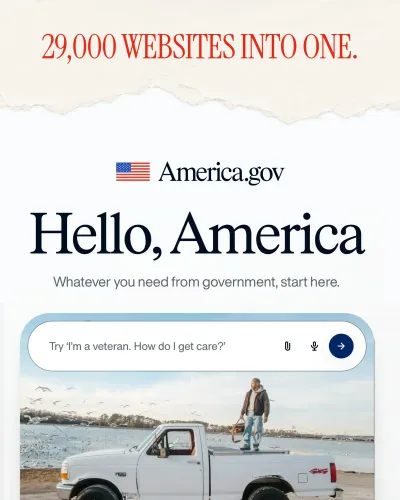
The White House launched America.gov on 30 September 2026, consolidating thousands of US federal agency websites into one unified digital portal — the most ambitious e-government consolidation since USA.gov debuted in 2007.
Key Takeaways
The White House announced the launch of America.gov on 30 September 2026 as a single federal web portal.
The move consolidates thousands of individual US agency websites into one unified digital address.
The US federal government first attempted centralised web access with FirstGov.gov in 2000 , later rebranded as USA.gov in 2007 .
E-government consolidation has been a bipartisan policy goal across multiple administrations for over two decades.
Full migration will depend on phased agency timelines, IT budgets, and potential Congressional digital-government legislation.
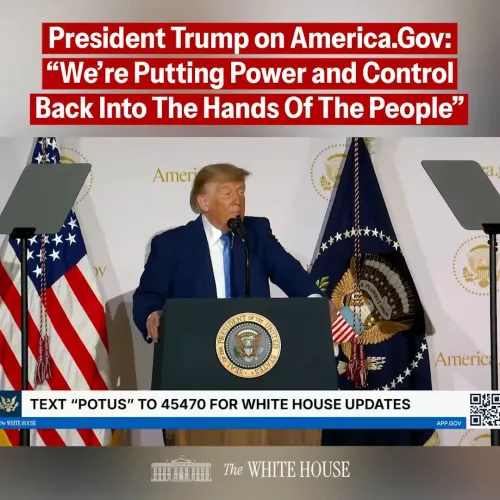
The United States federal government just collapsed thousands of agency websites into one address. The White House announced on 30 September 2026 the launch of America.gov, billing it as a single, unified digital front door for American citizens navigating federal services — a move framed squarely as government 'made for 2026.'
From a Thousand URLs to One Front Door
The announcement, posted on X with the tagline 'Thousands of websites ➡️ ONE easy place,' signals a sweeping consolidation of the federal government's sprawling digital presence. For decades, Americans seeking federal services have had to navigate a maze of agency-specific domains — each with its own design, search logic, and login system. America.gov is positioned as the fix.
The ambition is not entirely new. The federal government launched FirstGov.gov in 2000 as its first attempt at a centralised web portal, later rebranded as USA.gov in 2007. What the White House is now signalling is a more aggressive consolidation — fewer parallel sites, one authoritative destination.
Decades of Digital Fragmentation, One Attempted Reset
Successive administrations have wrestled with the same problem: the federal government operates hundreds of agencies, each historically maintaining independent digital infrastructure. The result has been duplication, inconsistent user experience, and genuine confusion for citizens trying to access benefits, file forms, or find official information.
E-government modernisation has been a bipartisan goal since the early 2000s, with legislation and executive directives periodically pushing agencies toward shared platforms and reduced web footprints. The launch of America.gov represents the latest — and apparently most direct — iteration of that long-running effort.
What Migration Actually Means for Federal Agencies
The real test will be in the execution. Consolidating thousands of websites means phased migration timelines, data architecture decisions, and agency buy-in across the entire executive branch. Congressional action on digital government legislation will also shape how quickly and completely individual agencies can transition. The announcement sets a destination; the road to it runs through federal procurement, IT budgets, and interagency coordination.
For ordinary Americans, the promise is straightforward: one place, every service, no wrong door. Whether America.gov delivers on that in practice will depend on how seamlessly agencies integrate — and how robustly the platform is built to scale.
The address is live. Now comes the harder part — making sure every agency actually shows up there.
Point of View
But make it 2026' is a deliberate pitch to a generation that expects seamless digital services, and it sets a high public benchmark. The real political risk is the gap between the announcement and delivery: if agency migration lags or the portal underperforms, the bold branding becomes a liability. Internationally, the move mirrors digital-government consolidation drives seen in the UK, India, and Estonia, where single-window citizen portals have become a standard of modern governance.
NationPress
1 Oct 2026
Frequently Asked Questions
What is America.gov and what does it do?
America.gov is the new unified web portal of the United States federal government, announced on 30 September 2026, designed to consolidate thousands of individual agency websites into one central access point for citizens.
Is America.gov replacing USA.gov?
The White House announcement positions America.gov as the new single federal destination, though the precise relationship to the existing USA.gov domain has not been fully detailed in official communications.
When was the US government's first centralised web portal launched?
The first centralised US federal web portal, FirstGov.gov, launched in 2000 and was later rebranded as USA.gov in 2007.
Why is the US government consolidating its websites?
Federal digital consolidation aims to reduce duplication, cut costs, and give citizens a single, consistent experience when accessing government services — a goal pursued by successive administrations since the early 2000s.
Will all US government agencies move to America.gov?
Full agency migration is expected to follow phased timelines and will depend on IT budgets, interagency coordination, and any relevant Congressional digital-government legislation.