White House Marks July 4 With Tribute to America's Founding Era

Synopsis
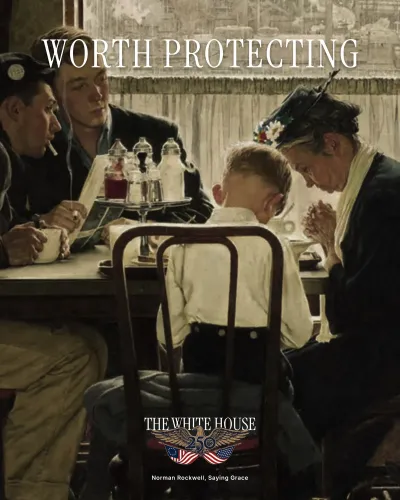
The White House marked the eve of America's 250th Independence Day on 3 July 2026 with a patriotic post declaring 'The era that built America,' accompanied by two videos, evoking the nation's foundational and developmental history ahead of the landmark semiquincentennial celebration.
Key Takeaways
The White House posted a patriotic tribute on 3 July 2026 , the eve of Independence Day .
The caption read: 'The era that built America,' accompanied by the American flag emoji and two videos .
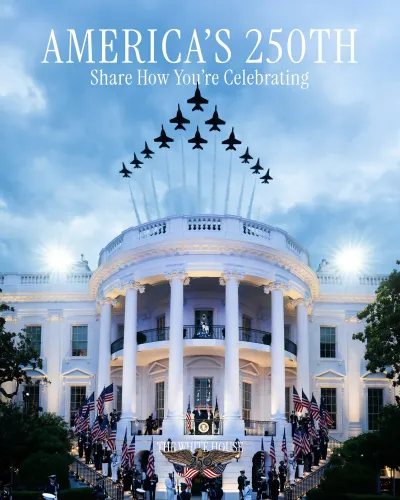
4 July 2026 marks the 250th anniversary — the semiquincentennial — of American independence.
White House Independence Day social-media posts are a recurring tradition across multiple administrations.
The post's historical framing aligns with broader federal commemorative planning for the 2026 milestone year.
The White House, the official communications account of the Executive Office of the President of the United States, posted a patriotic tribute on 3 July 2026, ahead of Independence Day, declaring: 'The era that built America.' The short caption, accompanied by two videos, was shared as the nation prepared for its 250th anniversary celebrations on 4 July 2026.
Context
The post, bearing only the words 'The era that built America' alongside the American flag emoji, evokes the long tradition of White House social-media messaging that salutes defining chapters in United States history on the eve of Independence Day. The brevity of the caption places interpretive weight on the accompanying video content, which was not independently available for review at the time of publication.
The United States was founded on 4 July 1776, when the Continental Congress formally adopted the Declaration of Independence. The phrase 'the era that built America' is a formulation that has appeared across political discourse to describe periods ranging from the post-Revolutionary founding to the industrial expansion of the 19th and early 20th centuries.
Policy Backdrop
Annual Independence Day communications from the White House have been a fixture of American political culture across multiple administrations. These posts typically invoke themes of national unity, economic achievement, and historical pride, timed to coincide with the statutory federal holiday observed on 4 July each year.
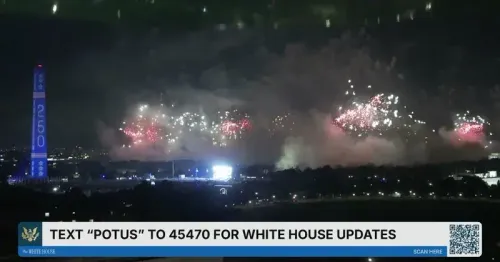
The 2026 celebration carries added significance as it marks the semiquincentennial — the 250th anniversary of American independence — a milestone that has prompted large-scale commemorative planning at the federal, state, and local levels across the country. Official events, parades, and fireworks displays were scheduled nationwide for 4 July 2026.
Stakeholders and Impact
American citizens are the primary audience for this messaging, with the White House using its social-media platform to participate in the national mood ahead of a major civic holiday. For the global audience — including the significant Indian-American diaspora and international observers — such posts signal the administration's rhetorical framing of American identity and historical legacy.
The choice to emphasise a foundational or developmental 'era' rather than any single modern policy achievement reflects a broader pattern of anchoring patriotic messaging in historical narrative, a approach that tends to draw broad public resonance across partisan lines during major national commemorations.
What's Next
Official July 4 2026 White House events and any subsequent administration statements are expected to elaborate on the historical and economic themes previewed in this post. Further video releases, public addresses, or ceremonial appearances tied to the 250th anniversary of American independence will likely define the administration's commemorative posture in the days ahead. Observers will watch for whether the 'era that built America' framing is extended into specific policy arguments or remains a standalone patriotic tribute.
Point of View
Posted on the eve of the nation's 250th birthday, is a deliberate act of historical framing — invoking a golden-age narrative without specifying which era, leaving the phrase open to broad identification. This kind of ambiguity is a feature, not a bug, of patriotic social-media strategy: it invites every American to project their own sense of national pride onto the message. Coming at the semiquincentennial, a once-in-a-generation milestone, the post signals that the administration intends to anchor its public identity in historical legacy rather than current-day policy metrics. The accompanying video content, once fully in circulation, will be the real indicator of which 'era' the White House is politically invested in celebrating.
NationPress
2 Oct 2026
Frequently Asked Questions
Why did the White House post 'The era that built America' on 3 July 2026?
The White House posted the message on the eve of Independence Day as part of the annual tradition of patriotic social-media tributes marking 4 July , with added significance this year as the United States celebrates its 250th anniversary of independence.
What is the significance of July 4 2026 for the United States?
4 July 2026 marks the semiquincentennial — the 250th anniversary — of the United States' Declaration of Independence, originally adopted on 4 July 1776 , making it one of the most significant national commemorations in American history.
Which era is the White House referring to when it says 'the era that built America'?
The White House did not specify a particular era in the post. The phrase is broadly used in American political discourse to reference foundational or high-growth periods such as the Revolutionary era, the industrial age of the 19th century , or the post-war economic expansion of the 20th century .
Does the White House regularly post on Independence Day?
Yes. Annual Independence Day social-media posts from the White House are a long-standing tradition observed across multiple administrations, typically invoking themes of national unity, historical pride, and American achievement.
How does this White House post relate to India?
While the post is directed at a US domestic audience , it is widely followed internationally, including by India's significant Indian-American diaspora and policymakers who track the US administration's public communications and rhetorical priorities.