White House Unveils Military Triumphal Arch for America's 250th

Synopsis
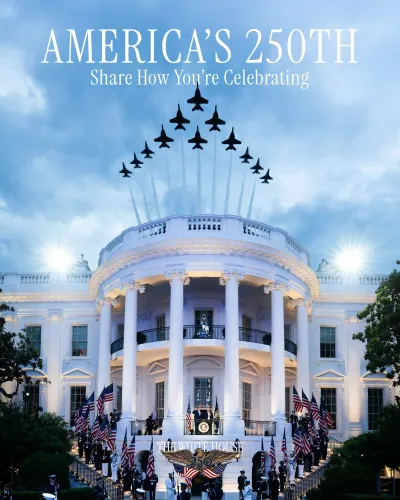
The White House has announced the Military Triumphal Arch, a landmark monument honouring American service members across 250 years of national history, timed to the United States Semiquincentennial celebrations and framed as a symbol of the nation's future.
Key Takeaways
The White House announced the Military Triumphal Arch on 6 November 2026 .
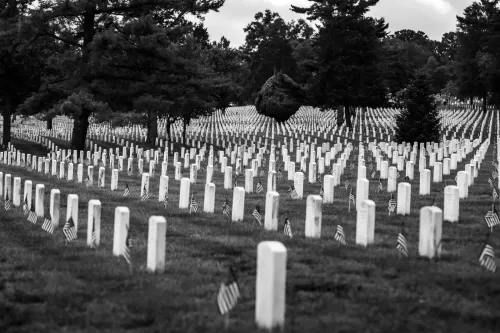
The monument is intended as a tribute to US military personnel who served across America's first 250 years .
It is linked to the United States Semiquincentennial , marking 250 years since the 1776 Declaration of Independence .
The US Semiquincentennial Commission was authorised by Congress in 2016 to plan 250th anniversary commemorations.
A dedicated website, Triumphalarch.com , was launched alongside the announcement.
Site selection, design approval, and funding mechanisms are yet to be publicly confirmed.
As the United States counts down to its 250th anniversary, the White House has announced a landmark addition to the nation's commemorative landscape: the Military Triumphal Arch, a monumental structure designed to honour American service members who sacrificed everything for their country.
A monument two-and-a-half centuries in the making
The White House described the arch as 'a monumental tribute to America's first 250 years and a symbol of the next 250' — framing it not merely as a backward-looking memorial but as a declaration of national intent. The announcement tied the project explicitly to the United States Semiquincentennial, the commemoration of 250 years since the Declaration of Independence was signed in 1776. A dedicated website, Triumphalarch.com, was launched alongside the announcement to provide further details.
The phrasing — 'a legacy of freedom, a future without limits' — signals that the administration intends the arch to carry a dual meaning: honouring the military dead while projecting forward-looking national ambition. That framing places it in a long lineage of American commemorative architecture that speaks as much to the living as to those being remembered.
Semiquincentennial and the tradition of anniversary monuments
The United States Semiquincentennial Commission was authorised by Congress in 2016 to coordinate national planning for the 250th anniversary celebrations. Major anniversary milestones in American history have almost always produced permanent physical tributes — from the centennial celebrations of 1876 in Philadelphia to the sesquicentennial works of 1926. The Military Triumphal Arch follows that tradition, adding a specifically military dimension to what is shaping up to be the largest national commemoration in a generation.
Triumphal arches carry deep symbolic weight across Western civic architecture — from the Arc de Triomphe in Paris, which honours French military campaigns, to the India Gate in New Delhi, which memorialises soldiers of the British Indian Army. A distinctly American version, dedicated to the full sweep of 250 years of military service, would occupy a singular place in that tradition.
What comes next: site, design, and funding
The critical outstanding questions are site selection, architectural design approval, and the funding mechanism — whether through congressional appropriation, public-private partnership, or a combination of both. Historically, major Washington monuments have required significant legislative groundwork before construction begins. Military veterans and their families represent the primary stakeholders in how the project takes shape, and advocacy groups are likely to weigh in as design details emerge.
With America's 250th birthday now on the immediate horizon, the pressure to move from announcement to groundbreaking is real — and the arch's legacy, like the nation's, will be written in what gets built next.
Point of View
The administration elevates it beyond a standard veterans' memorial into a statement about American exceptionalism and continuity. The arch concept also draws on a globally recognised civic vocabulary — triumphal arches as symbols of martial sacrifice — lending the proposal immediate symbolic legibility at home and abroad. The real test will come when site, design, and funding debates begin, historically the stage at which such projects gain or lose political momentum.
NationPress
6 Nov 2026
Frequently Asked Questions
What is the Military Triumphal Arch announced by the White House?
The Military Triumphal Arch is a proposed monumental structure announced by the White House on 6 November 2026 to honour American military service members across the nation's 250-year history, timed to the United States Semiquincentennial.
Where will the Military Triumphal Arch be built?
The White House announcement did not confirm a specific site. Site selection, design approval, and funding details are among the outstanding steps before construction can begin.
What is the US Semiquincentennial?
The United States Semiquincentennial is the commemoration of 250 years since the Declaration of Independence was signed in 1776. Congress authorised a Semiquincentennial Commission in 2016 to coordinate national planning.
Why is the US building a triumphal arch?
The White House framed the arch as a tribute to military veterans who gave their lives for the country, as well as a symbol of national ambition for the next 250 years, in keeping with the tradition of marking major American anniversaries with permanent monuments.
How is the Military Triumphal Arch different from existing US war memorials?
Unlike memorials dedicated to specific conflicts, the Military Triumphal Arch is intended to honour the full sweep of American military service across all 250 years of the nation's history, making it a broader, more encompassing tribute than conflict-specific monuments.