CM Fadnavis receives ₹3.68 cr MSEDCL staff donation for drought farmers
Synopsis
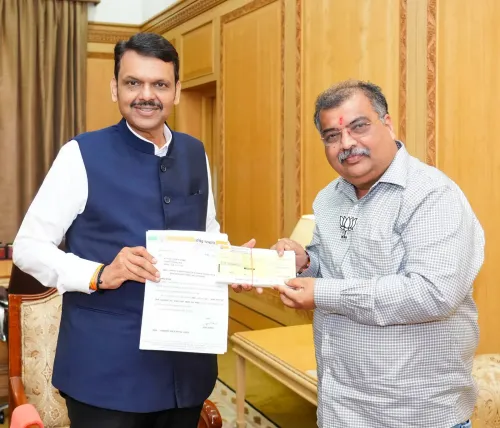
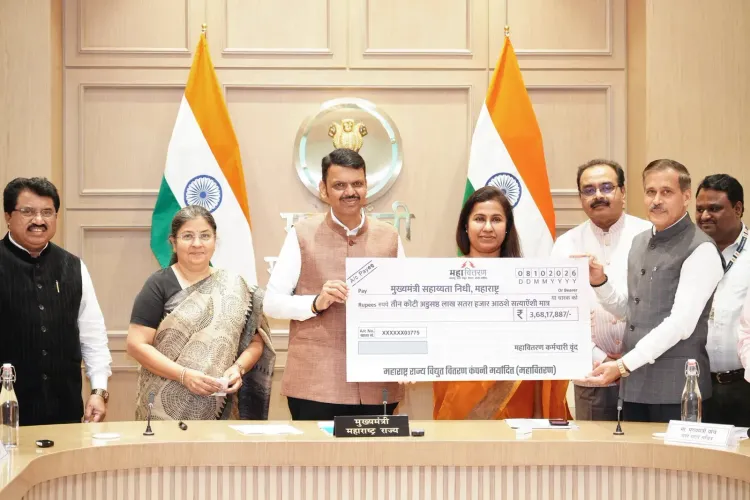
MSEDCL employees donated ₹3,68,17,887 to the Chief Minister's Relief Fund for drought-affected farmers in Maharashtra. Minister of State Meghna Bordikar presented the cheque to CM Devendra Fadnavis in Mumbai on 6 November 2026.
Key Takeaways
₹3,68,17,887 donated by MSEDCL employees to the Chief Minister's Relief Fund for drought-affected farmers.
Minister of State Meghna Bordikar presented the cheque to CM Devendra Fadnavis in Mumbai on 6 November 2026 .
The donation targets farmer welfare in drought-affected regions of Maharashtra .
The CM Relief Fund is a state-managed rapid-response instrument for natural calamity assistance.
Maharashtra public-sector employees have a recurring tradition of contributing to the fund during drought years.
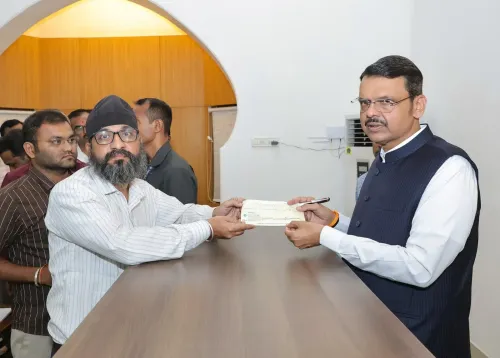
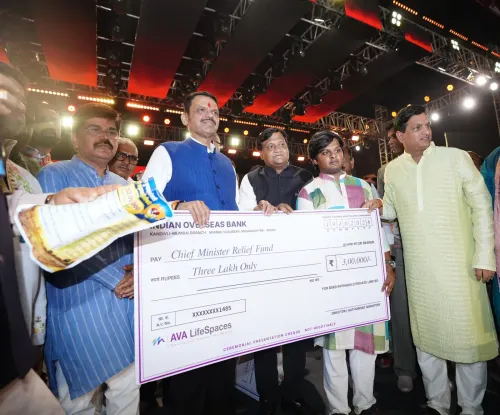
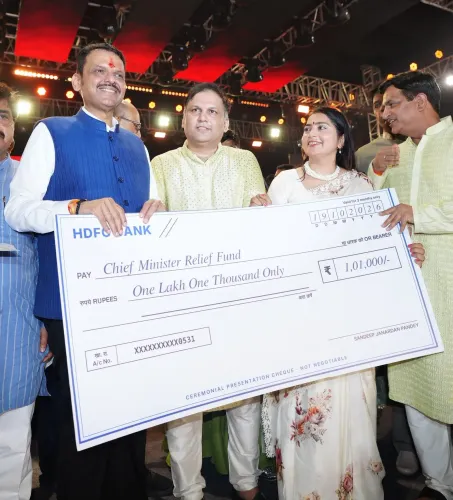
Nearly ₹3.68 crore raised by the workforce of Maharashtra's state power utility landed in the hands of the Chief Minister on Friday, 6 November 2026 — a collective gesture of solidarity with the state's drought-battered farming communities. The Chief Minister's Office of Maharashtra announced that Minister of State Meghna Bordikar presented a cheque of ₹3,68,17,887 to Chief Minister Devendra Fadnavis in Mumbai on behalf of employees of the Maharashtra State Electricity Distribution Company Limited (MSEDCL), directing the amount into the Chief Minister's Relief Fund for drought-affected farmers across the state.
The post, shared in Marathi, reads: 'मुख्यमंत्री देवेंद्र फडणवीस यांना मुंबई येथे महावितरणच्या कर्मचारी वृंदाच्या वतीने... ₹3,68,17,887 देणगीचा धनादेश सुपूर्द केला' — 'On behalf of the MSEDCL employee collective, a donation cheque of ₹3,68,17,887 was presented to Chief Minister Devendra Fadnavis in Mumbai.' CM Fadnavis thanked the employees at the event.
MSEDCL employees step up for drought-hit Maharashtra
MSEDCL, the state-owned distribution utility that powers homes and farms across Maharashtra, mobilised its workforce to pool this contribution. It is not the first time Maharashtra's public-sector employees have channelled collective funds toward the Chief Minister's Relief Fund during drought years — the practice has become a recognisable strand of the state's crisis-response culture, supplementing official budgetary allocations with on-ground solidarity.
Maharashtra's agricultural belt has historically been among India's most drought-vulnerable, with recurrent failures of the kharif season hitting smallholder farmers hardest. Contributions like this one flow into the CM Relief Fund, a state-managed pool used to deliver direct assistance during natural calamities — from immediate cash transfers to input subsidies for affected cultivators.
What ₹3.68 crore into the CM Relief Fund means for farmers
The Chief Minister's Relief Fund acts as a rapid-response instrument — sitting outside the slower cycles of budgetary appropriation — allowing the state to mobilise aid quickly when drought declarations are issued for affected talukas. How this specific donation is disbursed, and whether other state entities follow with similar contributions, will be the next marker of the relief effort's momentum.
The gesture also carries political weight for the Fadnavis administration: demonstrating that the government's own institutional machinery — not just the treasury — is visibly aligned with farmer welfare ahead of what could be a testing agricultural season.
Point of View
And they create visible optics of institutional solidarity with agrarian distress. With Maharashtra's kharif farmers perennially exposed to rainfall deficits, these contributions are unlikely to be one-off events — expect the Fadnavis administration to actively encourage more state entities to follow MSEDCL's lead as drought declarations stack up across talukas.
NationPress
7 Nov 2026
Frequently Asked Questions
How much did MSEDCL employees donate to the CM Relief Fund?
MSEDCL employees donated ₹3,68,17,887 (approximately ₹3.68 crore) to the Chief Minister's Relief Fund for drought-affected farmers in Maharashtra.
What is the Chief Minister's Relief Fund Maharashtra?
The Chief Minister's Relief Fund is a state-managed fund in Maharashtra used to provide rapid financial assistance to people affected by natural calamities such as droughts, floods, and other disasters.
Who presented the MSEDCL donation cheque to CM Fadnavis?
Minister of State Meghna Bordikar presented the donation cheque to Chief Minister Devendra Fadnavis in Mumbai on behalf of MSEDCL employees.
What is MSEDCL and why did its employees donate?
MSEDCL, the Maharashtra State Electricity Distribution Company Limited, is the state-owned power distribution utility. Its employees collectively donated to the CM Relief Fund to support farmers suffering from drought conditions across Maharashtra.
How does the CM Relief Fund help drought-affected farmers in Maharashtra?
The CM Relief Fund allows the Maharashtra government to disburse direct financial assistance to drought-affected farmers quickly, outside slower budgetary cycles, supplementing official allocations with contributions from public-sector employees and citizens.