Are the US reasons for withdrawal from WHO accurate?
Click to start listening
Synopsis
Geneva, Jan 25 (NationPress) - The head of the WHO has declared that the United States' reasons for its withdrawal are inaccurate. This critical statement raises questions about global health safety and America's financial obligations to the organization. With significant dues unpaid, the repercussions could be far-reaching, impacting international health policies.
Key Takeaways
- WHO Chief claims U.S. withdrawal reasons are inaccurate.
- Outstanding dues of $278 million remain unpaid by the U.S.
- The withdrawal raises questions about global health security.
- The formal withdrawal will be discussed in the upcoming WHO Executive Board meeting.
- Implications for international health policies are significant.
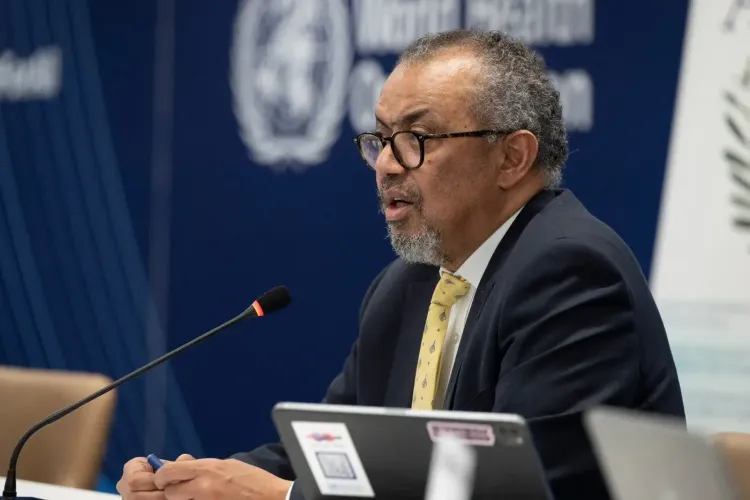
Geneva, Jan 25 (NationPress) The head of the World Health Organization (WHO) stated that the justifications provided by the United States for its withdrawal from the WHO are not accurate. Tedros Adhanom Ghebreyesus, the Director-General of the WHO, expressed these views via the social media platform X on Saturday. He cautioned that such a decision would render both the United States and the global community less secure, as reported by Xinhua news agency.
The United States, which revealed its intention to withdraw from the WHO a year prior, has yet to settle its outstanding dues, as confirmed by a WHO press representative.
"As of today, the USA has not fulfilled its financial obligations for the assessed contributions for the 2024-2025 biennium," the WHO official mentioned in an email to Xinhua on Wednesday.
A recent report from National Public Radio (NPR), a media organization based in the USA, indicates that the outstanding amount is approximately $278 million.
The formal withdrawal of the United States will be discussed during the upcoming WHO Executive Board meeting, with the WHO Secretariat stating, "We will proceed based on the recommendations of our governing bodies."
On January 20, 2025, US President Donald Trump signed an executive order to withdraw from the WHO. The official notification was received by the United Nations two days later.
As per the organization's charter, the withdrawal is effective one year after the notice is submitted.
Earlier on Thursday, the United States confirmed its formal withdrawal from the World Health Organization, thereby ending its membership in this international health entity. The Trump administration claimed this action fulfills a promise made on the president’s first day in office.
In a joint statement, Secretary of State Marco Rubio and Health and Human Services Secretary Robert F. Kennedy Jr. declared that the withdrawal was executed via an executive order signed by President Trump to liberate the United States from what they described as the organization’s constraints.
Point of View
The WHO chief's assertion regarding the U.S. withdrawal highlights serious issues in international cooperation on health matters. While the U.S. government has its reasons for withdrawing, the potential consequences for global health security are significant. It's essential to analyze this situation from multiple angles to understand its broader implications.
NationPress
25/01/2026
Frequently Asked Questions
What are the reasons given by the U.S. for withdrawing from the WHO?
The U.S. administration claimed that the WHO imposes constraints on the country, which they sought to eliminate through the withdrawal.
How much does the U.S. owe the WHO?
The outstanding dues of the United States to the WHO amount to approximately $278 million.
What impact does the U.S. withdrawal have on global health?
The withdrawal could potentially lead to reduced global health security, as warned by the WHO chief.
When did the U.S. officially announce its withdrawal from the WHO?
The U.S. announced its formal withdrawal on January 20, 2025.
What is the timeline for the U.S. withdrawal from the WHO?
According to the WHO charter, the withdrawal is effective one year after the notice is provided.