South Korea Supreme Court to rule on Yoon Suk Yeol obstruction charges on July 9
Synopsis
South Korea's Supreme Court will issue its first ruling on Yoon Suk Yeol on July 9 — a man already facing life imprisonment for insurrection and 30 years for ordering covert drone provocations against North Korea. The obstruction verdict is the next legal milestone in a case that has no modern parallel in South Korean democratic history.
Key Takeaways
South Korea's Supreme Court will rule on Yoon Suk Yeol's obstruction of justice charges on July 9 at 2 pm .
Yoon is accused of blocking investigators from detaining him in January 2025 , excluding nine Cabinet members from martial law deliberations, and falsifying public documents.
An appeals court sentenced him to seven years in April on these charges; the Supreme Court may revise that figure.
A separate Seoul court sentenced Yoon to 30 years in June for ordering drone infiltrations into North Korea to manufacture a pretext for martial law.
Former Defence Minister Kim Yong-hyun received 30 years ; the insurrection trial, where Yoon faces a life sentence at first ruling, continues at an appellate court.
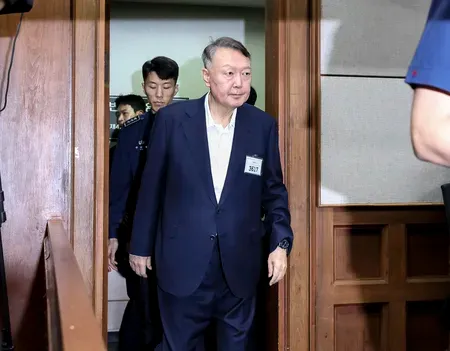
South Korea's Supreme Court is set to deliver its verdict on Thursday, July 9, on charges that jailed former President Yoon Suk Yeol obstructed justice by directing his bodyguards to prevent investigators from executing a detention warrant against him, following his failed martial law bid of December 3, 2024. The sentencing hearing, scheduled for 2 pm, will mark the top court's first ruling on charges directly stemming from that episode.
What the Obstruction Charges Cover
Beyond the bodyguard incident in January 2025, Yoon faces a cluster of related charges. He is accused of violating the rights of nine Cabinet members by excluding them from an advance review of his martial law plan. He also allegedly falsified public documents by revising the martial law proclamation after the decree was lifted — reportedly to conceal procedural irregularities — before later discarding the document.
An appeals court in April sentenced Yoon to seven years in prison on these charges, a two-year increase over the lower court's ruling but below the 10 years recommended by a special counsel team. The Supreme Court's July 9 hearing will determine whether that sentence stands, is increased, or is reduced.
The Broader Legal Reckoning
The obstruction case is just one thread in a sprawling legal web surrounding Yoon. His primary trial on insurrection charges — tied directly to the martial law declaration — is still ongoing before an appellate court. In the first ruling on that case, he was sentenced to life in prison.
Separately, a Seoul court earlier in June sentenced Yoon to 30 years in prison after convicting him of ordering covert drone infiltrations into North Korea in October 2024. The court found that the operation was designed to provoke Pyongyang into a military response and thereby manufacture a national security pretext for his December martial law declaration. The ruling matched the sentencing recommendation of special counsel Cho Eun-suk. Yoon's legal team filed an appeal hours after the verdict.
Co-Accused and Their Sentences
The drone operation case drew in several senior defence officials. Former Defence Minister Kim Yong-hyun was sentenced to 30 years in prison — higher than the 25 years sought by the special counsel — for his role in the operations. Former head of the Defence Counterintelligence Command Yeo In-hyung received 15 years, while former chief of the Drone Operations Command Kim Yong-dae was handed a three-year sentence suspended for five years.
The Seoul court stated that the accused had decided to use 'psychological warfare to incite North Korea and induce a provocation' in order to 'create conditions for martial law,' describing the conduct as a 'betrayal' of public trust in the military's legitimate use of force.
The Defence Position
Yoon's legal team has maintained that the drone deployments constituted a legitimate military response to North Korea's launches of trash-carrying balloons into South Korean territory in 2024. However, the court rejected this framing, ruling that the operation had instead undermined South Korea's own security by exposing military assets to the North and, according to the court's assessment, strengthening North Korea's military readiness.
In October 2024, Pyongyang publicly accused Seoul of drone infiltrations and dropping propaganda leaflets over the North Korean capital. Then-Defence Minister Kim initially denied the accusation; the defence ministry later said it could neither confirm nor deny it.
What Comes Next
The July 9 Supreme Court ruling on the obstruction charges will be the first definitive top-court word on Yoon's legal fate, though the larger insurrection trial and the drone-related appeal remain unresolved. With multiple cases at different stages across the South Korean judicial system, the full legal reckoning for the country's most dramatic political crisis in decades is far from over.
Point of View
But the obstruction charges are arguably the least of Yoon Suk Yeol's legal problems — he already faces a life sentence for insurrection and 30 years for the drone operation. What is striking is the judicial picture that has emerged: a sitting president who allegedly ordered covert military provocations against a nuclear-armed neighbour to manufacture a domestic emergency. South Korean courts have moved with unusual speed and severity, and the cumulative sentencing — across three separate cases — signals an institutional determination to establish that no office places anyone above constitutional order. The real question is whether the appellate process will moderate these verdicts or entrench them.
NationPress
1 Oct 2026
Frequently Asked Questions
What will South Korea's Supreme Court rule on July 9?
The Supreme Court will deliver its verdict on charges that former President Yoon Suk Yeol obstructed justice by ordering bodyguards to block investigators from detaining him in January 2025, and by falsifying and discarding martial law documents. It is the top court's first ruling on any charge stemming from his December 2024 martial law declaration.
What sentence does Yoon Suk Yeol currently face on the obstruction charges?
An appeals court sentenced Yoon to seven years in prison in April on the obstruction charges, up from the lower court's five-year ruling but below the ten years recommended by the special counsel. The Supreme Court may uphold, increase, or reduce that sentence on July 9.
Why was Yoon Suk Yeol sentenced to 30 years by a Seoul court in June?
A Seoul court convicted Yoon in June of ordering covert drone infiltrations into North Korea in October 2024, finding that the operation was designed to provoke Pyongyang into a military response and create a national security pretext for his December 3 martial law declaration. The court found this amounted to abuse of power and benefiting the enemy.
What is the status of Yoon's main insurrection trial?
Yoon's primary trial on insurrection charges — directly tied to the martial law declaration — is still ongoing at an appellate court. In the first-instance ruling, he was sentenced to life in prison. A final verdict in that case has not yet been delivered.
Who else has been sentenced in connection with Yoon's martial law and drone operations?
Former Defence Minister Kim Yong-hyun was sentenced to 30 years for his role in the drone operations, exceeding the 25 years sought by the special counsel. Former Defence Counterintelligence Command chief Yeo In-hyung received 15 years, and former Drone Operations Command chief Kim Yong-dae received a three-year suspended sentence.