Challenges Loom for Dhaka Amid Yunus-era Charter and US Trade Treaty
Synopsis
As Bangladesh navigates political turbulence following the BNP's rise, the July Charter and a controversial US trade treaty pose significant challenges. Protests and legal disputes intensify the stakes for the Awami League-led government, raising concerns over democratic legitimacy and international relations.
Key Takeaways
Political Challenges: The July Charter and US trade treaty are critical issues for the Awami League-led government.
Public Unrest: Protests highlight dissatisfaction with perceived inequalities in the trade agreement.
Opposition Mobilization: The BNP is leveraging the Charter to push for reforms and block legislation.
International Relations: The government faces pressure to maintain diplomatic ties amid rising tensions.
Future Stability: The ability to navigate these issues is crucial for Bangladesh's political and economic future.
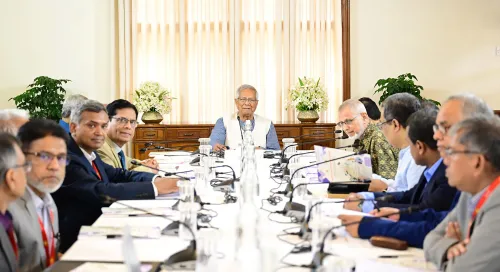
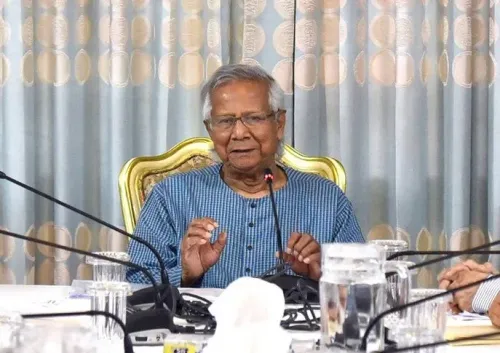
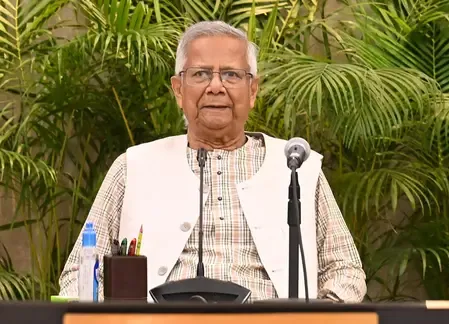
New Delhi, April 16 (NationPress) Prior to the Bangladesh Nationalist Party (BNP) taking power in February, both the July Charter and the US trade treaty established under the interim government led by Muhammad Yunus appeared to present significant challenges ahead.
Currently, as Opposition parties cite the Charter as a crucial guideline for democratic reforms, the trade treaty has ignited intense protests domestically, with detractors labeling it as "unfair" and "anti-national." This combination has resulted in a precarious situation for the Awami League-led government, which is finding it difficult to navigate internal political pressures alongside external diplomatic commitments.
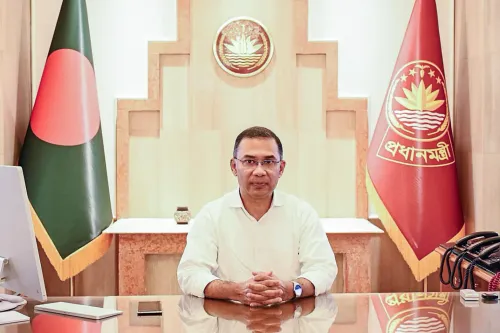
Additionally, instability in West Asia is compounding the already existing economic difficulties faced by Dhaka. On Friday, Prime Minister Tarique Rahman reassured citizens, urging them to remain calm and to practice moderation in state and personal expenditures, as reported by Bangladesh’s Business Standard.
Rahman stated that the government is allocating hundreds of crores of taka daily in subsidies for the fuel and energy sectors to ensure stability and normalcy.
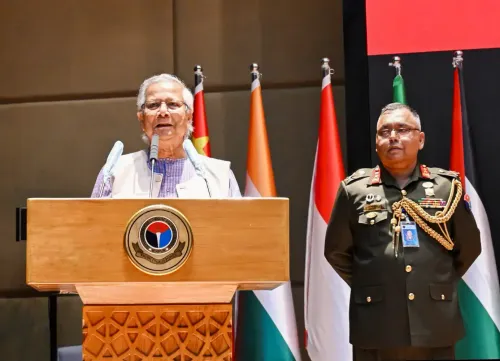
The July Charter, which was ratified in October 2025 by over 20 political parties during Yunus's caretaker administration, pledged extensive constitutional and electoral reforms following the July 2024 mass uprising that dethroned Sheikh Hasina’s government.
Today, Opposition leaders contend that the Charter mandates the ruling party to fulfill commitments regarding institutional independence and decentralization. Civil society organizations support this assertion, cautioning that neglecting the Charter could jeopardize democratic legitimacy.
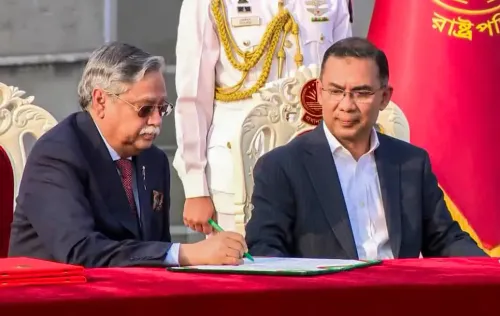
In February, prior to Tarique Rahman’s cabinet officially taking office, it was confronted with legal challenges stemming from amendments made by the interim government.
BNP members who were sworn in as parliamentarians refrained from becoming part of the proposed Constitution Reform Council, asserting that such a provision does not exist in the Constitution. They emphasized that Parliament must convene to execute constitutional reforms.
The BNP criticized the interim government for bypassing established legal processes, which they believe undermines legitimacy.
The Bangladesh Jamaat-e-Islami party strongly disagreed with the BNP's position and, alongside the allied National Citizens Party (NCP), announced a boycott of the cabinet swearing-in ceremony over this matter. Nevertheless, the BNP has not dismissed the referendum through which citizens voted for a new government and the July Charter in the February elections.
The Prime Minister has reiterated, according to media reports from Bangladesh, that the July National Charter—signed by various political entities—will be fully enacted, while cautioning against any attempts to incite instability regarding this issue.
In a pointed remark towards the Opposition Jamaat, he noted that those who received only a few votes are now demanding that their opinions be accepted in Parliament.
During a rally this week, he accused Opposition parties of attempting to orchestrate chaos in Bangladesh by focusing on the Charter's implementation, according to media reports.
The US trade treaty, signed just three days before the national elections, has faced criticism for allegedly compromising national interests. Detractors assert that the interim government kept the agreement shrouded in secrecy.
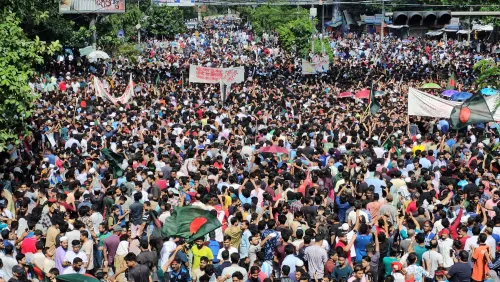
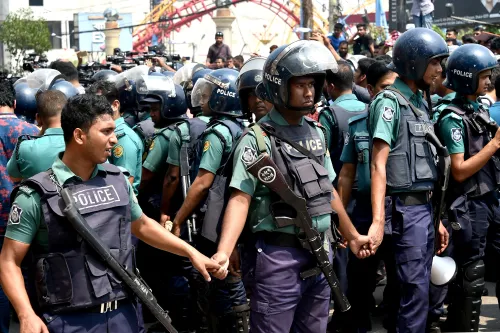
This week, student unions and various organizations held protests in Dhaka, denouncing the treaty as a "treaty of subjugation." They claimed that the agreement undermines Bangladesh’s autonomy in tariff and labor regulations, while the government fears that renegotiating the terms could strain relations with Washington, as per reports.
As the Opposition leverages the Charter to stall legislation and call for reforms, the Washington treaty has galvanized unions and student groups, heightening the potential for broader unrest.
The crisis in West Asia has emerged alongside the Yunus-era challenges, presenting the government with both internal pressures related to democratic expectations and external pressures linked to global trade diplomacy.
For the current administration, the stakes are remarkably high. Inability to manage these legacies could reignite political instability within the country and diminish Bangladesh’s reputation internationally.
Point of View
The ongoing situation in Bangladesh highlights the delicate balance the government must maintain. The interplay between political pressures and international commitments adds layers of complexity to governance. While the July Charter sets ambitious reform goals, the backlash against the US trade treaty signals significant unrest that cannot be ignored. A careful, proactive approach is essential for stability.
NationPress
19 Sept 2026
Frequently Asked Questions
What is the July Charter?
The July Charter is a political agreement signed in October 2025 by over 20 parties during the Yunus-led caretaker administration, promising constitutional and electoral reforms following the mass uprising that ousted Sheikh Hasina's government.
What are the concerns regarding the US trade treaty?
Critics claim the US trade treaty undermines Bangladesh's national interests and sovereignty over tariffs and labor standards, with allegations that the interim government kept the agreement secret.
How is the opposition responding to these issues?
The opposition, particularly the BNP, is using the July Charter to demand reforms and block legislation, while also mobilizing public protests against the trade treaty.
What is the potential impact of the ongoing protests?
The protests could escalate tensions and create political instability, complicating the government's ability to govern effectively and maintain international relations.
What are the stakes for the Awami League-led government?
The stakes are high as failure to manage these challenges could lead to renewed political instability and damage Bangladesh’s standing in the international arena.