Is Yunus's Interim Government Able to Maintain Unity in Bangladesh?
Synopsis
As Bangladesh approaches elections, Chief Advisor Mohammad Yunus grapples with uniting the nation amidst alleged sectarian violence and political turmoil. With rising tensions and accusations of power abuse, the electoral atmosphere is charged. Will Yunus succeed in navigating this precarious political landscape?
Key Takeaways
Yunus's government struggles with national unity.
Accusations against Hasina raise tensions.
Electoral atmosphere is charged with political strife.
Awami League faces a temporary ban from politics.
Public sentiment is divided over government actions.
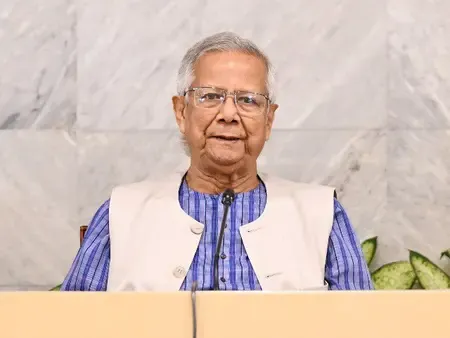
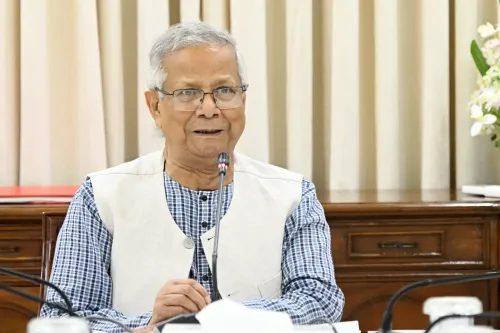
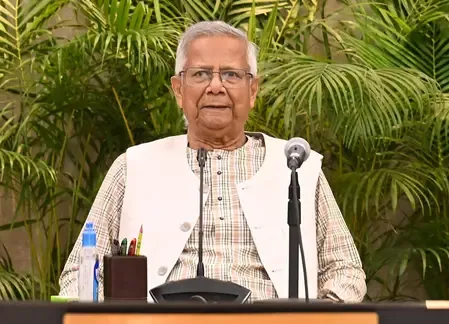
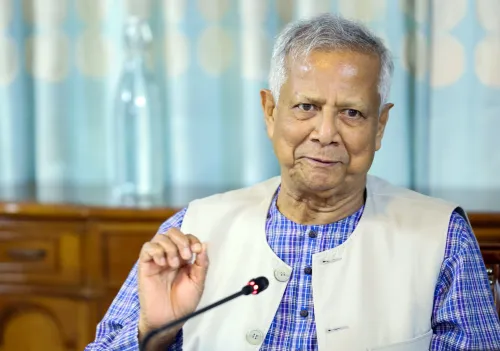
Dhaka, Nov 11 (NationPress) As the elections draw near in Bangladesh, Chief Advisor to the interim government, Mohammad Yunus, faces the daunting challenge of keeping the nation of 170 million people united, according to a report released on Tuesday.
The report highlights that sectarian violence has become prevalent, raising alarms about a rise in radical Islamism, while the Awami League claims that several of its members have been murdered.
“Yunus is also under scrutiny for alleged abuse of power and lawfare after his government prohibited the Awami League from participating in elections scheduled for February, attributing it to a 'coordinated violent activity' during the fatal protests of the previous year,” the Irish Times reported.
The interim government’s initial action included appointing Mohammad Tajul Islam as chief prosecutor for the International Crimes Tribunal, which aims to bring those responsible for the killings to justice.
“In January, he filed charges against Hasina and 11 others from her administration concerning enforced disappearances and extrajudicial killings that occurred during her tenure. By July, a tribunal officially charged her with alleged crimes against humanity related to the Monsoon Revolution. Her trial in absentia concluded last month, with a verdict expected next week,” it stated.
In a written response, Hasina characterized the proceedings as “a politically motivated charade,” claiming they were initiated by kangaroo courts.
Simultaneously, the report notes that students and various political factions are escalating pressure on the interim government to eliminate the Awami League from politics entirely.
“In May, the government complied by enforcing a ‘temporary’ ban on the party’s political activities, citing national security concerns. However, rather than seeking court approval to restrict Hasina’s party, the Yunus administration issued an executive order, leveraging a recent amendment to the country’s Anti-terrorism Act,” it added.
Meanwhile, several Awami League members have accused Yunus of pursuing political vendettas.
Mohammad Arafat, a senior Awami League member, stated that “Yunus is evidently dividing the nation and orchestrating a sham election, rendering a peaceful democratic transition nearly impossible.”
Bangladesh has also filed charges against Hasina’s family members, including her niece Tulip Siddiq, a British politician, and her daughter Saima Wazed. Siddiq labeled the charges as “false and politically motivated,” while Hasina’s son, Sajeeb Wazed, dismissed the broader allegations against the family as “completely false, baseless, fabricated, and driven by the ulterior political motives of the Yunus regime.”
“Within the halls of Jamuna House, Yunus’s temporary residence in central Dhaka, there exists a mix of pride and frustration among him and his team as the nation braces for what is anticipated to be a contentious electoral season,” the report concluded.
Point of View
It's crucial to acknowledge that the current political landscape in Bangladesh is fraught with challenges. While maintaining a balanced view, it’s evident that the actions of the interim government will significantly impact the country's democratic future. The nation stands at a crossroads, and clarity, transparency, and commitment to democratic principles are essential for stability.
NationPress
21 Sept 2026
Frequently Asked Questions
What challenges is Yunus facing in Bangladesh?
Yunus is dealing with sectarian violence, allegations of political vendettas, and the task of uniting a divided nation as elections approach.
What allegations have been made against Hasina?
Hasina has been charged with enforced disappearances, extrajudicial killings, and crimes against humanity during her governance.
What is the significance of the upcoming elections?
The elections are critical as they will determine the political direction of Bangladesh amid rising tensions and accusations of power abuse.
How has the Awami League responded to the interim government?
The Awami League has accused Yunus of political vendettas and has expressed concerns over the ban imposed on their party's political activities.
What is the public sentiment regarding the interim government?
Public sentiment is mixed, with some supporting Yunus's actions for national security, while others fear a loss of democracy and political freedom.