Anurag Thakur: 1 Crore Youth Take Anti-Drug Pledge Nationwide
Synopsis
Over 1 crore Indian youth simultaneously took an anti-drug pledge at 28,000 locations on 2 August 2026 under PM Modi's Nasha Mukt Bharat Abhiyan. BJP MP Anurag Thakur announced a 100-week roadmap with rotating spiritual and social organisations leading the campaign weekly, linking the drive to the Viksit Bharat 2047 national vision.
Key Takeaways
Over 1 crore youth took a simultaneous nasha mukti sankalp (anti-drug pledge) at more than 28,000 locations across India on 2 August 2026 .
PM Narendra Modi has announced a 100-week roadmap to sustain the campaign beyond the single-day pledge event.
Each of the 100 weeks will be led by a different prominent spiritual or social organisation , embedding the drive in existing community networks.
The campaign targets the Amrit Peedhi — India's youth generation — linking personal de-addiction to the Viksit Bharat 2047 national development vision.
The initiative builds on the Nasha Mukt Bharat Abhiyan launched in August 2020 by the Ministry of Social Justice and Empowerment.
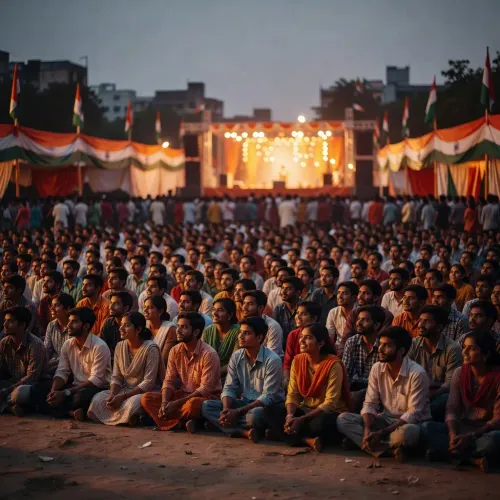
A pledge that echoed across 28,000 locations in a single day — BJP MP Anurag Thakur on Sunday, 2 August 2026 hailed a mass anti-drug oath drive in which over 1 crore young Indians simultaneously committed to a drug-free life under the banner of Nasha Mukt Bharat (Drug-Free India), crediting the initiative to the leadership of Prime Minister Narendra Modi.
One Crore Voices, One Resolve
Thakur described the event as 'a new chapter in history,' writing that youth across the country came together to take the nasha mukti sankalp — the solemn pledge of de-addiction. The sheer scale claimed — more than a crore participants at over 28,000 venues on the same day — places this among the largest single-day public-pledge drives the government has organised around a social welfare theme.
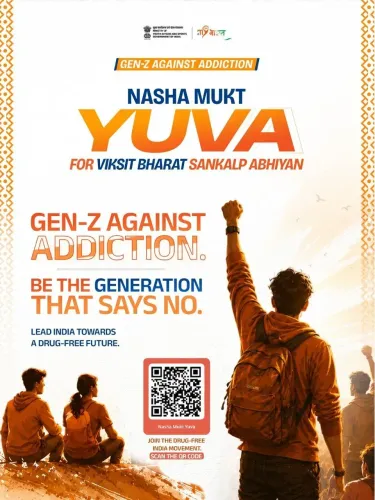
The drive sits within the broader Nasha Mukt Bharat Abhiyan, a campaign the Ministry of Social Justice and Empowerment launched in August 2020 to combat substance abuse through awareness, community mobilisation, and de-addiction outreach, with a deliberate focus on young Indians.
A 100-Week Roadmap to Carry the Pledge Forward
What sets Sunday's event apart from a one-day pledge drive is the structured follow-through announced alongside it. According to Thakur's post, Prime Minister Modi has laid out a 100-week roadmap to convert the resolve into action. Each week, a different prominent spiritual or social organisation will lead the campaign — a rotating stewardship model designed to keep momentum alive and draw in diverse communities across the country.
The framing is deliberate: the target audience is explicitly called the Amrit Peedhi — the 'Nectar Generation' — the cohort of young Indians expected to be in their prime working years by 2047, when India marks the centenary of independence. The government's Viksit Bharat 2047 vision — transforming India into a fully developed economy by that milestone — runs as the explicit backdrop to the campaign, linking personal health choices to national ambition.
Spiritual and Social Bodies as Weekly Anchors
The 100-week rotating format is a notable structural choice. By handing weekly leadership to India's spiritual and social organisations — groups with deep grassroots reach and moral authority in their communities — the campaign attempts to embed the anti-drug message into existing networks of trust rather than relying solely on government machinery. It is a model the current administration has used in other large welfare and awareness drives, blending state resources with civil-society and religious-body outreach.
The weeks ahead will test whether that structure translates into measurable de-addiction outcomes or remains a mobilisation exercise. Official progress reports and state-level implementation data will be the metrics to watch as the 100-week clock begins.
Point of View
Tying personal de-addiction to the Viksit Bharat 2047 vision. The 100-week rotating-organisation model is a structurally interesting departure from one-off awareness drives, using India's dense network of spiritual and social bodies as force multipliers for state welfare messaging. Whether the format generates verifiable de-addiction outcomes — or remains primarily a mobilisation and optics exercise — will define its legacy. For Anurag Thakur, amplifying the campaign publicly reinforces his positioning as a youth-welfare voice within the BJP, a role he cultivated through his tenure as Minister of Youth Affairs and Sports.
NationPress
16 Sept 2026
Frequently Asked Questions
What is the Nasha Mukt Bharat Abhiyan?
The Nasha Mukt Bharat Abhiyan is a government campaign launched in August 2020 by the Ministry of Social Justice and Empowerment to combat drug and substance abuse through community awareness, outreach, and de-addiction programmes, with a primary focus on Indian youth.
What happened on 2 August 2026 in the anti-drug campaign?
On 2 August 2026, over 1 crore youth simultaneously took an anti-drug pledge at more than 28,000 locations across India as part of the Nasha Mukt Bharat drive led under PM Narendra Modi's initiative.
What is the 100-week roadmap announced by PM Modi for the drug-free India campaign?
PM Modi announced a 100-week roadmap under which a different prominent spiritual or social organisation will lead the Nasha Mukt Bharat campaign each week, aiming to sustain momentum and community engagement beyond the initial pledge event.
What is Viksit Bharat 2047 and how does it connect to the anti-drug campaign?
Viksit Bharat 2047 is the government's national vision to transform India into a fully developed nation by 2047, the centenary of independence. The anti-drug campaign explicitly links youth de-addiction to this goal, framing a drug-free young generation as essential to achieving it.
Who is Anurag Thakur and why is he associated with this campaign?
Anurag Thakur is a BJP Lok Sabha MP from Hamirpur, Himachal Pradesh, and a former Union Minister of Information and Broadcasting and Youth Affairs and Sports. His past ministerial role in youth affairs makes him a prominent BJP voice on campaigns targeting young Indians.