Anurag Thakur Calls for Nasha Mukt Bharat on Anti-Drug Day
Synopsis
On International Day Against Drug Abuse, BJP MP Anurag Thakur backed the Modi government's dual strategy of narcotics supply-chain disruption and expanded rehabilitation under the Nasha Mukt Bharat Abhiyan, linking a drug-free India to the Viksit Bharat 2047 vision.
Key Takeaways
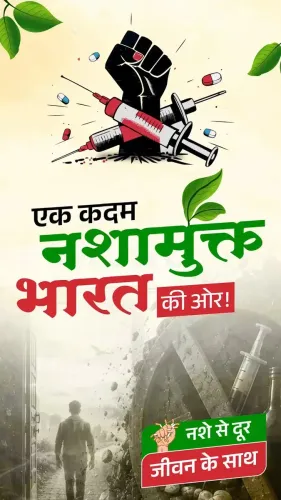
Anurag Thakur posted on 26 June 2026 , International Day Against Drug Abuse, calling for a Nasha Mukt Bharat .
He credited PM Modi and Home Minister Amit Shah for dismantling narco-cartels and breaking supply networks.
The Nasha Mukt Bharat Abhiyan , launched on 15 August 2020 , initially covered 272 districts with awareness and rehabilitation programmes.
The government's strategy covers three pillars: destroying narcotics supply chains, preventing youth exposure, and providing rehabilitation for those in addiction.
India's primary drug inflow threat runs through the Golden Crescent corridor via Afghanistan and Pakistan.
A drug-free India is framed as essential to the Viksit Bharat 2047 development roadmap.
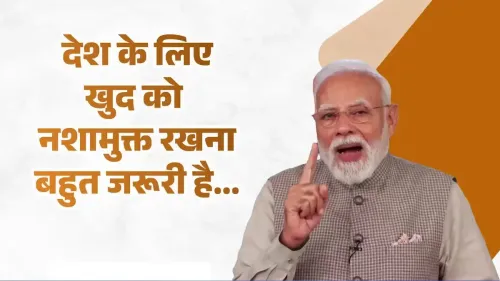
BJP MP Anurag Thakur used International Day Against Drug Abuse and Illicit Trafficking on 26 June 2026 to reaffirm the Modi government's three-pronged strategy against narcotics: dismantling supply chains, preventing youth exposure, and expanding rehabilitation support across India.
Context
Observed every year on 26 June since 1987, the United Nations-designated day is a global call to strengthen action against drug abuse and illicit trafficking. Thakur, a Lok Sabha MP from Hamirpur, Himachal Pradesh and former Union Minister of Information & Broadcasting and Youth Affairs & Sports, credited Prime Minister Narendra Modi and Home Minister Amit Shah for 'decisive leadership in dismantling narco-cartels and breaking their supply networks.'
The post outlines a dual mandate: aggressive enforcement on the supply side and compassionate rehabilitation on the demand side, framing a drug-free India as indispensable to the Viksit Bharat vision.
Policy Backdrop
The Nasha Mukt Bharat Abhiyan was launched on 15 August 2020, initially targeting 272 districts with community mobilisation, school awareness drives, and de-addiction infrastructure. The campaign has since expanded its footprint to cover awareness campaigns in schools and colleges, community outreach programmes, and rehabilitation support.
India's narcotics challenge is structurally linked to the Golden Crescent — the Afghanistan-Pakistan corridor — which remains a primary inflow route. The government has responded by strengthening border security, enhancing intelligence operations, and launching crackdowns on trafficking networks, while simultaneously updating the legislative framework under the Narcotic Drugs and Psychotropic Substances (NDPS) Act.
The present administration has woven narcotics control into the broader Viksit Bharat 2047 social and health roadmap, treating supply interdiction and demand reduction as complementary rather than competing priorities.
Stakeholders and Impact
Indian youth remain the primary concern, given their vulnerability to substance abuse at formative stages. Thakur's post explicitly flags the need to 'prevent our youth from falling into this trap' and calls for 'compassionate care and treatment for those seeking to break free from addiction.'
Border communities — particularly in states such as Punjab, Manipur, and coastal regions — face disproportionate exposure to trafficking networks. Expanded de-addiction centres and rehabilitation support are intended to serve both urban and rural populations caught in addiction cycles.
Families and local communities are also identified as stakeholders, with Thakur urging citizens to 'pledge to protect our families, communities and the future of our nation from this menace.'
What's Next
Attention will now turn to the operational rollout of additional de-addiction centres and school-level awareness modules under the Nasha Mukt Bharat Abhiyan. Any revision to NDPS Act provisions or fresh budgetary allocations in the next parliamentary session could signal the government's next legislative step.
With the Viksit Bharat 2047 framework setting long-term social benchmarks, the government's ability to demonstrate measurable reductions in drug prevalence — particularly among youth — will increasingly become a political and policy accountability marker.
Point of View
The statement elevates drug control from a law-enforcement issue to a nation-building imperative, broadening its political resonance. The explicit mention of Modi and Shah signals that narcotics policy will remain a high-visibility governance theme as the administration approaches future electoral cycles. The emphasis on de-addiction and 'second chances' also reflects a gradual but deliberate shift in political communication from pure enforcement optics toward public health framing.
NationPress
25 Sept 2026
Frequently Asked Questions
What is the Nasha Mukt Bharat Abhiyan?
The Nasha Mukt Bharat Abhiyan is a nationwide campaign launched on 15 August 2020 by the Indian government to combat drug abuse through awareness programmes in schools and colleges, community outreach, de-addiction centre expansion, and rehabilitation support. It initially targeted 272 districts across India.
What did Anurag Thakur say on International Day Against Drug Abuse 2026?
Anurag Thakur called for a united resolve to create a Nasha Mukt Bharat , praised PM Modi and Home Minister Amit Shah for dismantling narco-cartels, and outlined a three-point agenda: destroying drug supply chains, preventing youth addiction, and providing compassionate rehabilitation.
When is International Day Against Drug Abuse observed?
International Day Against Drug Abuse and Illicit Trafficking is observed every year on 26 June . It has been a UN-designated annual observance since 1987 , aimed at strengthening global action against drug abuse and trafficking.
What is India's main drug trafficking threat?
India's primary narcotics inflow threat comes through the Golden Crescent corridor — the region spanning Afghanistan and Pakistan — which is a major source of heroin and other narcotics entering India, particularly affecting border states like Punjab and Manipur.
How does drug control relate to Viksit Bharat 2047?
The Modi government has integrated narcotics control into its Viksit Bharat 2047 framework, treating a drug-free society as a prerequisite for achieving the social and health development benchmarks set for India's centenary of independence.