Anurag Thakur Marks World Environment Day, Urges Conservation Pledge
Synopsis
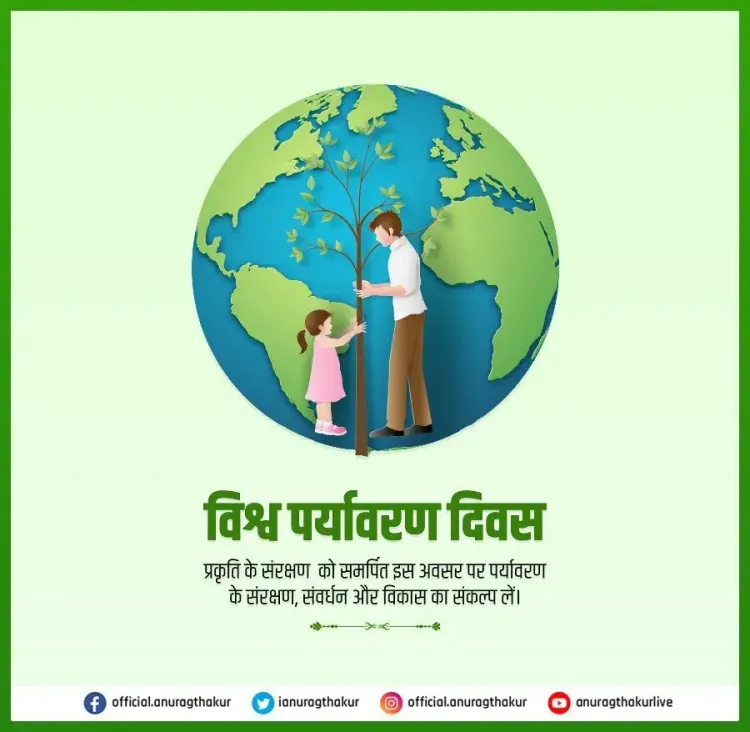
BJP MP Anurag Thakur marked World Environment Day on 5 June 2026 with a Hindi message calling clean air and water a universal right, urging citizens to pledge conservation and plant trees for future generations.
Key Takeaways
BJP MP Anurag Thakur posted a World Environment Day message on 5 June 2026 calling the future changeable through collective action.
He described clean air, clean water, and an unspoiled environment as rights belonging to every person.
Thakur urged a public pledge on World Environment Day for the protection, promotion, and conservation of nature.
His post ended with the Hindi slogan 'वृक्ष लगाएँ, धरा बचाएँ' — 'Plant trees, save the earth.' India has a net-zero emissions target of 2070 and a National Action Plan on Climate Change dating to 2008 , providing the policy backdrop for such appeals.
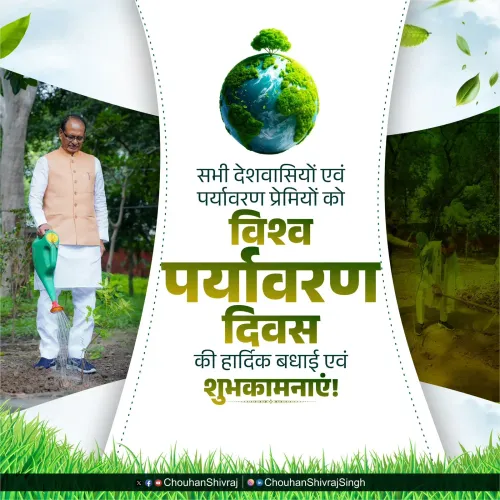
BJP MP Anurag Thakur on Friday, 5 June 2026 marked World Environment Day with a public message calling clean air, clean water, and an unspoiled environment fundamental rights of every citizen, and urging collective responsibility toward safeguarding these for future generations.
Context
Posting in Hindi on the occasion of World Environment Day, Thakur wrote: 'भूत नहीं लेकिन भविष्य बदलना हमारे हाथों में है' ('We cannot change the past, but the future is in our hands'). He called on citizens to take a pledge on this day dedicated to nature — to protect, promote, and conserve the environment — and closed with the rallying line 'वृक्ष लगाएँ, धरा बचाएँ' ('Plant trees, save the earth').
The post reflects a wider pattern among Indian political leaders of using World Environment Day to link conservation messaging to intergenerational duty, reinforcing both domestic and international commitments on climate action.
Policy Backdrop
India adopted its National Action Plan on Climate Change in 2008, establishing eight national missions covering mitigation and adaptation across sectors including solar energy, water, and forests. At the COP26 summit in 2021, India announced a net-zero emissions target by 2070 alongside updated Nationally Determined Contributions, signalling a long-term structural commitment to environmental goals.
Annual afforestation and pollution-control programmes have been paired with these international pledges, making tree-plantation drives a visible, ground-level expression of the country's broader climate strategy. Thakur's call to 'plant trees, save the earth' sits squarely within this established policy lineage.
Stakeholders and Impact
The message is addressed to Indian citizens broadly, framing environmental stewardship not as a government function alone but as a shared civic obligation. By invoking 'future generations', Thakur aligns his appeal with the intergenerational equity principle that underpins global climate frameworks.
For constituents in Hamirpur, Himachal Pradesh — a state whose ecology, rivers, and hill forests are acutely sensitive to climate variability — such messaging carries particular resonance. Himachal Pradesh has faced accelerating glacial retreat and erratic monsoon patterns, making conservation advocacy locally relevant beyond ceremonial observance.
What's Next
Attention will now turn to the scale of tree-plantation drives organised across states in the weeks following World Environment Day, a period that traditionally sees government-backed afforestation campaigns. India's positions at forthcoming international climate negotiations will also be watched as a measure of how political messaging on days like this translates into binding policy commitments.
As environmental concerns increasingly intersect with electoral politics and development planning, statements from senior legislators help set the tone for how conservation is framed in public discourse ahead of legislative and budgetary cycles.
Point of View
Reinforcing his public profile on issues beyond his former ministerial portfolios. By framing conservation as a 'collective responsibility' rather than a government mandate, the message carefully sidesteps policy specifics while building broad-based moral consensus. This rhetorical approach — invoking future generations and universal rights — mirrors the language India deploys in international climate forums, suggesting a conscious effort to echo national positioning at the constituency level. The tree-plantation call also previews the seasonal afforestation drives that will follow, giving the statement a practical anchor beyond symbolism.
NationPress
21 Oct 2026
Frequently Asked Questions
Why is World Environment Day celebrated on 5 June?
World Environment Day is observed annually on 5 June , the date the United Nations designated it in 1972 to promote global awareness and action for environmental protection.
What did Anurag Thakur say on World Environment Day 2026?
Anurag Thakur called clean air, clean water, and a pristine environment the right of every person, urged citizens to pledge conservation of nature, and signed off with the slogan 'Plant trees, save the earth.'
What is India's net-zero emissions target?
India announced a net-zero emissions target by 2070 at the COP26 climate summit in 2021 , alongside updated Nationally Determined Contributions.
What is India's National Action Plan on Climate Change?
India adopted the National Action Plan on Climate Change in 2008 , comprising eight national missions covering areas such as solar energy, water, and forests to address both mitigation and adaptation.
Who is Anurag Thakur?
Anurag Thakur is a BJP Lok Sabha MP from Hamirpur, Himachal Pradesh , and a former Union Minister who held the portfolios of Information and Broadcasting and Youth Affairs and Sports.