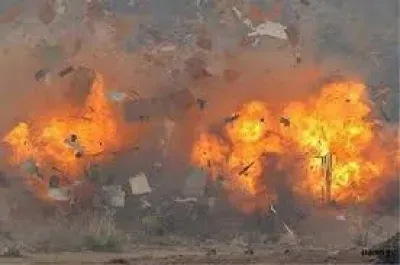
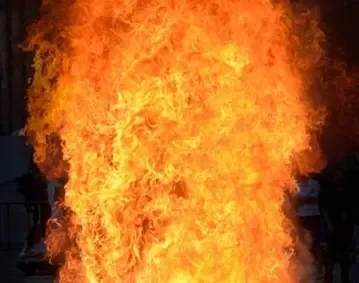
Thrissur Pooram Blast: Excess Explosives Probe as 14 Dead, DNA Tests Begin
Synopsis
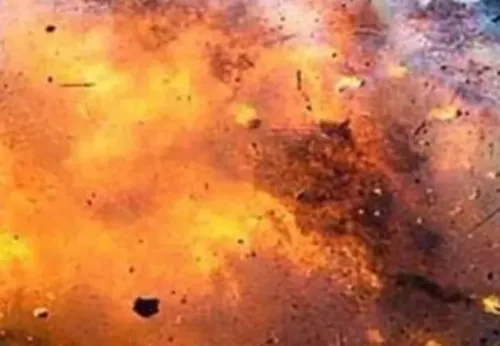
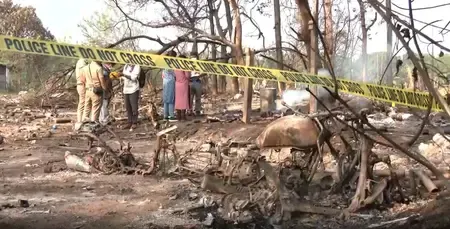
A fireworks explosion at Mundathikode during Thrissur Pooram preparations has killed 14 people, with remains found up to a kilometre away. Kerala's Devaswoms Minister has ordered a probe into illegal explosive stockpiling. DNA testing begins Saturday. The tragedy raises haunting echoes of the 2016 Puttingal temple fire — and questions about why lessons were never enforced.
Key Takeaways
14 people killed in the Mundathikode fireworks explosion during Thrissur Pooram preparations on April 24, 2025 .
29 sets of human remains recovered so far; remains found up to 1 kilometre from the blast site, with stray animals suspected of displacing some fragments.
Kerala Devaswoms Minister V.
Vasavan has ordered a probe into whether excess explosives were illegally stored at the site.
DNA testing underway at a mobile unit at Thrissur Medical College ; results expected from Saturday, April 26 .
Four persons remain missing ; four critically injured are still under treatment; official records were destroyed in the explosion.
Thrissur Pooram 2025 fireworks cancelled ; government to consult on shifting to visually-focused, low-noise displays at future festivals.
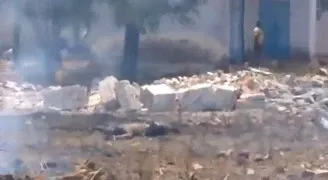
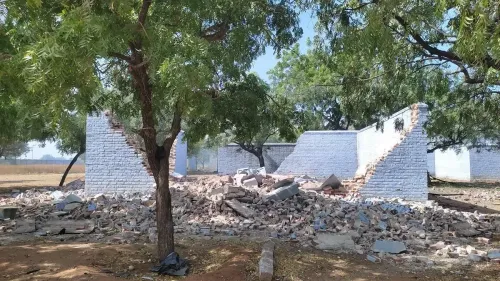
Thrissur, Kerala — The Mundathikode fireworks explosion linked to the iconic Thrissur Pooram festival has claimed 14 lives, with Kerala Devaswoms Minister V. N. Vasavan on Friday, April 25 announcing a formal investigation into whether illegally excessive quantities of explosive materials were stockpiled at the site. Recovery teams continue to retrieve human remains from locations spread across a wide radius, underscoring the catastrophic force of the blast.
Investigation into Explosive Storage Violations
Minister Vasavan confirmed that investigators would specifically examine whether the volume of explosives stored at the Mundathikode site exceeded legally permissible limits. This angle is central to the probe, as preliminary evidence suggests the scale of destruction was far beyond what a regulated fireworks operation should produce.
Authorities are also reviewing whether safety protocols mandated under existing licensing frameworks were followed. The explosion obliterated official records that documented the number of workers present, complicating the identification process significantly.
Death Toll and Recovery Operations
Of the 38 persons confirmed to have been present at the time of the blast, 14 have been declared dead. 29 sets of human remains have been recovered so far, with DNA analysis now underway to match fragments to victims. Four individuals remain missing, and four critically injured persons are still receiving treatment. Those with minor injuries have been discharged.
The geographic spread of the remains reflects the extreme intensity of the explosion. A portion of a human head was recovered from a field approximately 400 metres from the blast site, while parts of a hand were found nearly one kilometre away. Authorities have not ruled out that stray animals may have displaced some remains further afield.
Search teams equipped with cadaver dogs are combing surrounding paddy fields and residential neighbourhoods, assisted by local residents. Police personnel are operating in coordinated groups to ensure no area is left unsearched.
DNA Testing and Victim Identification
To accelerate victim identification, a mobile DNA testing unit has been deployed at Thrissur Medical College. Samples from all recovered remains — including those from unidentified bodies — have been submitted for examination. Results are expected to begin arriving from Saturday, April 26, which officials say will be pivotal in establishing a complete casualty picture.
The destruction of on-site documentation in the explosion means DNA matching is the primary — and in many cases, only — method available to confirm identities. Families of the missing have been asked to provide reference samples.
Government Response and Future Policy Shift
Minister Vasavan announced that the government would hold detailed consultations on overhauling fireworks practices at major temple festivals across Kerala. He specifically advocated a shift toward displays that prioritise visual spectacle over noise, citing international models including Olympic Games ceremonies as benchmarks.
As an immediate consequence, this year's Thrissur Pooram fireworks display has been cancelled. The Thrissur Pooram, considered one of the grandest temple festivals in India, draws lakhs of visitors annually and its fireworks competition — known as vedikkettu — is a defining highlight. The cancellation marks a historic disruption to a tradition stretching back centuries.
Broader Context and Accountability Questions
This tragedy is not Kerala's first fireworks-related mass casualty event. The Puttingal temple fire in Kollam in April 2016 killed over 110 people and injured hundreds more, prompting the Supreme Court of India to issue strict directives on fireworks at religious gatherings. Critics are now questioning how, nearly a decade after Puttingal, a similar disaster was allowed to occur — raising serious concerns about enforcement failures and the influence of festival organising committees over regulatory authorities.
Notably, fireworks competitions at Thrissur Pooram have historically operated in a grey zone where the scale of pyrotechnics often exceeds what standard permits technically authorise, according to observers familiar with the event. The question of whether district authorities and devaswom boards exercised adequate oversight will likely define the political and legal fallout from this tragedy.
As DNA results arrive and the full death toll is confirmed, pressure on the Kerala government to pursue criminal accountability — not merely administrative reform — is expected to intensify significantly in the coming days.
Point of View
110 dead, Supreme Court directives, government promises. Nearly a decade later, the same explosive culture at religious festivals has produced the same catastrophic result. The real story is not just the blast — it is the systemic impunity that allows festival organisers to stockpile explosives far beyond legal limits while regulators look away, often under social and political pressure. Until accountability reaches the licensing authorities and not just the pyrotechnicians, these tragedies will recur with grim predictability.
NationPress
19 Sept 2026
Frequently Asked Questions
How many people died in the Thrissur Pooram fireworks explosion?
A total of 14 people have been confirmed dead in the Mundathikode fireworks explosion linked to Thrissur Pooram preparations. Of 38 persons present at the site, four remain missing and four critically injured are still hospitalised.
What is being investigated in the Thrissur Pooram blast?
Kerala Devaswoms Minister V. N. Vasavan has ordered an investigation into whether excessive and illegal quantities of explosive materials were stored at the Mundathikode site. Authorities are also reviewing whether safety and licensing protocols were followed.
Has the Thrissur Pooram fireworks display been cancelled in 2025?
Yes, the Thrissur Pooram fireworks display for 2025 has been cancelled following the tragedy. The government has also announced consultations on reforming fireworks practices at major Kerala temple festivals.
When will DNA test results from the Thrissur blast be available?
DNA analysis results are expected to begin arriving from Saturday, April 26, 2025. A mobile DNA testing unit has been deployed at Thrissur Medical College to expedite identification of the 29 sets of recovered human remains.
Has Kerala faced a similar fireworks tragedy before?
Yes. In April 2016, the Puttingal temple fire in Kollam, Kerala, killed over 110 people and injured hundreds, prompting Supreme Court directives on fireworks at religious gatherings. Critics argue enforcement of those directives has remained inadequate.