Harmanpreet Kaur gets world's first wax statue of female cricketer in Jaipur
Synopsis
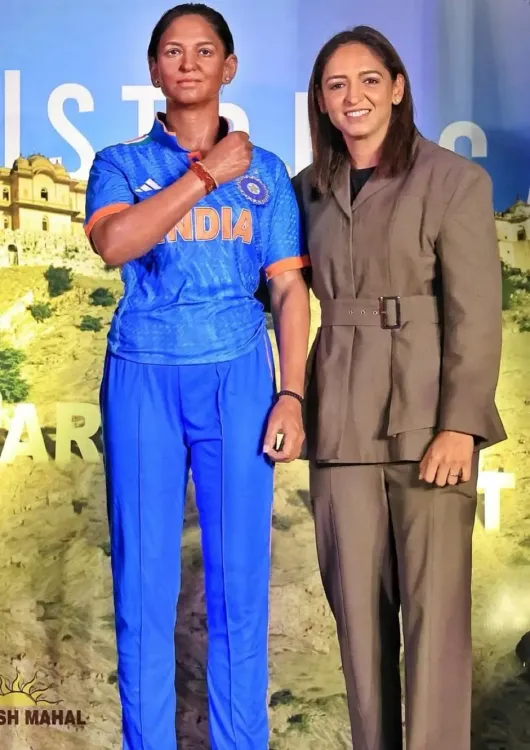
Harmanpreet Kaur became the first female cricketer in the world to have a wax statue made in her likeness, unveiled at Jaipur's Nahargarh Fort on 13 November. The moment echoes her journey from small-town origins to captaining India — and her belief that the 171-run knock that changed perceptions was only the beginning.
Key Takeaways
Harmanpreet Kaur's wax statue was unveiled on 13 November 2026 at the Rajasthan International Centre , Jaipur.
The figure, crafted by the Historica Museum , is the world's first wax statue of a female cricketer .
It will be permanently displayed at the 'Historica: Step into History' museum at Nahargarh Fort , alongside statues of Sachin Tendulkar , MS Dhoni , and Virat Kohli .
Harmanpreet credited her 171-run knock as a turning point in transforming public perception of women's cricket in India.
She called for better sporting infrastructure in rural areas and praised BCCI and state associations for expanding the women's cricketing calendar.
Indian women's cricket captain Harmanpreet Kaur made history on Friday, 13 November 2026, as her wax statue was unveiled at a ceremony held at the Rajasthan International Centre (RIC) in Jaipur — placing her alongside cricketing icons Sachin Tendulkar, Mahendra Singh Dhoni, and Virat Kohli. Crafted by the Historica Museum, the figure is billed as the world's first wax statue of a female cricketer and will be placed on permanent display at the 'Historica: Step into History' museum at Nahargarh Fort.
A Landmark Moment for Women's Cricket
Reflecting on her career at the event, Harmanpreet said her iconic 171-run knock played a pivotal role in reshaping public perception of women's cricket in India. She observed that the sport has undergone a remarkable transformation, with stadiums increasingly drawing packed crowds and growing numbers of women turning out to support the national side.
Drawing a parallel with India's historic 1983 men's World Cup triumph, she said the women's team's World Cup success had similarly redefined the landscape of the women's game. 'This is just the beginning. Women's cricket will reach even greater heights in the coming years,' she said at the ceremony.
Lord's Trophy and the Power of Collective Effort
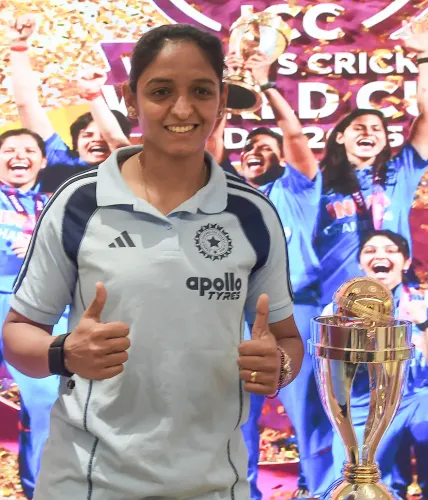
Recalling the World Cup victory at Lord's, Harmanpreet described lifting the trophy as one of the most unforgettable moments of her life, emphasising that the triumph was the culmination of the entire squad's collective dream and unity. The moment, she noted, belonged not to any individual but to every member of the team that believed in a shared goal.
Guard of Honour and Interaction with Young Cricketers
During the ceremony, young aspiring cricketers from Jaipur welcomed the Indian skipper with a guard of honour using raised bats. Touched by the gesture, Harmanpreet interacted with the youngsters, posed for photographs, and urged them to pursue their sporting ambitions with dedication.
Describing the wax figure as a deeply emotional milestone, she noted that seeing her statue displayed alongside cricketing icons she grew up admiring reflected years of perseverance and early career struggles. She also lauded the sculptors and museum team for the meticulous measurements, photographs, and video recordings undertaken to create an accurate likeness.
Call for Grassroots Infrastructure and BCCI Support
Highlighting the need to nurture grassroots talent, Harmanpreet pointed out that India's villages and small towns possess immense sporting potential. Having hailed from a similar background herself, she called for greater encouragement and improved sporting infrastructure for aspiring female athletes in rural areas.
She added that coordinated initiatives by state cricket associations and the Board of Control for Cricket in India (BCCI), alongside an almost year-round cricketing calendar, now offer emerging players a stronger platform to build professional careers. As the statue takes its place at Nahargarh Fort, it stands as both a cultural marker and a signal of how far Indian women's cricket has come — and how much further it aims to go.
Point of View
But the real story is the institutional shift it represents — women's cricket in India is no longer a footnote. What mainstream coverage tends to miss is the structural gap that still exists: despite packed stadiums and a year-round calendar, grassroots infrastructure in rural India for female athletes remains far behind the men's pipeline. Harmanpreet's call for BCCI and state associations to co-invest in rural talent is the harder ask that deserves as much attention as the ceremony itself.
NationPress
14 Nov 2026
Frequently Asked Questions
What is the significance of Harmanpreet Kaur's wax statue in Jaipur?
Harmanpreet Kaur's wax statue, unveiled on 13 November 2026 at Jaipur's Nahargarh Fort, is the world's first wax statue of a female cricketer. It places her alongside cricket legends Sachin Tendulkar, MS Dhoni, and Virat Kohli at the 'Historica: Step into History' museum.
Where is Harmanpreet Kaur's wax statue on display?
The statue is on permanent display at the 'Historica: Step into History' museum located at Nahargarh Fort in Jaipur, Rajasthan. It was crafted by the Historica Museum team using detailed measurements, photographs, and video recordings.
What did Harmanpreet Kaur say about her 171-run knock?
Harmanpreet said her 171-run knock was a pivotal moment that transformed public perception of women's cricket in India. She noted it contributed to growing crowds at women's matches and greater mainstream recognition of the sport.
How did Harmanpreet Kaur compare women's cricket to the 1983 men's World Cup?
She drew a parallel between the women's team's World Cup success and India's 1983 men's World Cup triumph, saying both victories reshaped the landscape of their respective games and elevated public interest.
What did Harmanpreet Kaur say about grassroots cricket development in India?
Harmanpreet called for improved sporting infrastructure and greater encouragement for female athletes in India's villages and small towns. She credited the BCCI and state cricket associations for expanding the women's cricketing calendar and creating stronger pathways for emerging players.