White House Flags Illinois Sanctuary Release in DUI Marine Death Case
Synopsis
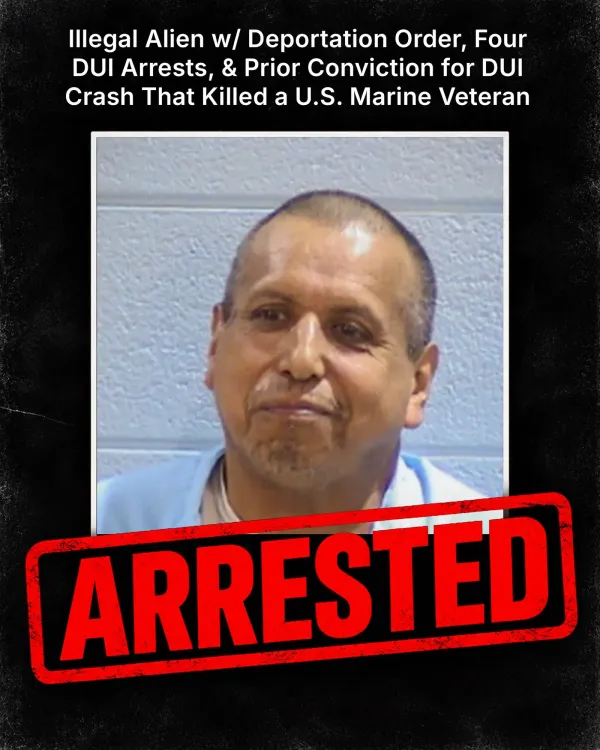
The White House says Illinois released Vicente Torres-Vasquez — accused of three illegal entries, four DUI arrests, and a 2011 crash that killed a U.S. Marine — without notifying ICE. He has since been re-arrested and faces deportation, escalating federal-state friction over sanctuary policies.
Key Takeaways
Vicente Torres-Vasquez is alleged to have entered the U.S. illegally three times and been arrested four times for DUI.
He was convicted in connection with a 2011 DUI crash that killed a U.S.
Marine , according to the White House.
Illinois released him without notifying ICE , the White House says, citing the state's sanctuary provisions.
Illinois enacted sanctuary-aligned rules through the TRUST Act in 2017 , limiting local cooperation with ICE detainers.
Governor JB Pritzker is named directly in the White House post, sharpening the federal-state political confrontation.
Torres-Vasquez has been re-arrested and deportation proceedings are now underway, the White House confirmed.
A case involving a man accused of killing a U.S. Marine in a 2011 drunk-driving crash has reignited the fiercest fault line in American immigration politics: what happens when a state refuses to tell federal agents when it frees someone in the country illegally. The White House posted on Friday, November 14, 2026, that Vicente Torres-Vasquez — described as having entered the United States illegally three times and been arrested four times for driving under the influence — has now been re-arrested and faces deportation, declaring 'Zero tolerance. No exceptions.'
What Illinois Did — and Didn't Do
At the centre of the White House's post is a pointed accusation against Governor JB Pritzker and what it calls 'sanctuary Illinois.' The administration says Illinois authorities released Torres-Vasquez without alerting U.S. Immigration and Customs Enforcement (ICE), allowing him to remain free despite his prior record and immigration status. Illinois enacted sanctuary-aligned provisions through the TRUST Act in 2017, which restricts local and state authorities from honouring ICE detainers — formal requests to hold a noncitizen for immigration pickup — in a broad range of circumstances.
The White House's framing places Pritzker squarely at the centre of the outcome, a move that is as much political as it is prosecutorial. The governor has been a consistent defender of Illinois's approach, arguing that cooperation with federal immigration detainers undermines community trust in local law enforcement.
The Marine's Death and the DUI Pattern
The White House says Torres-Vasquez was convicted for a 2011 DUI crash that killed a U.S. Marine — a detail that carries particular symbolic weight in the administration's messaging, casting the victim as someone who served the country while the offender allegedly exploited its legal seams. The post's claim of four DUI arrests and three illegal entries builds a portrait of systemic failure that the federal government is now wielding as a case study against sanctuary policies. (Research note: specific facts about Torres-Vasquez's entry history and the 2011 incident are drawn from the White House post and have not been independently verified.)
A Recurring Federal Playbook — and What Comes Next
This post follows a well-worn federal communications template: spotlighting an individual criminal case involving a noncitizen released by a sanctuary jurisdiction to maximise political pressure on state officials and build public support for stricter detainer compliance. The strategy has been deployed across multiple administrations but has taken on sharper urgency under the current one.
The friction between ICE and sanctuary states like Illinois, California, and New York has persisted for nearly a decade, with the federal government arguing that non-compliance directly endangers lives and states countering that blanket detainer cooperation would chill immigrant communities from reporting crimes. Torres-Vasquez is now in federal custody, and deportation proceedings are underway — but the broader standoff over detainer law, funding penalties for sanctuary jurisdictions, and potential federal legislation remains live and unresolved.
The White House's two-word closing — 'Zero tolerance' — signals that individual cases like this will continue to be amplified as political and legal leverage against states that resist federal immigration enforcement priorities.
Point of View
And build public opinion against governors like Pritzker who defend those policies. By invoking a fallen Marine, the administration anchors an abstract immigration-detainer debate in vivid human cost — a framing that has historically moved public sentiment. The deeper fight, however, is structural: the TRUST Act and similar state laws rest on Tenth Amendment grounds that courts have largely upheld, meaning the federal government cannot easily compel state cooperation and must instead rely on funding leverage or legislation. If the Torres-Vasquez case becomes a legislative flashpoint, it could accelerate congressional efforts to mandate detainer compliance — a battle that would test the limits of federal power over state criminal-justice systems.
NationPress
14 Nov 2026
Frequently Asked Questions
What is the Vicente Torres-Vasquez case about?
According to the White House, Vicente Torres-Vasquez is a foreign national who entered the U.S. illegally three times, was arrested four times for DUI, and was convicted for a 2011 drunk-driving crash that killed a U.S. Marine. Illinois released him without notifying ICE, and he has now been re-arrested for deportation.
What is a sanctuary state and how does Illinois qualify?
A sanctuary state limits cooperation between local law enforcement and federal immigration authorities, typically by restricting compliance with ICE detainers. Illinois enacted such provisions through the TRUST Act in 2017, which bars authorities from holding many noncitizens solely for immigration purposes.
What is an ICE detainer and why does it matter?
An ICE detainer is a formal request by U.S. Immigration and Customs Enforcement asking local jails or prisons to hold a noncitizen for up to 48 hours after their scheduled release so federal agents can take custody. Sanctuary policies restrict compliance with these detainers, which federal authorities say creates public-safety gaps.
What is Governor Pritzker's position on sanctuary policies?
Governor JB Pritzker has consistently defended Illinois's sanctuary measures, arguing that blanket ICE detainer compliance damages trust between immigrant communities and local police, ultimately making communities less safe by discouraging crime reporting.
Can the federal government force Illinois to comply with ICE detainers?
Courts have generally held that the federal government cannot directly compel states to enforce immigration detainers under the Tenth Amendment's anti-commandeering doctrine. Washington's main tools are financial leverage — threatening to withhold federal grants — or passing new legislation mandating compliance.