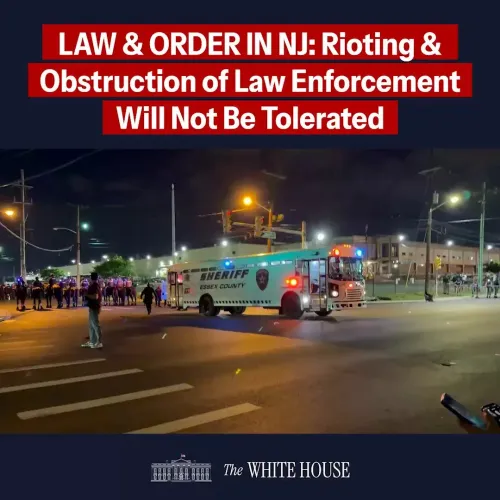
White House Backs ICE, Calls for Law Enforcement Support

Synopsis
The White House posted a blunt, all-caps call to 'stand with ICE and law enforcement' on 1 June 2026, reinforcing executive support for federal immigration enforcement amid persistent tensions with sanctuary jurisdictions and ongoing DHS budget debates.
Key Takeaways
The White House posted a direct message on 1 June 2026 calling on the public to 'stand with ICE' and 'stand with law enforcement.' ICE was established in 2003 under the Homeland Security Act of 2002 to consolidate immigration and customs enforcement within DHS .
The post follows a recurring pattern of executive messaging in support of ICE during periods of conflict with sanctuary jurisdictions .
Sanctuary cities and counties that limit cooperation with federal immigration detainers have been a persistent flashpoint since the mid-2010s.
Congressional action on DHS appropriations and new enforcement-priority guidance are the key near-term developments to watch.
The White House, the official communications account of the Executive Office of the President of the United States, posted a message of solidarity with federal immigration enforcement on Sunday, 1 June 2026, urging the public to 'stand with ICE' and 'stand with law enforcement.'
Context
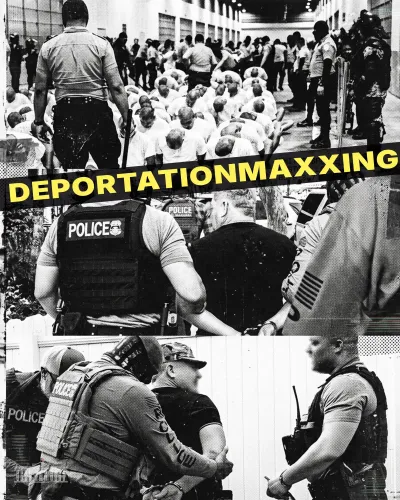
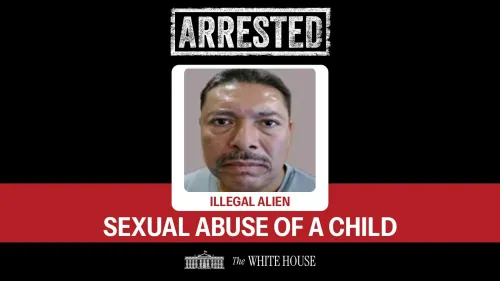
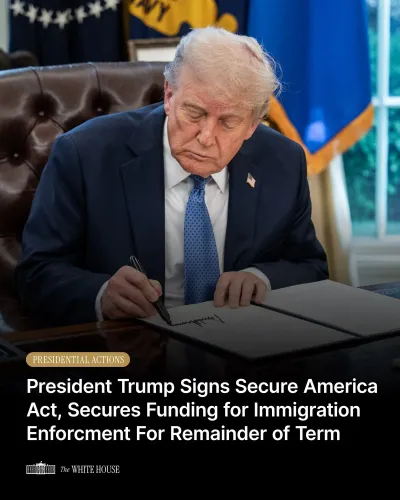
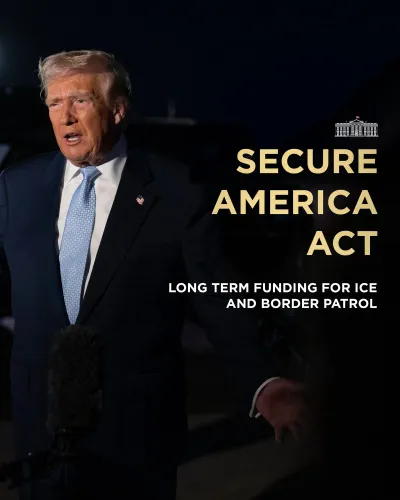
The post, comprising two declarative lines — 'STAND WITH ICE. STAND WITH LAW ENFORCEMENT.' — was accompanied by an image and signals a renewed public push by the executive branch in support of U.S. Immigration and Customs Enforcement (ICE). The message was issued without elaboration, but its framing aligns with a well-established pattern of executive messaging that positions ICE as a frontline institution under political pressure.
ICE was created in 2003 under the Homeland Security Act of 2002, which established the Department of Homeland Security (DHS) in the aftermath of the 11 September 2001 attacks. The agency consolidates immigration enforcement, customs investigations, and cross-border criminal probes under one federal roof.
Policy Backdrop
Support for ICE from the executive branch has historically spiked during periods of tension between federal immigration authority and state or local governments — particularly so-called sanctuary jurisdictions. These are cities, counties, and states that limit cooperation with federal immigration detainers, a practice that has generated repeated legal and political conflicts with ICE since the mid-2010s.
Since 2008, successive administrations have issued enforcement-priority memos directing ICE resources toward national-security threats and recent border crossers. The current message does not specify a particular operational context, but its unambiguous, all-caps phrasing suggests it is a response to a specific political or operational flashpoint, the details of which remain unverified.
Stakeholders and Impact
ICE officers and local law enforcement agencies are the immediate intended audience of the White House's show of solidarity. For federal agents who operate in jurisdictions that restrict cooperation with immigration detainers, such public backing from the executive office carries both symbolic and institutional weight.
Immigrant communities across the United States, particularly those in sanctuary cities, are likely to view the message as a signal of intensified interior enforcement. Advocacy groups have long argued that aggressive ICE operations create a climate of fear that discourages immigrants — including those with legal status — from engaging with public institutions. The White House post does not address these concerns.
What's Next
Congressional negotiations over DHS appropriations for the coming fiscal year are expected to be a key arena where the political posture signalled in this post translates into budgetary and operational reality. Any new enforcement-priority guidance from DHS leadership would directly shape how ICE allocates its resources between border enforcement and interior operations.
The broader standoff between federal immigration authorities and sanctuary jurisdictions shows no signs of resolution. With the White House publicly doubling down on its support for ICE, legal battles over detainer compliance and federal funding conditions for non-cooperating municipalities are likely to intensify in the months ahead.
Point of View
The presidency publicly wraps itself around ICE to shore up agency morale and send a warning to non-cooperating jurisdictions. The timing, just ahead of expected DHS appropriations battles, suggests the message is also aimed at Congress. For Indian observers tracking US domestic politics, this reflects how immigration enforcement has become a defining axis of American executive power — one that shapes diplomatic conversations around visa policy, deportations of Indian nationals, and bilateral law-enforcement cooperation.
NationPress
15 Oct 2026
Frequently Asked Questions
What does 'Stand with ICE' mean from the White House?
It is a public declaration of executive support for U.S. Immigration and Customs Enforcement, signalling that the administration backs aggressive immigration enforcement and stands against efforts by states or cities to limit ICE's operations.
What is ICE and when was it created?
ICE, or U.S. Immigration and Customs Enforcement, was created in 2003 as part of the Department of Homeland Security , established after the 9/11 attacks to unify immigration enforcement and customs investigations under one federal agency.
What are sanctuary cities and why does ICE oppose them?
Sanctuary cities, counties, or states are jurisdictions that restrict local law enforcement from cooperating with federal ICE detainer requests. ICE and the federal executive argue this limits their ability to detain and deport individuals with immigration violations.
How does the White House's ICE support affect Indian nationals in the US?
Indian nationals on visas or with pending immigration cases can be affected by intensified ICE interior enforcement operations. A more aggressive enforcement posture increases the risk of detention for those with any immigration irregularities, including overstayed visas.
What happens next after the White House backs ICE?
The immediate arena to watch is the DHS appropriations process in Congress, where funding levels for ICE operations will be negotiated. New enforcement-priority guidance from DHS is also expected, which would direct where ICE focuses its resources.